The Ripple Effect: How the Iranian Revolution Echoes Worldwide
Why empowering the diaspora and reclaiming Iran is a global imperative
Ziya Gökalp (1876–1924), a prominent Turkish nationalist intellectual and sociologist during the late Ottoman Empire, was the first to coin the Turkish terms İslamcılık (Islamism) and İslamcı (Islamist) around 1913. He introduced these terms in the midst of intense debates over secularism, nationalism, and religion that followed the 1908 Young Turk Revolution. Gökalp aimed to articulate a modern, nationalist interpretation of Islam that could stand in contrast to the traditionalist religious scholars (ulema), who often accused reformers of being irreligious or insufficiently Islamic. His terminology and framing were intended to legitimize reformist and nationalist currents within Islam, positioning them as authentically religious rather than heretical.
This early usage of “Islamism” in Turkish predates its widespread adoption in Arabic discourse and is considered a significant precursor to what would later be called “political Islam”—the concept of Islam as a comprehensive political and social system that shapes governance, law (Sharia), and society as a whole. Gökalp’s ideas had a lasting influence, shaping the development of Islamist thought not only in Turkey but also in the broader Muslim world, impacting later figures such as Hassan al-Banna in Egypt and Sayyid Qutb, both of whom played pivotal roles in the evolution of modern Islamist movements.
Unlike Gökalp’s clear coinage of “Islamism,” the exact English phrase “political Islam” does not have a single, universally recognized originator. The term began to appear in Western academic and analytical literature from the 1970s onward, as scholars sought to describe contemporary movements that aimed to implement Islamic principles in politics and state affairs. Its usage gained significant prominence in the wake of the 1979 Iranian Revolution, the rise of groups like the Muslim Brotherhood, and the broader resurgence of religion in public life across post-colonial Muslim societies.
Key scholars who popularized and analyzed the concept of “political Islam” include Olivier Roy (notably in The Failure of Political Islam, 1994), who examined it as a modern ideological phenomenon, and Gilles Kepel (author of Jihad: The Trail of Political Islam). Other influential academics, such as John L. Esposito, explored the term in the context of religious revival and its impact on public and political life.
Some sources trace the roots of the phenomenon described by “political Islam” to 19th-century Orientalist literature or even earlier debates in Egypt, particularly in response to the 1798 French campaign and the modernization efforts under Muhammad Ali Pasha. However, these earlier references pertain more to the emergence of Islamic political activism and reformist movements than to the specific terminology of “political Islam” itself.
The concept of Islam as an all-encompassing political, social, and legal system is evident in the writings of influential thinkers such as Jamal al-Din al-Afghani, Muhammad Abduh, Rashid Rida, Abul A’la Maududi, and Hassan al-Banna, the founder of the Muslim Brotherhood in 1928. These figures did not create the idea from scratch; rather, they built upon earlier Islamic traditions and interpretations that emphasized the integration of religion and governance.
Some scholars argue that it is a Western construct that fails to recognize the inherently political nature of classical Islam, as seen in the Prophet Muhammad’s dual role as both a spiritual guide and a political leader. Others contend that what is now called “political Islam” emerged as a modern response to the challenges of colonialism, secular nationalism, and Western cultural and political dominance in the Muslim world.
Many Islamist movements themselves reject the label “political Islam,” preferring terms such as “Islamic movement” or “Islamic revival” to emphasize continuity with traditional Islam and to avoid the implication that their approach is a departure from authentic Islamic teachings. They argue that Islam has always encompassed all aspects of life, including governance, law, and society, and that their efforts represent a return to these foundational principles rather than a new or separate ideology.
Additionally, the evolution of these ideas reflects broader debates within Muslim societies about the relationship between religion and state, the legacy of colonialism, and the search for authentic forms of governance in the modern era. The diversity of perspectives within Islamic thought highlights the complexity of defining and understanding the role of Islam in public life.
Iran: Threat Assessment and Operational Record
Since the 1979 revolution, the Islamic Republic of Iran has maintained a unique ideological identity rooted in theocratic governance under velayat-e faqih (guardianship of the Islamic jurist). The regime’s foundational principles include the explicit export of its revolutionary model, persistent anti-American and anti-Israeli rhetoric (“Death to America/Israel” as state policy), and a willingness to challenge the regional and global order. These are not merely rhetorical positions; Iran’s operational record demonstrates a consistent pattern of action aligned with its ideological commitments.
Terrorism, Proxies, and Regional Destabilization
- IRGC and Quds Force: The Islamic Revolutionary Guard Corps (IRGC), particularly its Quds Force (formerly led by Qasem Soleimani until his 2020 death in a U.S. strike), has been central to Iran’s external operations. The IRGC supports and directs a network of designated terrorist groups and militias, including Hezbollah, elements of Hamas, the Houthis in Yemen, and various Iraqi Shia militias.
- Operational Impact: U.S. intelligence attributes hundreds of American deaths in Iraq (estimated 500–600+ via explosively formed penetrators and related attacks post-2003) and thousands wounded to Iranian-backed networks. The IRGC was designated a Foreign Terrorist Organization by the U.S. in 2019. Attacks on U.S. bases, embassies, shipping, and regional allies have continued for decades, with Soleimani directly linked to plots against American personnel.
- Global Reach: Iran’s proxy and terror infrastructure extends beyond the Middle East, with documented plots and attacks in Europe, Latin America, and Asia, underscoring the regime’s willingness to project power asymmetrically.
Nuclear Program and Proliferation Concerns
- Enrichment Activities: Iran has pursued uranium enrichment and related nuclear capabilities despite its obligations under the Non-Proliferation Treaty (NPT) and ongoing International Atomic Energy Agency (IAEA) scrutiny. Prior to the Joint Comprehensive Plan of Action (JCPOA), Iran advanced toward nuclear threshold status, with IAEA reports highlighting concealment and compliance issues.
- Post-JCPOA Developments: Following the U.S. withdrawal from the JCPOA in 2018, Iran accelerated enrichment (reaching 60%+ in some periods), significantly shortening estimated breakout times. A nuclear-armed Iran would pose a major proliferation risk, embolden its regional posture, and heighten concerns about nuclear terrorism—especially given the regime’s ideological hostility and its development of ballistic missile delivery systems (which the JCPOA did not constrain).
Strategic and Existential Threat Framing
- U.S. Homeland: While Iran does not pose a direct conventional or nuclear existential threat to the U.S. homeland on the scale of peer competitors like China or Russia, the combination of ideological motivation, terrorism infrastructure, nuclear threshold capability, and proxy warfare creates severe risks. These include emboldened attacks on U.S. interests and allies, potential proliferation cascades, disruptions in the Strait of Hormuz, and ideological inspiration for global jihadist networks.
- Israel and Regional Allies: For Israel, the threat is more immediate and acute, given Iran’s support for anti-Israel proxies and its repeated calls for Israel’s destruction. U.S. regional partners also face persistent threats from Iranian-backed groups and missile/drone attacks.
- Regime Resilience: Despite decades of sanctions and international isolation, the Iranian regime has demonstrated significant resilience and adaptability, maintaining internal control and external influence.
- Human Rights Record: Iran’s domestic record—marked by suppression of protests, executions, and discrimination against minorities—is extensively documented by independent monitors and further underscores the regime’s repressive nature.
The evidence supports the view that Iran poses a persistent, ideologically driven threat distinct from purely state-rational actors. Its actions are shaped by a blend of revolutionary ideology and pragmatic calculation. However, some analysts argue that Iran remains a rational (if revisionist) state actor, responding to perceived encirclement and deterrable through credible threats. They contend that its capabilities are containable and that direct confrontation risks escalation or regional instability. The debate continues over the best approach to managing the Iranian challenge—whether through pressure, engagement, deterrence, or a combination of strategies.
U.S. Policy Toward Iran: Oscillations, Outcomes, and the JCPOA Debate
For over half a century, U.S. policy toward Iran has oscillated between engagement, containment, and pressure, with each administration recalibrating its approach. Despite these shifts, the cumulative evidence points to the persistent failure of appeasement and containment strategies to fundamentally alter Iran’s behavior or ambitions.
- Pre-1979: Iran was a close U.S. ally under the Shah, with deep military and economic ties.
- Post-1979 Revolution: Relations collapsed amid the hostage crisis, leading to decades of sanctions and Iran’s designation as a state sponsor of terrorism.
- Iraq-Iran War Era: The U.S. subtly tilted toward Iraq, seeking to balance regional power.
- Post-9/11 and Iraq War: U.S. focus intensified on the IRGC’s regional activities and Iran’s nuclear ambitions.
The JCPOA: Diplomatic Gamble or Strategic Error?
The 2015 Joint Comprehensive Plan of Action (JCPOA), negotiated by the Obama administration alongside the EU3 and other partners, sought to impose verifiable limits on Iran’s nuclear program. Key provisions included:
- Caps on uranium stockpiles and enrichment (to 3.67%)
- Redesign of the Arak reactor
- Enhanced IAEA inspections
- Sanctions relief in exchange for compliance
The IAEA consistently reported Iranian compliance with nuclear restrictions until the U.S. withdrawal in 2018. Supporters argued the deal rolled back Iran’s breakout capacity, increased transparency, and bought crucial time for diplomacy. They viewed it as pragmatic realism, coordinated with allies to avoid worse outcomes such as an unchecked nuclear sprint or war.
However, critics—including many Republicans, Israel, and Gulf states—argued that:
- Sunset clauses created a future pathway for advanced enrichment.
- The deal failed to address Iran’s missile program or support for proxies and terrorism.
- Sanctions relief indirectly enabled more aggressive regional activity.
- The agreement treated only the nuclear “symptom,” not the regime’s core behavior or ideology.
After the U.S. withdrawal, Iran accelerated its nuclear program, confirming critics’ fears about the deal’s limitations and the challenges of enforcement.
The Trump administration’s “maximum pressure” campaign, culminating in the 2020 strike on Qassem Soleimani, marked a sharp turn toward direct action and economic isolation. This approach aimed to coerce behavioral change through crippling sanctions and targeted military action, in stark contrast to the diplomatic engagement of the JCPOA era.
U.S. policy toward Iran remains defined by oscillation and debate. Both engagement and pressure have produced mixed results, with neither approach delivering a decisive resolution to the underlying challenges posed by the Iranian regime. The JCPOA debate encapsulates the broader dilemma: whether to prioritize pragmatic risk reduction through diplomacy or to confront and contain a hostile actor through isolation and force. Ultimately, the effectiveness of any policy depends on enforcement, Iranian compliance in both letter and spirit, and the willingness of the U.S. and its allies to adapt to evolving realities.
Eleven years after the signing of Obama’s JCPOA, a dramatic escalation unfolded: On February 28, 2026, the U.S. and Israel launched coordinated strikes against Iranian nuclear, missile, and regime targets. The initial wave reportedly killed Supreme Leader Ali Khamenei. The active conflict phase saw Iran retaliate with missile and drone attacks on Israel, U.S. interests, and regional targets, triggering spillover violence involving Hezbollah in Lebanon and raising tensions in the Strait of Hormuz.
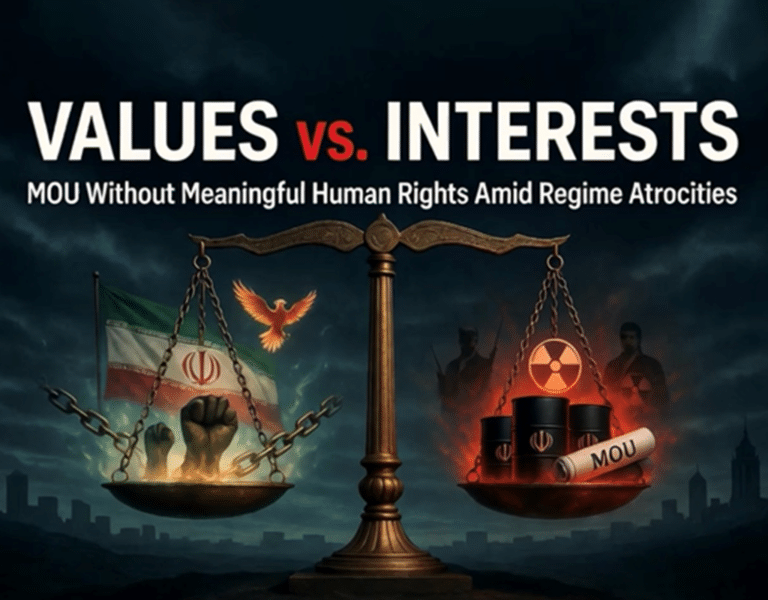
A ceasefire, brokered by Pakistan, was announced around April 7–8, 2026, though it was marked by repeated violations, extensions, and the imposition of a U.S. naval blockade. By mid-June 2026, a memorandum of understanding was reached to open further negotiations—including on nuclear issues—within a 60-day window. U.S. combat deaths remained low (about 13 reported in the broader regional context), but financial costs soared into the tens of billions within weeks. Iranian casualties and displacement were severe, with thousands reported dead (including civilians) and a significant regional humanitarian impact.
In June 2026, Congress passed a historic concurrent War Powers Resolution—the first dual-chamber 5(c) resolution of its kind since 1973—directing the removal of U.S. forces from hostilities absent explicit congressional authorization. The measure passed narrowly, with some bipartisan support (including four Republican senators). While largely symbolic in legal terms, it served as a pointed political rebuke amid heated debates over the conflict’s goals, duration, costs, and constitutional authorization.
Perspectives on the resolution remain sharply divided. Supporters argue it represents a legitimate constitutional check and a necessary caution against open-ended military engagement. Critics contend it undermines U.S. leverage at a critical juncture, especially given the Iranian regime’s record and the stakes involved.
Foreign policy decisions, especially regarding Iran, rarely stem from a simplistic “agenda to harm America” or sheer incompetence. Instead, the evidence points to deep, longstanding disagreements over threat perception, strategic priorities, and the inevitable trade-offs involved.
One camp emphasizes the regime’s ideological and religious character, its decades-long sponsorship of terrorism (notably during the Soleimani era), and its nuclear ambitions—arguing these require sustained maximum pressure or even degradation to prevent further empowerment. The other camp prioritizes diplomacy, robust nonproliferation verification, avoidance of endless military entanglements, multilateral cooperation, and managing Iran as a revisionist but ultimately containable actor. This latter view sees over-confrontation as risking escalation or inadvertently strengthening hardliners within Iran. The JCPOA (Iran nuclear deal) exemplified this diplomatic approach, while maximum pressure campaigns and targeted strikes reflected the former. European engagement with the JCPOA was driven by nonproliferation and economic interests, not by any anti-U.S. conspiracy.
Domestic politics—especially sharp partisan polarization on Iran since at least 2015—bureaucratic inertia, shifting intelligence assessments (which have sometimes failed), lobbying from multiple interests, economic considerations (energy markets, sanctions relief), and the momentum of previous policies all shape outcomes. Hindsight reveals miscalculations across Middle East policy by both parties. Critiques of the JCPOA’s “short-termism” (sunset clauses, missile and proxy gaps) have merit, but dismissing it as “stupidity” underestimates the challenge of making decisions with incomplete information in adversarial contexts.
Public records and declassified debates show genuine policy disagreements, not coordinated subversion. Intelligence on Iran’s nuclear and proxy activities has been broadly consistent in its core findings. Ultimately, the Iranian regime bears primary responsibility for its own choices and attacks on U.S. interests.
Nevertheless, policy errors and misalignments have real costs, as seen in past interventions and the oscillating U.S. approach to Iran. The regime’s survival and continued behavior validate concerns about underestimating ideological threats. Conversely, direct military action brings escalation, humanitarian, and economic risks—as the 2026 phase demonstrated (with low U.S. casualties but significant regional toll and eventual de-escalation through renewed talks).
Bottom line: The Islamic Republic’s record on terrorism, ideological export, and nuclear pursuit provides ample reason to view it as a persistent, serious adversary—arguably more so than a conventional state rival, given its revolutionary ambitions. U.S. interventions have repeatedly shown that ambitious goals collide with complex realities, often at high human and financial cost. The 2015 JCPOA was one calculated bet (diplomatic containment of nuclear risk); subsequent maximum pressure and the 2026 strikes were another (degradation and deterrence). The 2026 congressional resolution highlighted institutional friction over executive action in this context.
Ultimately, neither a pure “agenda” nor simple incompetence explains the record. U.S. policy reflects competing strategic logics, incomplete information, domestic constraints, and the inherent difficulty of shaping outcomes with a determined, ideological regime. Honest analysis requires weighing the regime’s agency and actions against the efficacy and unintended consequences of U.S. responses—across multiple administrations. Ongoing debate over these trade-offs is essential; reducing the discussion to conspiracy or incompetence risks missing actionable lessons on deterrence, alliances, verification, and the prudent use of force in pursuit of long-term interests.
The characterization of Iran as part of an axis with China and Russia appears both accurate and increasingly pressing in the context of 2026. This is especially true in the aftermath of the post-February 28 strikes, the death of Khamenei during the initial U.S./Israel operations, and the subsequent ceasefire and Memorandum of Understanding (MOU) phases. The level of collaboration among Iran, Russia, and China has significantly deepened:
- Russia-Iran: There is a robust exchange of drone technology (with Iranian Shahed drones supplied to Russia for use in Ukraine, and a reverse flow of technology and intelligence to Iran after 2026). Intelligence sharing has expanded, including the provision of satellite imagery on U.S. targets. The two countries formalized their relationship with a strategic partnership treaty in 2025. Russia benefits from the diversion of U.S. attention and resources.
- China-Iran: China remains a major purchaser of discounted Iranian oil, providing Iran with a crucial economic lifeline that helps it evade sanctions. China also supplies dual-use components for missiles and drones, and the two countries have broadened their economic and technological ties under the 2021 comprehensive partnership agreement.
- Overall “Axis of Evasion/Autocracy” (sometimes referred to as CRINK, including North Korea): This grouping is characterized by sophisticated sanctions circumvention networks, diplomatic alignment against the U.S.-led international order, and mutual military and technological support. It is not a formal alliance with mutual defense obligations like those of WWII, but rather a pragmatic, interest-driven coalition focused on anti-sanctions measures, opposition to Western hegemony, and cooperation in energy and arms. China tends to act more cautiously to protect its broader global interests, while Russia is more opportunistic. Nevertheless, this axis significantly enhances Iran’s resilience and regional reach.
The emergence of this axis makes unilateral action against Iran both riskier and less effective, reinforcing the notion that Iran is now part of a broader, coordinated challenge to the Western-led global order.
Additionally, the deepening ties among these states have led to increased joint military exercises, intelligence fusion centers, and the development of alternative financial systems to bypass Western sanctions. This evolving partnership not only complicates Western strategic calculations but also emboldens Iran and its partners to pursue more assertive regional and global policies.
History’s “classroom” demonstrates that constructing rationales in the moment is easy, but maintaining sustained strategic clarity—especially in the face of ideological expansionism—is far more difficult. World War II stands out as a rare case where the threat became unambiguously existential, prompting a response that matched the scale and urgency required. In contrast, most conflicts since then have involved threats perceived as less than existential, yet still serious, constrained by domestic politics, and complicated by adversaries adept at operating below the threshold of total war. The result has often been a pattern of managed competition or recurring crises, rather than decisive resolution.
This tendency toward rationalized incrementalism carries significant costs, particularly when the adversary’s core character—marked by ideological hostility, entrenched terrorism infrastructure, nuclear threshold ambitions, and revisionist alliances—remains unaddressed at the strategic level. History shows that adversaries who combine ideological drive with resilience and external enablers are especially adept at exploiting inconsistency and hesitation.
Effective strategic learning requires a sharper focus on priorities: What are the truly non-negotiable objectives regarding such regimes? For example, is the aim to prevent nuclear weapons acquisition, to severely degrade proxy networks, or to weaken their axis partnerships? Which tools and policies actually move these metrics over time, and what realistic costs—political, economic, and military—is the public willing to sustain? Half-measures, justified by shifting rationales, have repeatedly failed to achieve lasting results. Yet, the alternative of total war carries catastrophic risks in a nuclear era.
The viable space between these extremes—sustained, adaptive pressure, robust support for internal opposition, and strong alliances with states that share the threat assessment—has been inconsistently applied. History offers no guarantees of success for any approach, but it does make clear that adversaries with ideological motivation, resilience, and external support will exploit every inconsistency and hesitation. Strategic clarity, prioritization, and the willingness to match means to ends are essential if the cycle of managed crises is to be broken.
And now we are standing at the gate—déjà vu 1930. The sense of history repeating itself is not just a rhetorical flourish; it is a genuine, weighty feeling in this moment. After decades of oscillating policies—rationales for engagement, sanctions, limited strikes, and now the 2026 campaign followed by a ceasefire and MOU—the Islamic Republic endures. It has deepened its ties within the axis, leveraging Russian and Chinese support through drones, intelligence sharing, oil evasion, and technology transfer, all while maintaining its ideological posture. This is deeply frustrating, especially for Americans and regime critics who have watched this cycle repeat for 47 years since 1979.
History teaches us that rationales for delay often mask an unwillingness to confront ideological, expansionist threats head-on. The parallels to the 1930s are not empty rhetoric. Then, as now, ideological regimes with universalist ambitions—whether through the export of revolution, slogans like “Death to America/Israel,” proxy networks, or even eschatological framing—were underestimated or rationalized as ultimately containable or controllable.
Tactical alliances of convenience have formed among revisionist powers coordinating against the status quo order—then Germany, Italy, and Japan; now elements of Russia, China, Iran, and North Korea, forming an “axis of evasion and autocracy.” Engagement or limited responses—Munich-style diplomacy, sanctions that leak, and strikes that degrade but do not eliminate core capacity—have repeatedly bought time for adversaries to adapt, rearm, and exploit divisions among their opponents.
Domestic and public fatigue, combined with a desire to avoid short-term costs, has often delayed decisive action until the threat metastasized. “We the people” and our elected representatives have a mixed record. Post-WWII containment worked against Soviet communism through sustained, multi-decade pressure, alliances like NATO, and ideological competition without constant hot war. Post-9/11 adaptations improved counterterrorism. Yet, on Iran specifically, nearly 50 years of policy swings reveal incomplete learning: persistent underestimation of the regime’s durability, its proxy adaptability, and the formation of a resilient axis.
Now, as we stand at this gate, the lessons of history urge us to recognize the dangers of cyclical complacency and the high cost of delayed reckoning. The challenge is not just strategic, but moral and generational: will we repeat the mistakes of the past, or finally learn from them?