Skip to content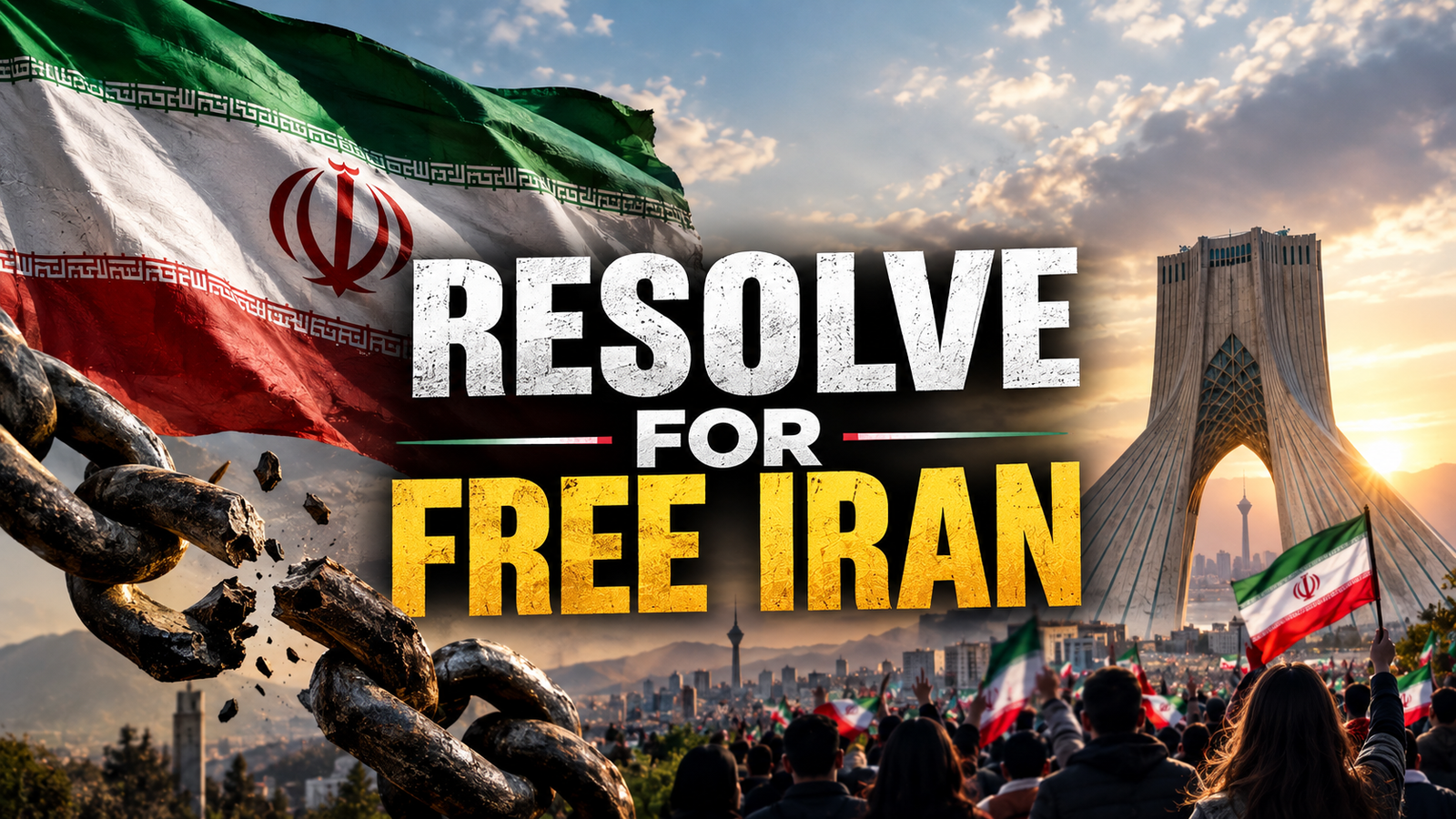
Resolve for a Free Iran

Post-World War II Middle Eastern history shows a recurring pattern: authoritarian regimes facing internal resistance or external pressure often survive by adapting, using proxy warfare, and exploiting the strategic patience of their adversaries. The Islamic Republic of Iran illustrates this pattern with unusual clarity. Since the 1979 Revolution, the regime has consolidated proxy networks, advanced toward nuclear threshold capability, and repeatedly suppressed dissent, including the massacres of 2025–2026. Western powers, meanwhile, have too often favored calibrated restraint, economic calculation, and diplomatic resets over sustained pressure. Taken together, these choices have produced a cycle in which repression inside Iran and aggression abroad reinforce one another. The warnings of Winston Churchill, Niccolò Machiavelli, and George Orwell help frame the danger of such half-measures: Churchill’s insistence on resolve against existential evil, Machiavelli’s warning that delayed conflict strengthens the adversary, and Orwell’s insight that the quickest way to end a war is often to accept defeat all resonate with the present moment.
The Iranian people have not been passive. They have poured into the streets repeatedly—at great cost—most recently in December 2025 and January 2026, only to face massacres while great powers largely watched or offered rhetoric and sanctions. Estimates of deaths in that crackdown range from several thousand confirmed (HRANA) to tens of thousands according to local health sources and higher figures cited publicly by President Trump (around 52,000–54,000). The regime’s intrinsic ideological character—Khomeinist political Islam enforced by the Islamic Revolutionary Guard Corps (IRGC)—is structurally anti-democratic, prioritizing velayat-e faqih (guardianship of the jurist) over popular sovereignty, pluralism, and individual rights.
Against that backdrop, this essay brings those threads together: the rise of the axis of resistance, early post-revolutionary atrocities that Western governments often tolerated for economic or geopolitical reasons, the enabling effects of policies such as the 2015 JCPOA, the 2025 Twelve-Day War and the 2026 escalation, the killing of Supreme Leader Ali Khamenei, and the agency and suffering of the Iranian people. Its central claim is that negotiations which merely allow the regime to reconstitute are inadequate. A more coherent strategy must degrade the IRGC’s power while materially supporting Iranians who seek a free, secular, and democratic future.
This argument proceeds in three steps: first, it traces how Western restraint enabled the Islamic Republic to consolidate power and extend influence through proxies; second, it shows how the Iranian people’s repeated uprisings reveal both agency and vulnerability under a heavily armed security state; and third, it argues that any credible Western strategy must pair pressure on the IRGC with concrete support for democratic Iranian forces.
Historical Foundations: The Rise of the Islamic Republic and the Axis of Resistance
Post-World War II state formations in the Middle East—Israel in 1948, the modern contours of Iraq, and the consolidation of Ba’athist Syria under Hafez al-Assad from 1970—set the stage for ideological and proxy conflicts. The 1979 Islamic Revolution in Iran, led by Ayatollah Ruhollah Khomeini, overthrew the Pahlavi monarchy amid widespread discontent but quickly installed a theocratic system that fused Shia Islamism with anti-Western, anti-imperialist rhetoric. Early actions were telling: the U.S. Embassy hostage crisis (1979–1981), raids and threats against other diplomatic targets, and a campaign of transnational repression that included assassinations and brutal attacks on dissidents in Europe shortly after the revolution. The 1988 massacre of political prisoners—thousands executed on Khomeini’s fatwa via “death commissions”—exemplified the regime’s willingness to eliminate internal opposition en masse.
Western responses were often pragmatic rather than principled. During the Iran-Iraq War (1980–1988), arms and intelligence flowed variably to both sides to maintain balance. Economic interests—oil market stability and potential contracts—frequently tempered rupture. The regime’s “export of the revolution” doctrine gave rise to the axis (or front) of resistance: an Iran-led network including Hezbollah in Lebanon, later Hamas and Palestinian Islamic Jihad, the Houthis in Yemen, Iraqi Shia militias, and (until its 2024 fall) Assad’s Syria. This forward-defense strategy allowed Tehran to impose costs on adversaries through deniable proxies while developing asymmetric capabilities—ballistic missiles, drones, and cyber tools—that conventional Western superiority struggled to counter directly.
Machiavelli’s counsel in The Prince is directly applicable: “There is no avoiding war; it can only be postponed to the advantage of others.” By allowing the regime space to consolidate after 1979 and build its proxy infrastructure over decades, external powers handed it time to prepare. Churchill’s perseverance against Nazi Germany contrasted with later Western approaches that treated the Islamic Republic more as a difficult interlocutor than an ideological adversary exporting terror and theocracy. Orwell’s warning about insufficient resolve leading to effective defeat captures the outcome: repeated cycles of pressure followed by relief enabled the regime to advance its nuclear program toward threshold status, expand its missile arsenal, and sustain regional destabilization.
Western Policy Failures: Economics, Engagement, and the JCPOA Trap
The historical pattern matters because it shaped the policy mistakes that followed. Across our discussions, one recurring theme is that basic rules of strategy—clear objectives, sustained commitment, and recognition of the adversary’s nature—were often ignored in favor of reaction, postponement, or rushed off-ramps. Economic advantages, including oil, markets, and trade routes, repeatedly led great powers to turn blind eyes to atrocities. The regime’s early hostage-taking, embassy violations, and European assassinations of dissidents occurred with awareness but limited sustained isolation.
The 2015 Joint Comprehensive Plan of Action (JCPOA) stands as a prime example of flawed engagement. It delivered substantial sanctions relief—roughly $100 billion or more in unfrozen assets and resumed oil revenues—while imposing temporary nuclear constraints with sunset clauses. Critics rightly noted that it did not address ballistic missiles, terrorism sponsorship, or human rights, allowing the IRGC to use the economic breathing room to reconstitute and advance capabilities. Iran strategically prolonged aspects of negotiations and used the period to strengthen its asymmetric posture. The deal’s collapse and subsequent dynamics fed into the escalations of 2025–2026.
Broader interventions, such as the 2003 Iraq War (launched on flawed premises) and later withdrawals, created spaces that IRGC-backed militias exploited. Afghanistan’s trajectory similarly illustrated the limits of nation-building without addressing sponsoring states. In each case, knowledge of the regime’s global role in supporting violence did not translate into consistent degradation of its capabilities. Negotiations became ends in themselves rather than tools leveraged from positions of strength. The result was a regime that adapted, survived internal protests (2009, 2022, and beyond), and positioned itself as a revisionist power challenging the regional order.
Europe’s lag in designating the IRGC as a terrorist organization—following the U.S. lead in 2019, with EU action in early 2026 and UK movement around the same period—further exemplified hesitation rooted in legal thresholds and lingering diplomatic preferences. These delays allowed operational continuity.
The Iranian People’s Agency and the 2025–2026 Massacres
The consequences of these policy choices were felt most directly by Iranians themselves. Central to any coherent analysis, therefore, is the Iranian people. They bear primary responsibility for their society’s direction through their actions and choices where possible, but authoritarian control severely constrains that agency. Repeated uprisings demonstrate profound discontent with the theocratic system’s failures: economic mismanagement, repression, corruption, and ideological rigidity.
The protests beginning December 28, 2025, triggered by economic crisis, spread nationwide and represented the largest challenge since 1979. Security forces responded with lethal force, culminating in massacres especially around January 8–9, 2026. Death toll estimates vary due to information blackouts and reprisals: HRANA and similar groups confirmed thousands (with more under review), while broader reporting from medical sources and officials cited figures in the 12,000–36,500+ range for peak periods; President Trump publicly referenced approximately 52,000–54,000 killed, emphasizing that protesters “have no guns and the other side has machine guns.”
The regime’s response—live fire, mass arrests, executions, and curfews—mirrored its historical playbook. Great powers largely confined responses to statements, targeted sanctions, and warnings rather than measures that could have meaningfully disrupted the killing apparatus or supported the demonstrators. Internet shutdowns isolated protesters; the asymmetry of firepower was stark. This abandonment echoed earlier episodes and reinforced the regime’s calculation that internal dissent could be crushed with limited external cost.
Yet the people’s willingness to return to the streets, despite these risks, underscores both their agency and the regime’s fundamental illegitimacy in the eyes of large segments of society. Demands have consistently included dignity, rights, economic relief, and, for many, an end to the theocratic structure itself.
The 2025–2026 Wars: Opportunities Created and Squandered
The regime’s ability to crush protest at home was inseparable from its regional and military posture abroad. The military dimension therefore provides necessary context for the current dynamics. Israel’s Twelve-Day War, from June 13 to June 24, 2025, targeted Iranian military and nuclear facilities, degrading air defenses and infrastructure; the U.S. participated with strikes on hardened sites. A ceasefire followed.
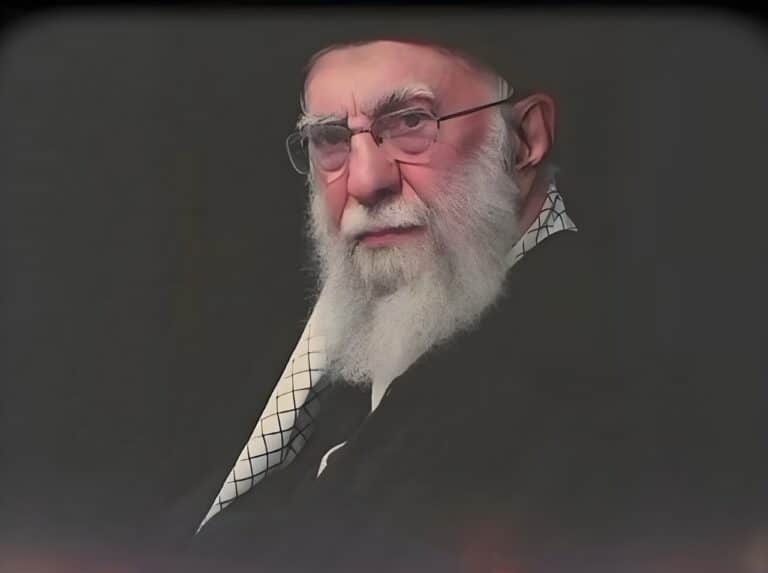
This set the stage for the broader 2026 Iran war, launched February 28, 2026, with joint U.S.-Israeli strikes (U.S. Operation Epic Fury). The opening phase included a precision operation that killed Supreme Leader Ali Khamenei and other senior figures, triggering Iranian retaliation across the region, proxy activation (Hezbollah, Houthis, Iraqi militias), and disruption threats to the Strait of Hormuz. Ceasefires and a June 2026 memorandum of understanding were attempted but collapsed amid violations, leading to renewed exchanges into July 2026.
These events sharpen the central strategic lesson rather than replacing it. Khamenei’s elimination created a genuine window: leadership decapitation, strained proxies, economic pressure from sanctions and war, and ongoing military degradation. Yet pauses for negotiations risked allowing hardliners, potentially under a successor like Mojtaba Khamenei, to regroup. The pattern of restraint followed by escalation and then off-ramps repeated historical errors.
Ideological Clarity and Strategic Lessons
The military record also points back to the regime’s ideological core. The Khomeinist project is not a generic faith tradition but a specific political ideology that subordinates democracy to clerical rule. The constitution embeds mechanisms ensuring Islamic law’s supremacy; elections are heavily vetted; dissent is treated as an existential threat. This anti-democratic character is not incidental but definitional—evident in the treatment of women, minorities, opposition, and the export of the model via proxies. While not all Islamist movements are identical, this variant has demonstrated consistent opposition to secular pluralism.
Churchill’s resolve applied to an ideological foe willing to use any means. Machiavelli’s warning against delay favored acting when the adversary was consolidating. Orwell highlighted the danger of seeking quick political wins that leave the root threat intact. Applied here, policies that treated the regime as a normal state actor with negotiable grievances enabled its survival and growth. The axis of resistance was built under noses that prioritized short-term stability or commerce over long-term security and human rights.
Toward Decisive Action: Degrading the IRGC and Empowering the People
If the historical, political, and military record points to one conclusion, it is that half-measures have failed. The case for moving beyond them is strong. The regime’s record—from early atrocities to the 2025–2026 massacres, proxy terrorism, and nuclear pursuit—demonstrates that restraint is interpreted as weakness. Total or near-total degradation of the IRGC’s command structure, economic empire, proxy networks, and missile and drone capabilities could prevent reconstitution and create conditions for internal change. In the post-Khamenei environment, with military pressure already applied, sustained focus on these targets makes strategic sense.
Equally vital is support for the Iranian people. They have shown they will mobilize; they must be helped to succeed. This includes intelligence sharing, secure communications, disruption of regime repression tools during crackdowns, and—controversially but logically in extremis—material assistance, including arming vetted opposition or resistance networks committed to democratic transition. The asymmetry (“they have no guns”) must be addressed if self-liberation is the goal. Historical precedents for supporting internal resistance against tyrannical regimes exist, though risks of blowback or fragmentation require rigorous vetting, clear political frameworks, and integration with a broader strategy.
Risks are real and must be confronted: escalation (Hormuz closure, wider regional involvement), power vacuums leading to chaos or new authoritarians (lessons from Iraq, Libya, Syria), civilian suffering in any intensified campaign, and the challenge of defining “total” victory without a viable post-regime governance vision. Arming carries proliferation and diversion dangers; external support cannot substitute for broad Iranian ownership. A hybrid approach—military degradation of the IRGC’s coercive core paired with political and informational support for secular democratic forces—offers a more calibrated path than either perpetual negotiation or undifferentiated “total war.”
Negotiations are not inherently surrender but must be conducted from strength, with irreversible concessions on nuclear, missile, and proxy issues, not temporary relief that funds the next cycle. The goal should be a free Iran aligned with its people’s aspirations, not perpetual containment of a revanchist theocracy.
Conclusion: Memory, Resolve, and the Path to a Free Iran
The conversations across our exchanges converge on a clear diagnosis: Western policy has too often postponed confrontation or settled for fragile equilibria that advantaged the adversary, while the Iranian people have paid with their lives and freedoms. The 1979 Revolution’s early crimes, the building of the axis, the enabling JCPOA period, the abandoned protests of 2025–2026, and the openings created (and sometimes squandered) in 2025–2026 all point to the same lesson. Machiavelli, Churchill, and Orwell were not abstract theorists; their insights describe the consequences of insufficient resolve against determined ideological opponents.
The Iranian people’s repeated sacrifices demand more than condolences or limited sanctions. They require a strategy that degrades the instruments of their oppression—the IRGC foremost—and provides meaningful help so that future uprisings can succeed rather than end in massacre. The ideological core of the regime is anti-democratic by design; its removal or fundamental weakening is a prerequisite for the secular, pluralistic order many Iranians seek.
The price is high—human, economic, and strategic. But the alternative is continuation of a cycle that has already claimed tens of thousands in recent protests alone, destabilized the region, and advanced threats that will only grow if unaddressed. Memory of the victims—from 1988 to 2025–2026—must fuel resolve, not resignation. A coherent policy combining sustained pressure on the regime’s power structures with robust support for the Iranian people offers the clearest path out of this long darkness toward a future where Iranians can determine their own destiny in freedom. The time for half-measures has passed; the imperative now is clarity of purpose and the will to see it through.
References and Sources (selected from discussions)
– Historical timelines and casualty estimates drawn from contemporary reporting (HRANA, Time, Reuters, Wikipedia summaries of 2025–2026 events).
– Strategic analysis informed by primary historical texts (Machiavelli’s The Prince, Churchill speeches, Orwell essays).
– Policy critiques based on documented outcomes of JCPOA and intervention cycles.
This essay represents a synthesis of extended analytical conversations and is intended for advocacy, education, and strategic reflection on the path to a free and democratic Iran.