Beyond Hormuz: How Iran’s Caspian Sea Quietly Became Its Strongest Geopolitical Trump Card
The Persian Gulf, the Strait of Hormuz, and the surrounding islands have long been at the center of global attention, serving as a focal point for international scrutiny and regional disputes for centuries. This critical maritime corridor is among the world’s most vital commercial waterways, with over 100 large oil and supply tankers passing through daily. Its strategic significance is underscored by its role as a chokepoint, where any disruption can threaten the flow of oil to major economies such as the West, Russia, China, Japan, and many others. Historical events—including the 1970s oil crisis, the Iran-Iraq War, and recent confrontations involving the United States, Israel, and Iran—have repeatedly highlighted the vulnerability and importance of this region.
The Islamic Republic of Iran has consistently leveraged its control over the Strait of Hormuz as both a strategic advantage and a bargaining chip. This control has enabled Iran to exert pressure on Western nations and the United States, using the threat of disruption to negotiate or deflect attention from its controversial actions over the past five decades. However, decisive and strategically calculated actions—such as President Trump’s blockade of the Persian Gulf, which effectively tightened control over the Strait of Hormuz—have demonstrated that this leverage can also become a significant vulnerability for Iran, potentially turning its greatest asset into an Achilles’ heel.
In recent years, attention has increasingly shifted toward the Caspian Sea as a potential “winning card” for Iran, both in times of peace and conflict. The notion that the Caspian Sea could offer Iran a more resilient and valuable strategic advantage than its traditional dominance over the Persian Gulf and Strait of Hormuz has gained traction, especially in the context of the 2026 Iran conflict. Analysts argue that the Caspian Sea provides Iran with critical diversification options, enabling it to evade sanctions, establish alternative trade and energy corridors, and build alliances that are less susceptible to Western naval blockades or military intervention.
While the Caspian Sea cannot fully replace the Persian Gulf’s unparalleled role in global oil exports, it does offer Iran complementary leverage in an increasingly multipolar and sanctioned international environment. By utilizing the Caspian’s unique geopolitical position, Iran can mitigate some of the risks associated with its reliance on the Persian Gulf, thereby enhancing its strategic flexibility and resilience in the face of mounting external pressures.
- Background: Iran’s Dual Maritime Frontiers and the Legacy of Gulf Dominance
Iran occupies a unique geostrategic position, straddling two distinct maritime theaters:
- Southern Flank: Persian Gulf and Strait of Hormuz — This region has long been Iran’s principal strategic asset. The Strait of Hormuz is a global energy chokepoint, handling approximately 20–30% of the world’s seaborne oil and a significant share of LNG exports. Iran wields considerable “sea denial” capabilities here, leveraging naval mines, anti-ship missiles, fast-attack craft, and the IRGC Navy. The threat to disrupt or close the Strait has historically served as a powerful deterrent, extracting concessions from adversaries. However, this leverage is double-edged: the area is highly exposed to U.S. and Israeli naval power, vulnerable to blockades (as seen in 2026), and susceptible to tanker wars and escalation. Recent crises—including U.S. blockades, precision strikes, and Houthi/Red Sea disruptions—have driven up shipping costs, reduced Iranian exports, and underscored the risks of escalation and isolation.
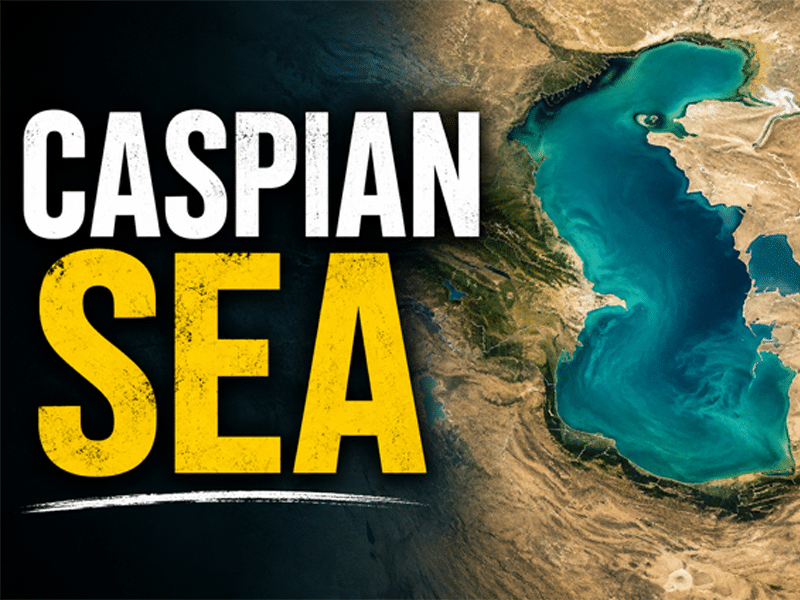
- Northern Flank: Caspian Sea — The Caspian is a landlocked sea bordered by Iran, Russia, Azerbaijan, Kazakhstan, and Turkmenistan. Iran’s Northern Fleet (4th Naval Region, based at Bandar Anzali) is the second largest after Russia’s Caspian Flotilla. While the Caspian supports energy swaps, regional trade, and military logistics, it lacks direct access to open oceans. Its economic and strategic volume is far lower than the Gulf, but its “internal” nature—shared with allied or neutral states—offers a measure of insulation from Western naval power.
Historically, Iran’s maritime strategy—under both the Shah and the Islamic Republic—centered on Gulf dominance, with oil exports as the “strategic center of gravity.” The Caspian was a secondary theater, focused on border security and energy reserves. However, the intensification of sanctions in the 2010s and beyond has prompted a gradual rebalancing.
- The Speculation: Why the Caspian Is Framed as Iran’s “Winning Card”
The notion of the Caspian as a “winning card” for Iran has gained traction in expert commentary, Iranian official rhetoric, and crisis-driven analysis—especially in the wake of the 2026 Gulf conflict. Several factors underpin this shift:
- Official Rhetoric and Northern Pivot: In November 2025, Foreign Minister Abbas Araghchi declared the Caspian “holds vital importance equal to the Persian Gulf,” highlighting deepening ties with northern neighbors and high-level meetings in Rasht. This signals a deliberate pivot to the north in Iran’s strategic calculus.
- Sanctions Evasion and Covert Corridors: The Caspian enables discreet military and economic cooperation with Russia, largely shielded from Western naval surveillance. It has become a “safe zone” for shadow-fleet oil swaps, drone and weapons transfers (notably Shahed UAV designs to Russia), and sanctioned goods moving through ports like Bandar Anzali to Astrakhan. Unlike the heavily monitored Gulf, the Caspian’s landlocked geography limits interdiction.
- Alternative Trade and Energy Routes:
- International North-South Transport Corridor (INSTC): This multimodal corridor links India to Russia and Europe via Iranian Caspian ports (Anzali, Amirabad), rail, and road networks—bypassing the Strait of Hormuz entirely. Traffic has surged amid Gulf disruptions.
- Trans-Caspian/Middle Corridor: Connecting Central Asia to Europe via the Caspian, Azerbaijan, Georgia, and Turkey, this route bypasses both Russia and southern maritime chokepoints. Cargo volumes have soared since 2022, and the 2026 war has further amplified its appeal as a “backup inland corridor.”
- North-South Economic Integration: Iran is investing in infrastructure to link Caspian ports with southern Gulf ports, creating logistics bases that serve littoral states and facilitate north-south trade.
- War-Driven Revaluation (2026 Context): The ongoing Gulf conflict has rendered southern routes hazardous, sharply elevating the Caspian’s strategic value. Analysts note that “routes through the Persian Gulf and the Strait of Hormuz have become dangerous, and the Caspian is turning into a backup inland corridor.” Air and sea traffic is increasingly diverted northward, and Central Asia’s southern corridors are under pressure. Israeli strikes on Bandar Anzali in March 2026 targeted this very axis, underscoring its growing relevance.
- Broader Geopolitical Leverage: Iran’s deepening ties with Russia (joint naval exercises, Caspian Flotilla coordination) and potential for gas swaps and pipelines position it as a regional hub. The “strategic energy ellipse” concept—encompassing both the Persian Gulf and Caspian—remains relevant, but sanctions have made the northern leg more actionable for Tehran.
- Supporting Literature and Analyses
- Recent Think-Tank and Policy Reports (2025–2026): Institutions like the Hudson Institute and AFPC highlight the Middle Corridor’s rise amid Hormuz risks, advocating for enhanced Caspian maritime security (notably for Azerbaijan and Kazakhstan). They frame the Caspian as a diversification tool against Iranian leverage and regional instability.
- Iranian and Regional Media: Coverage of INSTC activation, alternative routes (including Chabahar and Jask pipelines, and Caspian corridors), and official statements reinforce the narrative of the Caspian’s “equal importance.”
- Historical and Academic Context: Earlier works (RAND, CSIS, oil diplomacy studies) focused on Gulf oil as Iran’s core power but acknowledged the Caspian’s diversification potential under sanctions. Post-2022 analyses emphasize the Russia-Iran Caspian axis for sanctions evasion. A 2007 Elsevier paper on “inner-Caspian” energy corridors anticipated today’s north-south links.
- Speculative and Op-Ed Discourse: social media and commentary explicitly link the 2026 war to the Caspian’s “sharp” rise as Hormuz becomes unreliable. Videos and posts outline three alternative routes, with the Caspian/INSTC at the center.
While no single academic work uses the exact phrase “winning card,” the theme recurs in crisis analyses: the Caspian as a resilient northern flank versus the exposed southern chokepoint.
- Nuances, Limitations, and Counterarguments
- Scale and Capacity: Caspian trade volumes remain modest compared to Gulf oil tankers. The Caspian supplements, but does not replace, southern exports—especially since Iran’s major oil fields are in the south.
- Shared Sovereignty and Vulnerabilities: The 2018 Caspian Legal Status Treaty restricts full militarization. Russia dominates the naval balance; Azerbaijan and Kazakhstan hedge against a Moscow-Tehran axis. Israeli strikes have shown the Caspian is not immune to conflict.
- Economic and Technical Hurdles: Limited port infrastructure, shallow drafts, and bottlenecks (such as congestion at Aktau) constrain growth. Ambitious pipeline projects remain largely aspirational.
- Risks: Over-reliance on the Caspian could alienate Azerbaijan (an energy rival with Israeli ties) or invite great-power competition. Gulf leverage still deters direct invasion or total isolation.
- Multiple Angles: Militarily, the Caspian supports asymmetric deterrence through alliances; economically, it hedges against sanctions; diplomatically, it enables a “Look North” policy. However, Gulf control remains central to Iran’s global visibility and revenue.
- Edge Cases: In the event of a full Gulf blockade or war escalation, Caspian routes could sustain minimal oil/gas flows and military resupply. Conversely, if Russia-Iran relations sour, the northern flank’s utility would diminish.
- Implications
- For Iran: The Caspian validates a hedging strategy—using the Gulf for leverage and revenue, and the Caspian for resilience and sanctions survival. Success depends on sustained infrastructure investment and partnerships with Russia, China, and India.
- Regional and Global Impact: The rise of the Middle Corridor as a “Eurasian alternative” reduces Hormuz’s centrality and pressures Gulf monarchies. Central Asia gains new options but faces spillover risks from regional instability.
- U.S. and Western Policy: The situation highlights the need for counter-corridors (such as Trump Route for International Peace and Prosperity “TRIPP”) and increased Caspian security assistance to littoral states.
- Future Outlook: The 2026 war has operationalized the Caspian’s strategic potential. If Gulf tensions persist, Caspian leverage will likely grow—making it a durable “card,” though not a standalone solution.
Caspian Energy Reserves: Comprehensive Overview
The Caspian Sea region—encompassing offshore and adjacent onshore basins shared by Russia, Kazakhstan, Turkmenistan, Azerbaijan, and Iran—holds some of the world’s most significant hydrocarbon reserves outside the Middle East. While not matching the Persian Gulf’s supergiant fields in scale, the Caspian’s energy resources make it a critical player in global energy markets. Its development, however, is shaped by complex geography, geopolitics, infrastructure limitations, and evolving legal frameworks. Estimates of reserves vary due to differences in classification (proven vs. probable/possible), exploration maturity, and political reporting, but recent data (notably the U.S. Energy Information Administration’s 2025 Regional Analysis Brief and industry sources as of early 2026) provide a consistent and up-to-date picture.
Geological and Resource Structure
The Caspian basin is not a single, uniform reservoir but a patchwork of multiple geological formations spanning the North, Middle, and South Caspian. It features both substantial offshore deposits and major onshore fields in surrounding basins. This diversity underpins the region’s complex resource potential and development challenges.
Oil Reserves
- Proven (1P) *oil reserves for the broader Caspian region are estimated at 17–48 billion barrels. Offshore reserves form a substantial share in several countries. This is comparable to the historical reserves of the U.S. or North Sea, but far below the Persian Gulf’s hundreds of billions of barrels.
- Possible and additional recoverable resources could push the total as high as 233 billion barrels in some older assessments, though these figures are speculative and highly dependent on technological advances, market prices, and investment levels.
- Key fields: Kazakhstan’s Tengiz and Kashagan fields (both onshore and offshore) are dominant contributors, with Kashagan’s cumulative production approaching 1 billion barrels by late 2025.
Natural Gas Reserves
- Proven gas reserves are even more impressive, cited in the 170–400+ trillion cubic feet (Tcf) range for the region. Turkmenistan alone holds world-class volumes, ranking fifth globally, with the Galkynysh field estimated at ~27 trillion cubic meters (roughly 950+ Tcf).
- Possible resources exceed 290–300 Tcf in various assessments. Gas is often associated with oil in some areas but also occurs in giant standalone fields, especially in Turkmenistan and Azerbaijan.
- Offshore production is significant: In 2022, Caspian offshore output accounted for about 1% of global petroleum liquids and 3% of global gas supply, with Azerbaijan’s offshore fields providing nearly all its gas and most of its oil.
Country-by-Country Breakdown (Proven Reserves, ~January 2025)
- Kazakhstan: ~30 billion barrels oil (largest in the region); ~85 Tcf gas (mostly associated). Major fields: Tengiz (onshore, Caspian basin-linked), Kashagan (offshore, with 9–15.8 billion barrels recoverable). Offshore 2P reserves represent ~28% of national oil total.
- Azerbaijan: ~7 billion barrels oil; ~35–60 Tcf gas (offshore dominates at ~89–95% of 2P reserves). Key assets: Azeri-Chirag-Gunashli (ACG) complex (oil), Shah Deniz (gas, with recent capacity expansions).
- Turkmenistan: ~0.6 billion barrels oil; massive gas reserves (~265–400 Tcf proven, with Galkynysh alone potentially supporting 200 bcm/year exports for decades). Offshore share ~52% for oil 2P.
- Russia (Caspian sector): Significant but smaller relative to national totals; ~2.7 billion barrels oil (older data), with limited updates on recent offshore finds.
- Iran (Caspian sector): Modest compared to its Persian Gulf assets (~0.1 billion barrels proven oil, limited gas; Sardar-e Jangal field with ~1.4 Tcm gas potential, Chalous structure ~250 bcm). Iranian Caspian reserves are underexplored due to sanctions and legal disputes.
Undiscovered Resources and Upside Potential
The U.S. Geological Survey’s 2025 assessment estimates mean undiscovered, technically recoverable resources in the Greater Caspian area at ~34.3 billion barrels oil, ~320 Tcf gas, and ~7.4 billion barrels natural gas liquids. This highlights significant remaining upside, though with wide uncertainty ranges.
Comparison to the Persian Gulf
The Persian Gulf dwarfs the Caspian in proven oil reserves (hundreds of billions of barrels) and also holds vast gas resources. However, the Caspian offers important diversification, especially for gas and as a hedge against Gulf chokepoints. Its landlocked geography, however, amplifies transit dependencies, in contrast to the Gulf’s open-sea access.
Production Context and Recent Developments (2025–2026)
- Oil Production: Caspian upstream output is expected to reach record levels in 2026, led by Kazakhstan (Tengiz expansion targeting ~960 kb/d) and Azerbaijan’s efforts to counter ACG decline (new $6B platform). However, output faces pressures from maintenance, export route disruptions (e.g., drone attacks, sanctions), and field maturity.
- Gas Production: Azerbaijan exported over 25 bcm in 2025 via the Southern Gas Corridor (Shah Deniz is key); the Absheron field added new output. Turkmenistan is advancing Galkynysh phases, with potential for 80+ bcm/year, but faces export constraints.
- Trends: Renewed exploration (BP in Azeri waters, SOCAR-ExxonMobil deals), revived Trans-Caspian pipeline discussions amid Iran disruptions, and diversification into renewables (solar/wind in Azerbaijan and Kazakhstan) are shaping the region’s future. Kashagan’s 1B-barrel milestone and Shah Deniz expansions underscore ongoing investment.
Key Constraints and Considerations
- Data Variability: “Proven” reserves require commercial viability under current technology and prices. Many figures include probable (2P) or possible categories. Soviet-era data may inflate some estimates; independent audits (e.g., for Galkynysh) are crucial but infrequent.
- Offshore vs. Onshore: A high percentage of Azerbaijan’s and significant shares of other countries’ resources are offshore, raising technical, environmental, and legal challenges. The 2018 Caspian Legal Status Convention limits militarization but does not resolve all delimitation disputes.
- Geopolitical and Logistical Constraints: The landlocked Caspian means export reliance on vulnerable pipelines (CPC for Kazakh oil, Southern Gas Corridor for Azeri gas). Russia dominates some routes; Trans-Caspian pipelines remain aspirational due to environmental, legal, and political hurdles. Sanctions limit Iranian and Iran-linked development.
- Economic and Technical Factors: High sulfur content in some crudes (e.g., Tengiz), declining mature fields (ACG post-2010 peak), and significant capital expenditure needs for field extensions. Climate impacts (e.g., wind resources, sea levels) could indirectly affect operations.
- Environmental and Social Considerations: Growing renewable ambitions (e.g., green energy corridors linking Kazakhstan, Uzbekistan, and Azerbaijan to Europe via Caspian cables) could complement or compete with hydrocarbons. Environmental risks (e.g., sturgeon habitats, pollution) and local content requirements add complexity.
Implications for Iran
For Iran, Caspian reserves offer a northern hedge—enabling gas swaps and potential pipeline connections—but are minor compared to its southern Gulf assets. In scenarios of conflict or sanctions, limited Caspian access provides some diversification for trade and logistics but cannot replace Gulf volumes. Underexplored Iranian sectors could yield upside if conditions improve, but investment remains limited. In the event of a broader Gulf closure, Caspian routes might sustain limited flows via swaps or northern corridors, but volumes would not offset Gulf losses. Major new discoveries or advances in Trans-Caspian infrastructure could enhance the region’s strategic value, especially for transit nations like Iran and Azerbaijan. Conversely, prolonged low prices or technological stagnation could leave much of the Caspian’s resource base stranded.
In summary, the Caspian region plays a significant role in enhancing energy security, notably by supplying natural gas to Europe and Asia and supporting oil diversification efforts. Its greatest strength lies in serving as a complementary asset within a multipolar energy landscape, leveraging its strategic location and resilience to disruptions in southern transit chokepoints. However, its full potential is moderated by persistent development challenges and infrastructural constraints. The record production levels and new corridor projects anticipated in 2026 will further define the Caspian’s evolving importance amid shifting global dynamics. For a more comprehensive understanding, in-depth analysis of individual field economics or detailed pipeline modeling could uncover additional insights and complexities.
*1P oil reserves refer to proven reserves, which include both proved developed and proved undeveloped reserves. 2P reserves are the sum of 1P and probable reserves, while 3P reserves represent the total of 1P and 2P reserves.