Why the West Must Confront Political Islam with Decisive Resolve
The early 20th century, particularly in the aftermath of World War I, was a time of profound transformation marked by a mix of nostalgia, optimism, and upheaval. Europe, still basking in the intellectual legacies of the Renaissance and Enlightenment, was grappling with reconstruction amid economic volatility. Meanwhile, the United States emerged as a burgeoning superpower, championing a new world order rooted in free-market capitalism. This American vision not only fueled domestic prosperity but also catalyzed economic revival in war-torn Europe through initiatives like the Dawes Plan and later the Marshall Plan. However, the Great Depression of the 1930s rippled across the Atlantic, exacerbating hardships and forcing both regions to confront internal challenges. Despite these setbacks, European powers clung to their imperial ambitions, perpetuating colonial doctrines that sowed seeds of global discord. This stubborn adherence to expansionism, without reevaluating policies toward the developing world, bred political confusion and societal unrest.
In Europe, the interwar period was a cauldron of ideological ferment. The devastation of World War I had dismantled old empires, giving rise to fragile democracies, resurgent monarchies, and the insidious spread of Marxism. Economic disparities, including the prominent role of Jewish communities in finance and commerce, fueled antisemitic sentiments and populist backlash. This volatile environment proved fertile ground for radical movements: communism promised egalitarian utopias, while hyper-nationalism morphed into fascism. In Germany, economic humiliation from the Treaty of Versailles, hyperinflation, and unemployment paved the way for Adolf Hitler’s Nazi Party. Colonial exploitation in the Middle East and Africa further bolstered European economies, providing raw materials and markets that inadvertently strengthened aggressive regimes. Germany’s rapid industrialization, partly funded by colonial spoils and reparations loopholes, transformed it into a militaristic powerhouse. Hitler’s ascent caught Europe and America off guard, leading to the horrors of World War II—a conflict that reshaped the global order and claimed over 70 million lives.
The Allied victory in 1945 ushered in a brief era of détente and reconstruction. With economies rebuilt through American aid and infrastructure projects, the world experienced relative peace and unprecedented growth during the early postwar years. Yet, this stability was ephemeral. Territorial ambitions and ideological rivalries soon ignited the Cold War, pitting the capitalist West against the communist East. The Soviet Union, under leaders like Joseph Stalin, aggressively exported Marxism-Leninism to underdeveloped nations, using proxy wars, espionage, and alliances to expand its sphere of influence. This strategy challenged Western dominance, from Eastern Europe to Asia and Africa. China, meanwhile, adopted a more introspective path under Mao Zedong, focusing on internal consolidation amid economic struggles and population pressures.
The West’s response was multifaceted but often contradictory. European powers, including Britain and France, intensified colonial pursuits in Africa, the Middle East, and Southeast Asia, ostensibly to foster development while extracting resources for their own benefit. This neocolonialism sometimes incorporated superficial improvements in local living standards but prioritized metropolitan prosperity. The United States, eschewing direct territorial control, pursued a subtler form of influence: supporting nationalist leaders who aligned with American interests, even if it meant propping up dictators like Augusto Pinochet in Chile or Ferdinand Marcos in the Philippines. Unlike Europe’s emphasis on preserving traditional hierarchies, religious institutions, and cultural conservatism—often to maintain social order—America promoted liberal ideals such as individual freedoms, technological innovation, and democratic reforms. This approach yielded successes, like the economic miracles in South Korea and Taiwan, but also backfired by empowering middle classes that demanded genuine autonomy, leading to unrest and revolutions.
By contrast, European strategies often reinforced religious tolerance and pre-modern values to quell dissent, discouraging rapid modernization. The escalating East-West competition manifested in covert operations, proxy conflicts (e.g., the Korean and Vietnam Wars), and numerous coups that redrew political maps in favor of one bloc or the other. The Soviet Union was particularly adept at infiltrating Western spheres, fomenting communist parties and insurgencies in Latin America, Africa, and the Middle East. Paradoxically, flawed Western foreign policies—marked by short-term alliances with autocrats—created openings for these incursions, nurturing disillusioned middle classes receptive to egalitarian rhetoric, even as communism’s economic model proved unsustainable.
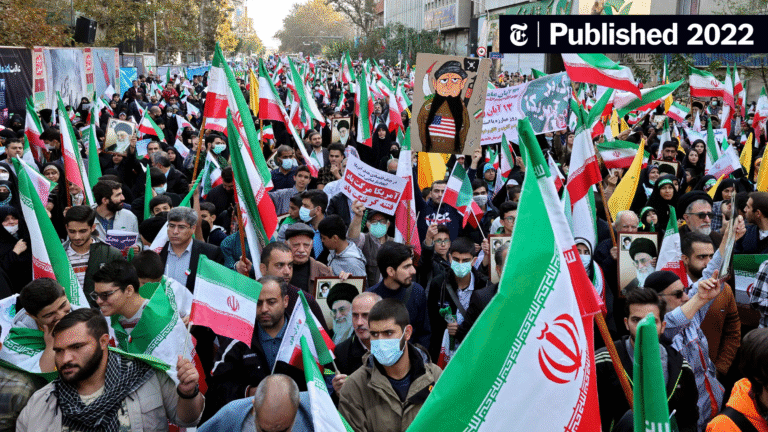
By the late 20th century, the West, led by a vibrant American democracy, pivoted toward a more idealistic foreign policy emphasizing peace, human rights, and democratic transitions. This shift, epitomized by the end of the Cold War and the Soviet Union’s collapse in 1991, aimed to foster global stability. However, entangled in historical guilt over past interventions, Western leaders—particularly in the U.S.—overreached. They overestimated the readiness of societies for rapid democratization, ignoring entrenched traditions, religious fundamentalism, and the lingering colonial agendas of allies like Britain and France. This naivety, coupled with a reluctance to challenge “primitive” cultural norms for fear of cultural imperialism, triggered backlashes. Brutal regimes emerged across the globe: Idi Amin’s genocidal rule in Uganda, military juntas in Pakistan and Latin America, and authoritarian strongmen in the Arab world. Perhaps the most egregious example was the 1979 Iranian Revolution, where President Jimmy Carter’s emphasis on human rights and détente inadvertently facilitated the rise of Ayatollah Khomeini’s theocratic regime. European powers, drawing on their colonial nostalgia, subtly encouraged such outcomes, misleading ambitious American policymakers.
Today, in 2026, the echoes of these missteps reverberate louder than ever. Nearly five decades after Iran’s revolution, the Ayatollah’s “product”—a fusion of religious fanaticism and state repression—has destabilized the Middle East, fueling proxy wars in Yemen, Syria, and Lebanon, and exporting terrorism worldwide. This “religious Nazism,” as it can aptly be termed, mirrors the unchecked rise of Hitler in the 1930s: built on unverifiable divine mandates, apocalyptic prophecies (such as the return of the Hidden Imam), and a doctrine of global conquest through violence. Plato’s warning in The Republic rings true—democracy’s excess and demagoguery can undermine itself. European nations, once again, obscure their complicity, while America grapples with policy paralysis.
The world stands at a precipice akin to 1940, facing an existential threat from political Islam’s “final solution”: a theocratic empire forged in blood, unhinged from rational accountability. Any hesitation or half-measures will only embolden these forces, allowing them to consolidate power and expand. The West must act decisively—not through reckless invasion, but with a coordinated strategy: robust sanctions, cyber defenses against propaganda, support for internal reformers, and targeted military interventions to dismantle terror networks. Drawing lessons from history, we must prioritize realism over idealism, confronting this ideology head-on before it engulfs more nations. Failure to do so risks repeating the tragedies of the past, where appeasement led to catastrophe. The time for numbness and ignorance is over; resolve must prevail