Failing a Nation: The Islamic Republic’s War on Women; American Skepticism and Western Complicity Through Silence
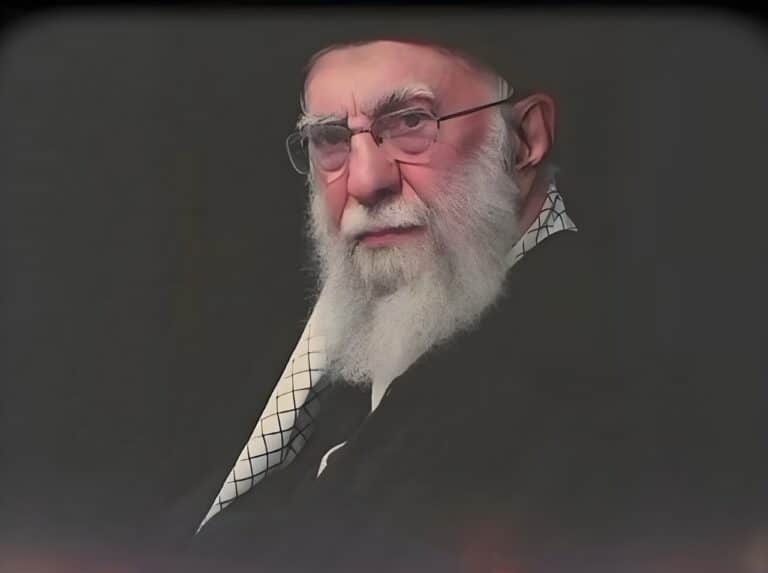
Since the establishment of the Islamic Republic of Iran, first under the leadership of Ayatollah Khomeini and later Ayatollah Khamenei, the regime has been responsible for widespread human rights abuses both within its borders and beyond. Over the past several decades, the Iranian authorities have systematically suppressed dissent, executing and imprisoning tens of thousands of political opponents, activists, and freedom fighters. Many of these individuals have faced vague and arbitrary charges such as “waging war against God” (moharebeh) or have been targeted for actions as simple as refusing to wear the hijab. These acts of repression are often justified in the name of religion, but in reality, they serve to silence any form of opposition to the regime’s rule.
Internationally, the Iranian government has also been implicated in supporting violence and instability in other countries, contributing to the suffering of countless people beyond its own borders. Despite the scale and severity of these atrocities, much of the Western world has chosen to turn a blind eye, prioritizing economic interests—such as trade, oil, and natural gas—over the defense of human rights and the well-being of the Iranian people. For nearly half a century, this policy of appeasement and indifference has allowed the regime to continue its campaign of oppression, leaving the Iranian nation to endure unimaginable hardship and loss while the world looks away.
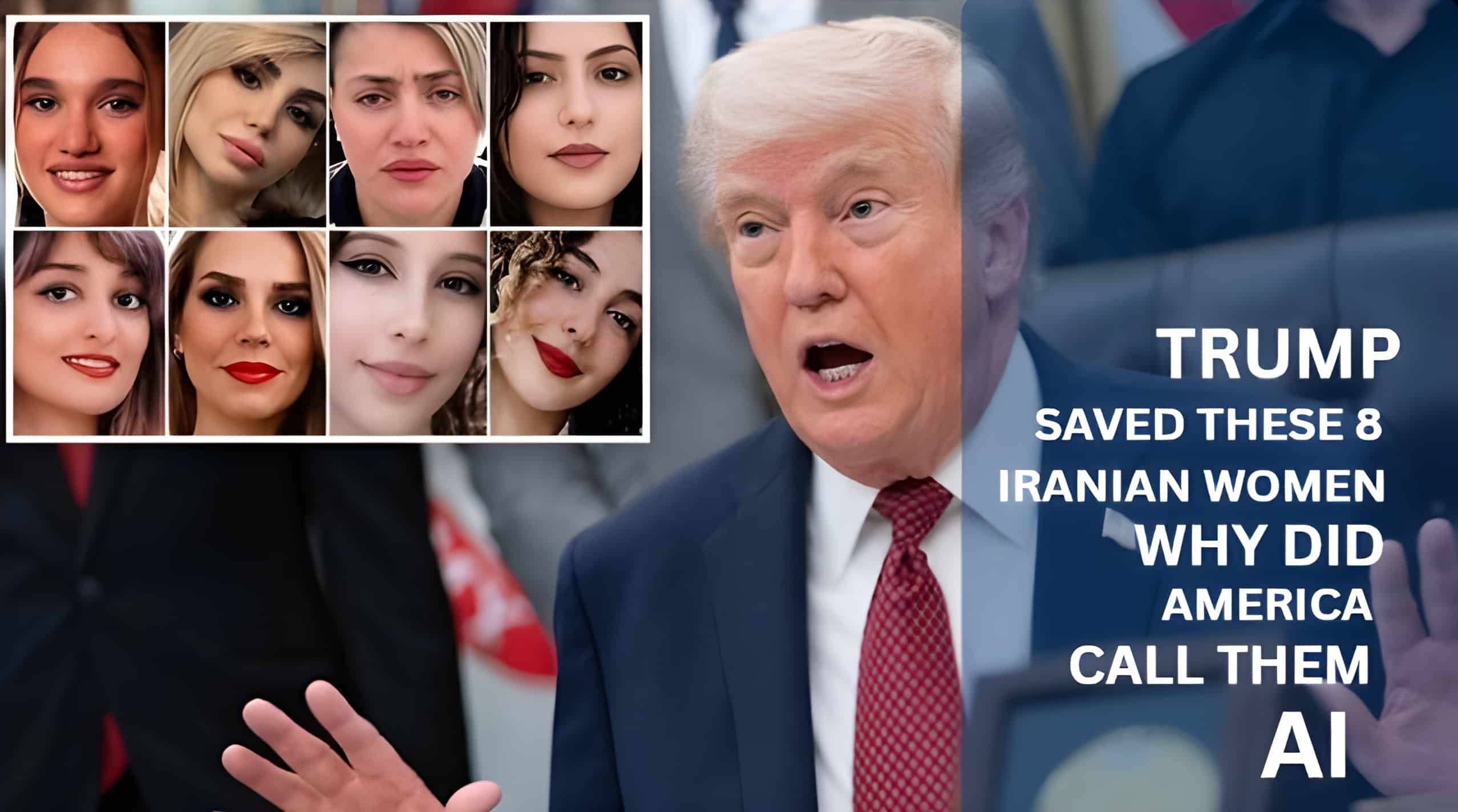
In late April 2026, U.S. President Donald Trump made a high-profile public appeal to the Iranian government, urging them to release or spare the lives of eight Iranian women reportedly facing imminent execution for their alleged participation in anti-regime protests. Trump characterized his intervention as both a humanitarian plea and a potential diplomatic overture, suggesting that such an act could serve as a “great start” to renewed U.S.-Iran negotiations amid ongoing regional tensions and fragile ceasefire discussions.
On April 21, Trump amplified the issue by reposting images and statements from Eyal Yakoby, a prominent American pro-Israel activist, who claimed that Iran was preparing to execute the women that very night. Trump addressed Iranian leaders directly on his Truth Social platform, writing: “To the Iranian leaders, who will soon be in negotiations with my representatives: I would greatly appreciate the release of these women… Please do them no harm! Would be a great start to our negotiations!!!” His message was widely circulated and drew significant international attention to the fate of the women.
The following day, April 22, Trump announced what he described as a diplomatic breakthrough: “Very good news! I have just been informed that the eight women protestors who were going to be executed tonight in Iran will no longer be killed. Four will be released immediately, and four will be sentenced to one month in prison.” He publicly thanked Iran’s leaders for “respecting my request,” framing the development as a direct result of his intervention and a positive signal for future talks.
However, Iran’s judiciary swiftly refuted Trump’s claims, dismissing them as “fake news” and asserting that the U.S. president had been “misled once again.” Iranian officials stated that no executions had been scheduled for the women in question, some of whom had already been released or were out on bail. They further clarified that any remaining charges would result in, at most, short prison sentences rather than capital punishment. Human rights organizations have confirmed that at least some of the women, including Bita Hemmati, had received death sentences, but the precise timing of any executions and the veracity of the claim that they were to be carried out “tonight” remain subjects of dispute and ongoing investigation.
Background: The January 2026 Anti-Regime Protests and Crackdown
In January 2026, Iran witnessed a new wave of anti-government protests that rapidly spread across the country. Demonstrators, including large numbers of women and youth, took to the streets in response to mounting political repression, economic hardship, and ongoing restrictions on civil liberties. Protesters reportedly engaged in a range of actions: chanting anti-regime slogans, throwing objects such as bottles, concrete blocks, and incendiary materials from rooftops—some of which resulted in injuries to security forces—disrupting public order, and disseminating what authorities labeled as “anti-regime propaganda.”
The Iranian government responded with a sweeping and severe crackdown. Security forces arrested thousands of individuals, with human rights organizations estimating that the death toll ranged from several hundred to potentially thousands. Many detainees faced expedited trials in revolutionary courts, often on grave charges such as moharebeh (“waging war against God”), “corruption on earth,” and “collusion against national security”—offenses that can carry the death penalty under Iranian law.
This latest unrest follows a recurring pattern of mass mobilization and state repression in Iran, echoing earlier movements such as the 2022 Mahsa Amini protests, which centered on women’s rights and opposition to the mandatory hijab. Exile and opposition groups—including the National Council of Resistance of Iran (NCRI), Norway-based Hengaw, and Iran Human Rights—have documented widespread abuses: torture, forced confessions broadcast on state television, and opaque judicial proceedings lacking due process. The Iranian government, meanwhile, has consistently portrayed these protests as foreign-instigated threats to national security, justifying its harsh response as necessary to preserve order.
The Eight Women: Profiles and Reported Cases
Information about the eight women facing prosecution or death sentences in connection with the January 2026 protests comes primarily from Iranian opposition groups, human rights organizations (such as NCRI, Lawfare Project, Hengaw, and Iran Human Rights in Oslo), activist social media posts, and independent media reports. Iranian authorities have released little public information, and court records remain inaccessible for independent verification. According to human rights monitors, two of the women—Golnaz Naraghi and Venus Hosseini Nejad—were already out on bail before former President Trump’s public appeal on their behalf.
- Bita Hemmati: Arrested during the January 8–9, 2026 protests in Tehran alongside her husband, Mohammadreza Majidi Asl, and several others. She is reportedly the first woman sentenced to death specifically for protest-related activities in this wave. Charges against her include participating in illegal gatherings, throwing objects from rooftops, using explosives and incendiary materials, damaging public property, and disrupting national security. Advocacy groups allege she was subjected to torture and forced to confess on state television. Her case has been widely reported by NCRI and other organizations.
- Diana Taherabadi (age 16): A minor detained in January 2026 for alleged involvement in the protests. Some reports indicate she faces charges such as “waging war against God,” raising grave concerns about the prosecution of juveniles.
- Mahboubeh Shabani (age 33): Arrested in February 2026, she is accused by rights groups of aiding injured protesters, a charge that has been used in the past to criminalize humanitarian aid during unrest.
- Ensieh Nejati (or Nejat): Identified as a Kurdish women’s rights activist and mother of a young child. Some sources report that she received a death sentence in early 2025, though details about the timing and specific charges vary.
- Ghazal Ghalandari: Named in activist compilations, but with limited additional biographical information publicly available.
- Golnaz Naraghi (age 37): An emergency medicine specialist reportedly arrested during the protests. According to Iran Human Rights, she has been out on bail since late March 2026.
- Venus Hossein Nejad (or Hosseini Nejad, age 28): Reportedly detained at her workplace and forced to confess on state television. She, too, has been out on bail since late March 2026.
- Panah Movahedi: Mentioned in activist reports as having been detained in connection with the protests, though fewer specific details about her case are publicly confirmed.
Claims circulating on social media that the photos of these women shared by activists such as Yakoby were AI-generated have been debunked by fact-checkers and Iran Human Rights (Oslo), which have confirmed the women’s real identities and the ongoing legal threats they face.
Iran’s judiciary, through its official outlet Mizan Online, asserted that none of the women referenced were ever slated for execution on the night in question. According to their statement, several of the women had already been released, while others were facing charges that did not carry the death penalty; any convictions, they emphasized, would result only in prison terms. Iranian officials characterized former President Trump’s intervention as being based on inaccurate or misleading information, suggesting that his involvement was unnecessary and misinformed.
In contrast, Trump publicly framed the outcome as a direct consequence of his personal diplomatic efforts, claiming credit for the immediate release of four women and the reduction of sentences for four others to one month in prison. He presented this as a significant diplomatic achievement, attributing the positive developments to his intervention.
Human rights organizations, however, caution that Iran has a documented pattern of denying or minimizing the existence of death sentences until the last possible moment. These groups report that, under international scrutiny or pressure, Iranian authorities sometimes commute death sentences while continuing to insist that no executions were ever imminent. Independent monitoring organizations based outside Iran have corroborated at least one of the reported death sentences—specifically that of Bita Hemmati—by tracking rulings from Iran’s revolutionary courts. This independent verification stands in contrast to the official narrative, highlighting the ongoing challenges in obtaining transparent and reliable information about the fate of political prisoners in Iran.
Moral Dimensions: Multiple Ethical Lenses
My concerns illuminate a profound ethical dilemma: Does external intervention—such as public diplomacy—affirm the dignity of those suffering under repression, or does partisan skepticism in the West inadvertently deepen their plight? This tension is not merely theoretical; it shapes real-world outcomes for those at risk.
Human Dignity and the Right to Life (Universalist/Deontological Perspective)
From a universalist and deontological standpoint, the Iranian regime’s use of the death penalty against protesters—often following torture, sham trials, and for acts of peaceful dissent—constitutes a grave violation of intrinsic human worth. The regime’s conflation of criticism with “waging war against God” has disproportionately targeted women, especially in the aftermath of Mahsa Amini’s death, and has led to a surge in secret executions. These clandestine killings not only rob families of closure and justice but also erode societal trust and instill widespread fear.
In this context, Western responses matter deeply. When Western actors exaggerate claims about “AI fakes” without rigorous factchecking, or reflexively dismiss credible reports due to partisan animus, they abdicate their moral responsibility. Such actions reduce real victims to mere pawns in domestic political battles, obscuring atrocities and weakening international pressure that could save lives. Human rights are not a partisan issue; to ignore them out of political convenience—whether due to antipathy toward Trump or any other figure—is to prioritize ideology over empathy and evidence. This undermines the Iranian people’s right to international solidarity and support.
From a consequentialist angle, the outcomes of public pressure are paramount. There is evidence that high-profile interventions—such as Trump’s public appeals—may have contributed to temporary halts in executions, potentially saving lives, as some monitors and observers have cautiously acknowledged. Historically, international attention has occasionally led to commutations or delays in executions. However, the regime’s pattern of secret reversals and continued crackdowns means that such gains are often fragile and temporary.
If domestic polarization in the U.S. leads to widespread skepticism—dismissing all reports as “AI fakes” simply because of their association with a controversial figure—the net effect is a reduction in future pressure. This emboldens the regime, normalizes atrocities, and demoralizes Iranians who look to the West for support. The insight into the blinding effect of partisan skepticism is vital: it can render human rights abuses invisible, erode support for effective intervention, and send a message to both victims and perpetrators that Western solidarity cannot be counted on.
The Iranian regime and its affiliates actively exploit the proliferation of AI-generated content to sow doubt and confusion. When Western commentators—especially those with significant platforms—amplify unverified claims about AI fakes without due diligence, they do more than fail at factchecking; they become unwitting participants in the regime’s information warfare. The motivation—whether rooted in opposition to Trump or other political figures—does not mitigate the harm. Turning a human rights crisis into a domestic political contest erodes global trust in information and undermines the pursuit of truth.
It is important to acknowledge that not every skeptic is acting in bad faith; the genuine flood of AI-generated misinformation in coverage of Iran’s protests and strikes makes caution understandable. However, when credible evidence from exile monitors, families, and independent organizations contradicts the narrative of doubt, continued denial becomes morally culpable. The ethical imperative is to seek truth rigorously and to avoid amplifying narratives that serve authoritarian interests.
The failure to support Iranians resisting an oppressive regime implicates bystanders in the perpetuation of injustice. While external intervention alone cannot guarantee regime change, sustained international attention to abuses—executions, torture, gender apartheid—carries significant moral weight. Partisan blindness and the instrumentalization of suffering for political ends echo historical failures to respond to authoritarian crackdowns elsewhere. Exaggerating or dismissing atrocities for domestic advantage undermines collective moral agency and betrays those who most need solidarity.
In sum, the ethical response to Iran’s repression demands a multi-faceted approach: unwavering commitment to human dignity, pragmatic attention to outcomes, rigorous truth-seeking, and a refusal to let partisan interests override the universal imperative to stand with the oppressed.