Skip to content

America
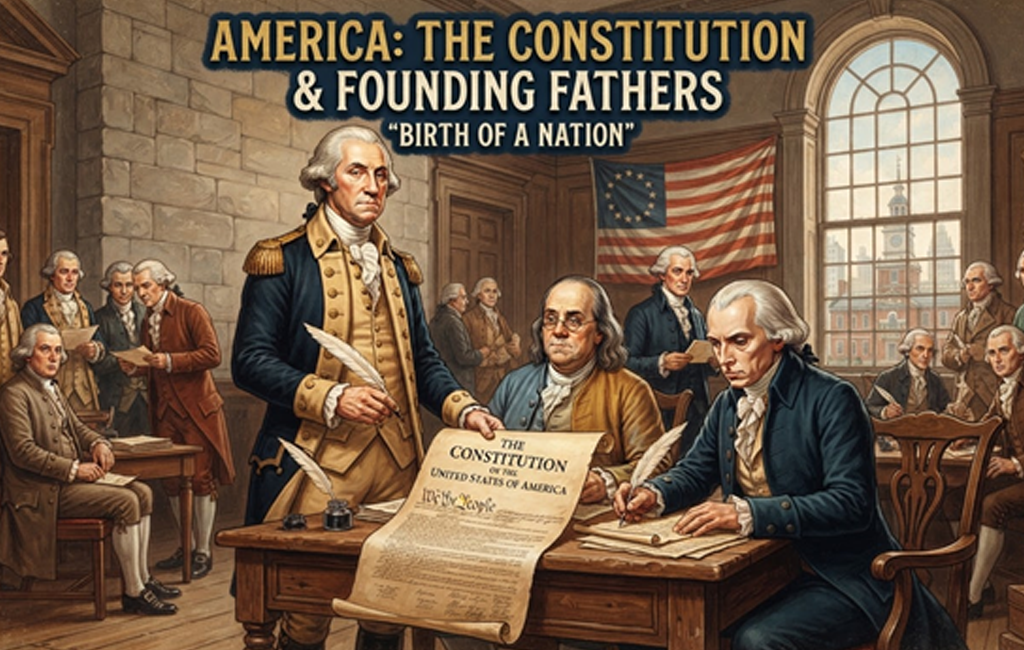
The concept of America—and the dream of coming to America—has captivated people worldwide since the founding of the nation. From its inception, the United States has stood as a beacon of hope, promising sustained freedom, opportunity, and citizenship under a constitution crafted by visionary leaders. This Constitution, while rooted in enduring principles, was designed to be dynamic and adaptable, evolving to meet the challenges and aspirations of each new generation. It is a living document, open to refinement and modernization, yet always within the framework of its original intent: to secure liberty and justice for all.
American-born citizens are raised within this constitutional tradition, absorbing its values and responsibilities from an early age. Naturalized citizens, meanwhile, take a solemn oath to uphold and defend the Constitution, pledging their allegiance to the ideals of freedom, equality, and civic participation. Both groups are united by a shared commitment to sustaining and advancing the American experiment, ensuring that future generations can enjoy the rights and opportunities that define a productive and meaningful life in the United States.
This shared commitment provides the context for examining the challenges discussed below.
Over the past 250 years, the resilience of American democracy has been tested repeatedly by foreign adversaries employing a range of tactics—from direct military confrontation to more subtle forms of influence and subversion. While past attempts to undermine the nation often failed through overt aggression, contemporary threats increasingly take the form of ideological infiltration and cultural manipulation, targeting the youth and seeking to erode the foundational promise of America from within.
Representative Omar spent her formative years in a country that lacked democratic institutions, offering her little opportunity to experience the freedoms and responsibilities associated with true citizenship. For the first 17 or 18 years of her life, she lived under regimes where democracy and personal liberty were scarce. In contrast, Mayor Mamdani became a U.S. citizen at the age of 7 but was raised by an Indian mother and a Ugandan father. It is reasonable to assume that both of his parents grew up in societies vastly different from the United States, with distinct perspectives on democracy and civil liberties.
The political landscapes of Somalia, Uganda, and India are shaped by complex histories marked by colonialism, conflict, and the challenges of nation-building. These countries have experienced historical trauma, fragile state institutions, and the influence of shifting geopolitical interests from global superpowers. Such backgrounds inevitably shape the worldviews of individuals like Representative Omar and Mayor Mamdani, influencing their understanding of democracy, governance, and the meaning of freedom in a society like the United States.
For naturalized citizens who hold elected office, the tools available to address concerns about loyalty, conduct, or policy positions are those provided by the constitutional republic itself: free and fair elections, transparent legislative processes, robust enforcement of criminal and civil laws where evidence of fraud or misconduct exists, and policy reforms designed to prevent future abuses. Notable examples include Ilhan Omar, a Somali-born refugee who became a U.S. citizen in 2000, and Zohran Mamdani, a Ugandan-born, Indian-descended legislator who naturalized in 2018. Both have exercised their rights as citizens and public officials, sometimes attracting controversy for their political views or personal histories. As of October 2026, Omar faced renewed federal scrutiny over alleged misstatements in her immigration documents, with potential implications for her citizenship status. She has denied any wrongdoing, and previous investigations have not resulted in actionable findings.
Within this constitutional framework, the discussion turns to the scope and limits of specific legal remedies.
It is important to clarify that denaturalization—the legal process of revoking citizenship—is a narrowly defined remedy. It requires clear and convincing evidence of material fraud or willful misrepresentation during the naturalization process and can only proceed through civil litigation or criminal conviction. Denaturalization is not a tool for punishing unpopular opinions, political dissent, or dual loyalties. The U.S. Constitution sets explicit requirements for congressional office—age, length of citizenship, and residency—but does not prohibit dual citizenship. While legislative proposals to bar dual or naturalized citizens from office have been introduced, none have become law. Expulsion of a sitting member of Congress requires a two-thirds majority vote, and ultimately, voters retain the power to remove officials at the ballot box. The First Amendment robustly protects free speech, including controversial or unpopular advocacy, so long as it does not cross into criminal conduct or material support for terrorism.
Beyond citizenship proceedings, the discussion also considers other mechanisms of democratic accountability.
Concerns about “clans,” networks, or foreign influence are addressed through established democratic mechanisms: political opposition, primary challenges, transparency in campaign finance, enforcement of foreign-agent registration laws, and scrutiny of ties to foreign governments or designated organizations. Media and academic debates over ideology or voting records should be engaged on their merits, not suppressed through institutional censorship. Allegations of immigration fraud, marriage fraud, or other crimes must be adjudicated in courts of law, with due process and the presumption of innocence—not by administrative fiat or public pressure.
The next distinction is between responses to existing conduct and policies intended to address future concerns.
Looking forward, the most effective policy tools for safeguarding American democracy and promoting successful integration remain those that operate prospectively: selective immigration standards that prioritize skills, language proficiency, and cultural compatibility; strict limits on chain migration; vigilant enforcement against fraud; and the elimination of state-supported parallel institutions that undermine national cohesion. For those already within the system—including elected officials—the primary constraints are the rule of law and the outcomes of democratic elections, not retroactive mass denaturalization. Historically, successful assimilation and the maintenance of national identity have depended on sustained selection, cultural confidence, and the willingness of political majorities to enforce clear boundaries. Where such majorities are absent, the resulting policies and outcomes reflect the prevailing social consensus.
Now the question arises: What should we, the American people, do about individuals like Mamdani and Omar—whether they are serving in Congress, teaching in colleges and universities, or simply living as ordinary citizens—who have come to America not to contribute to its betterment, but to pursue a misguided vision of an ideal society, a false paradise promoted by the so-called red-green alliances?
The following points turn from legal and policy mechanisms to civic participation.
First, it is important to uphold and defend the core values that define America: freedom of speech, democracy, and respect for the rule of law. We must remain vigilant and ensure that these values are not undermined by those who seek to impose ideologies that are incompatible with the principles of liberty and justice for all.
Second, we should encourage open and honest debate in our institutions—be they Congress, universities, or public forums. Challenging ideas and engaging in civil discourse are essential to preserving a healthy democracy. We must not shy away from confronting narratives that distort the truth or promote division, but do so with facts, reason, and respect for differing viewpoints.
Third, it is crucial to promote civic education and awareness among all Americans. By understanding our history, our Constitution, and the responsibilities of citizenship, we can better recognize and resist attempts to reshape the nation according to unrealistic or harmful ideologies.
Finally, we should foster a spirit of unity and inclusion, welcoming those who genuinely wish to contribute to the American dream while standing firm against those who seek to exploit our openness for divisive or destructive ends. Through vigilance, education, and engagement, we can ensure that America remains a beacon of hope and opportunity for all.