Skip to content
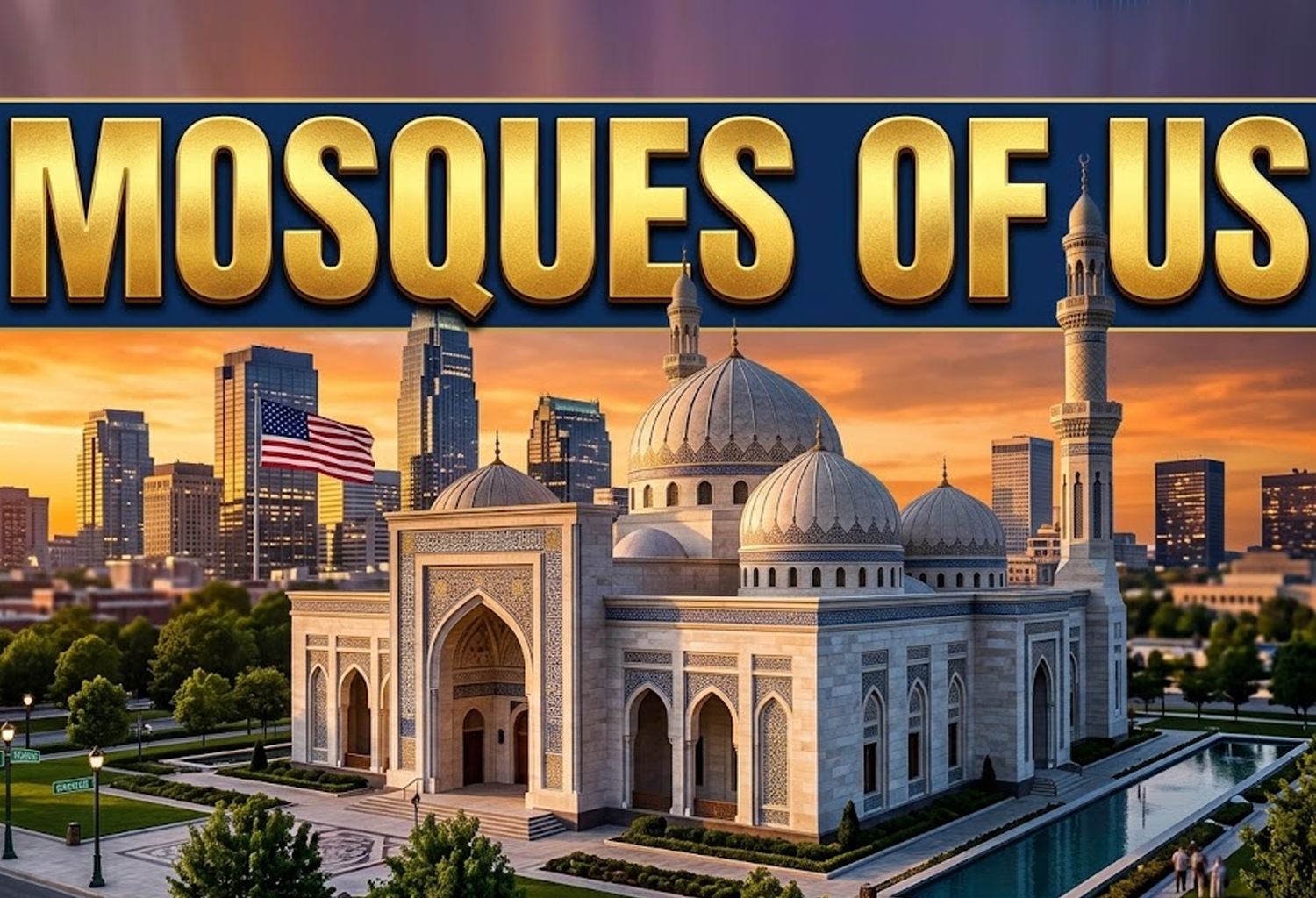
U.S. Mosque Growth in Context: Demographics, Institutions, Data Limits, and Security Risks

This document examines the growth of organized mosques in the United States, distinguishes surveyed counts from broader directory estimates, and argues that the trend is best explained by post-1965 immigration, local community formation, suburban expansion, and institutional catch-up rather than by a single nationwide system.
Recent studies, including the U.S. Mosque Survey conducted by Ihsan Bagby in collaboration with ISPU and the Hartford Institute, provide the most reliable counts of organized mosques in the United States.[1] These surveys count mosques that hold Friday prayer and control their own space, while excluding informal prayer rooms, university musallas, and unverified listings.[2] Because Friday prayer is a central religious gathering, the surveys focus on measurable organizational and demographic features rather than on the content or intent of sermons.


The discussion proceeds in six parts. It first explains the reliability and limits of mosque-count data, then traces the historical growth pattern since the 1960s. It then examines demographic and institutional drivers, the internal diversity of U.S. mosques, the relationship between mosque counts and Muslim population estimates, and the separate question of security and policy risk.
Data Sources and Count Limitations
The U.S. Mosque Survey reports the following counts of organized mosques:[1]
- 1984: 598
- 1994: 962
- 2000: 1,209
- 2011: 2,106
- 2020: 2,769

No equivalent national survey has been published since 2020. More recent commercial directories and lead-generation sites list between 3,400 and 4,500 entries labeled as mosques, but those totals often include Islamic centers, storefronts, smaller prayer spaces, and possible duplicates. If the growth rate observed in prior survey periods continued, a plausible 2026 estimate for organized mosques would be around 3,000-3,200, with 3,150 falling within that range. That figure should be treated as an interpolation, not as an official surveyed count.
For the 1960s, the historical picture is less clear because no comparable national survey existed. Academic estimates suggest that the number of established mosques in the early-to-mid 1960s ranged from a few dozen to under 100, with growth accelerating after the passage of the 1965 Immigration and Nationality Act.[3] Broader claims, such as estimates of more than 230 mosques by 1960, likely depend on wider definitions that included rented halls, prayer spaces, and Nation of Islam temples. The frequently cited figure of 20 mosques in the 1960s should therefore be treated as a rounded low-end estimate rather than a documented census.
The 2011 U.S. Mosque Survey found that only about 5% of existing mosques were founded before 1960, and another 6% in the 1960s, indicating that the vast majority of American mosques were established from the 1970s onward.[1]
Drivers of Mosque Growth
The rise in the number of mosques in the United States reflects several overlapping functions: worship, religious education, community services, and civic organization. Some mosques and Islamic centers have received financial or institutional support from foreign governments, individuals, or private organizations with international ties, but U.S. mosques vary widely in funding, governance, and local control. This variation makes it important to distinguish documented funding relationships from broader claims about centralized planning.
The key drivers behind the increasing number of mosques include:
- The 1965 Hart-Celler Act, which ended national-origin quotas and was followed by family reunification, student visas, and later refugee flows from South Asia, the Middle East, Africa, and other regions.[3]
- A younger age profile and modest fertility differences among some Muslim communities, contributing to natural population growth without serving as the main driver of mosque expansion.[4]
- Conversions among African Americans, initially through the Nation of Islam and later through Sunni Muslim communities.
- The suburbanization and expansion of existing Muslim communities, leading to the establishment of new mosques in growing neighborhoods.
- Documented cases of foreign or transnational support for mosque construction and religious education, alongside local fundraising and community-led institution building.
Today, mosques can be found in every state, with the highest concentrations in New York, California, Texas, Florida, Illinois, New Jersey, and Michigan. However, the distribution is not as uniform as some maps suggest; many states in the Mountain West and Plains regions have only a handful of mosques, while urban and suburban areas in the aforementioned states host the majority.

Estimates of the U.S. Muslim population generally range from 3.5 to 4.5 million people, representing about 1–1.4% of the total U.S. population.[4][5]
During the same decades, other immigrant religious institutions also expanded significantly, including Hindu temples, Sikh gurdwaras, Buddhist centers, and evangelical churches serving immigrant communities.
The definition of mosque is flexible. It can refer to a purpose-built structure with traditional architecture, a converted storefront, a university prayer room, or a multipurpose community center; broader definitions naturally produce higher counts.
Graphics and statistics about mosque growth are often shared in both alarmist and celebratory contexts. In both cases, the numbers may be treated as precise even though they are estimates shaped by varying definitions and data sources.
The general trend is accurate: there were very few organized mosques in the mid-1960s, compared with several thousand today. However, specific figures such as 20 mosques then and 3,150 now, as well as maps implying national saturation, should be interpreted with caution.
These figures are best understood as rough estimates rather than precise counts, and similar patterns of institutional growth appear across many immigrant religious communities in the United States.
Institutional Diversity
After establishing the scale and pace of mosque growth, the next question is what kinds of institutions these mosques are. The evidence points not to a single national structure, but to a diverse field of local congregations shaped by ethnicity, sectarian identity, neighborhood settlement patterns, and loose organizational networks.
U.S. mosques and Islamic centers do not operate as a single, unified denomination. Instead, most are independent local congregations, each with its own governance and character. Understanding mosque affiliation in the U.S. requires looking at three overlapping layers:
- Ethnic or national origin of the congregation
- Sectarian identity (Sunni vs. Shi’a)
- Loose national networks rather than formal membership or denominational structures
The most comprehensive data comes from the 2020 U.S. Mosque Survey (Ihsan Bagby / ISPU / Hartford Institute), which identified 2,769 mainstream mosques—defined as those that hold Friday prayer and control their own space.[2] This count excludes Nation of Islam temples, Ahmadiyya, Ismaili, and similar groups.
Ethnic and national composition in 2020
This survey provides the clearest published breakdown of mosque attendees by ethnic or national background:[2]
- South Asian (Pakistani, Indian, Bangladeshi, Afghan): 39%
- Arab: 28%
- African American: 16%
- Sub-Saharan African: 8%
- Other (Turkish, Iranian, European, White American, Southeast Asian, etc.): 9%

Only about 4% of mosques are nearly mono-ethnic (90%+ one group). However, roughly three-quarters have one group that is clearly dominant, even if others are present. South Asian–dominated mosques are the largest single category, making up 36% of all mosques. African American–dominated mosques have declined from 23% in 2010 to 13% in 2020.[6]
Sectarian breakdown of mainstream mosques
- Sunni: 93–94% (~2,589 mosques)
- Shiʿa: 6–6.5% (~166–180 mosques)

Shiʿa congregations tend to be smaller, younger as institutions, and more often led by Arab or South Asian communities. Iranian-dominated Shiʿa mosques have declined sharply in recent years.
Organizational networks, not formal denominations
There is no U.S. equivalent to a Catholic diocese or a Southern Baptist Convention. Governance is almost always local, typically involving a board and an imam. National organizations function as networks, training sources, or advocacy groups, rather than as governing bodies:[2]
- ISNA (Islamic Society of North America): The largest umbrella organization; many immigrant mosques participate in its conventions and programs.
- ICNA (Islamic Circle of North America): South Asian rooted, with a strong focus on dawah and social services.
- MAS (Muslim American Society): A national Muslim organization involved in religious education, civic engagement, and community programming; some observers associate parts of its history or organizing style with Muslim Brotherhood influence.
- CAIR (Council on American-Islamic Relations): Primarily a civil rights and advocacy group; not a mosque-governing body.
- Independent / Unaffiliated: The majority of mosques operate independently of any national network.
The 2020 survey itself was co-sponsored by ISNA, ICNA’s Council for Social Justice, CAIR, and others, illustrating how these networks overlap with mosque leadership even as most mosques remain legally and organizationally independent.[2]
Theological approaches in the 2020 report
- The strict single-madhhab (school of law) approach has dropped to 4%.
- “Follow the great scholars of the past” has risen to 39%.
- Self-identified Salafi mosques make up less than 1%.
Most mosque leaders now describe their approach as a blend of “contextual” and “traditional,” reflecting both adaptation to the American context and respect for classical Islamic scholarship.[1]
Population Growth and Mosque Growth
Pew’s 2017 survey of U.S. Muslims found that Muslim adults ages 40-59 reported an average of 2.4 children, compared with 2.1 for Americans overall. This represents a modest fertility difference, not a dramatic baby boom. The 2023-24 Religious Landscape Study does not provide a separate total fertility rate for Muslims, but it does show that Muslims are younger as a group and more likely to have minor children at home: 42% compared with 27% of Christians. That pattern is mainly a function of age structure, not unusually large, completed family size.
If fertility alone were driving growth, the Muslim population would increase by only a few percent per decade. In reality, mosque counts and population estimates have risen much faster. Pew’s own reconstructions show:[4]
- 2007: approximately 2.35 million Muslims of all ages
- 2011: approximately 2.75 million
- 2017: approximately 3.45 million

This equates to an increase of about 100,000 people per year. Pew attributes this growth to a combination of immigration and higher fertility, with religious conversion having little net effect (about as many people leave Islam as join). In 2017, about 58% of Muslim adults in the U.S. were foreign-born. Over the same period, the number of lawful permanent residents arriving from Muslim-majority countries also rose sharply.[4]
Authors of mosque surveys report similar findings: new mosque construction tends to follow the formation of new immigrant communities rather than higher birth rates within existing congregations. In other words, immigration—not unusually high fertility or conversion—is the primary engine of Muslim population growth in the United States. Between 2010 and 2020, the number of mosques increased by 31%, while Pew-style estimates of the Muslim population grew by roughly 25% to 50%, depending on the years chosen. The 2020 Religion Census reported a larger increase in adherents, from about 2.6 million to 4.45 million, but that figure reflects both real growth and methodological changes.
Despite the rise in mosque numbers, the number of people per mosque did not surge. Earlier counts showed roughly 1,600–2,000 associated Muslims per mosque. By 2020, that figure had dropped to about 1,250–1,600, depending on whether Pew population estimates or the Religion Census adherent count is used. Bagby’s 2020 Eid-linked average was 1,445 per mosque.[6] This pattern suggests that mosque growth reflects institutional catch-up and community splitting rather than artificial inflation of the Muslim population.
Local Concentration and Enclaves
PRRI’s county-level research finds that Muslims make up about 2% of the population in major cities, 1% in urban suburbs, and less than 0.5% in exurbs and middle suburbs.[7] The highest concentrations are in places like Queens, parts of metro Detroit, North Jersey, Philadelphia, and the D.C. suburbs. The distribution is far from uniform; about half of U.S. Muslims live in urban areas, nearly half in suburbs, and only a tiny share in rural areas.

This pattern aligns with what one would expect from post-1965 immigration: newcomers often settle where jobs, co-ethnic communities, halal infrastructure, and existing mosques are already present. Real enclaves have formed in places such as Dearborn, Hamtramck, Paterson, parts of Minneapolis-St. Paul, and certain neighborhoods in Queens and Brooklyn. However, an enclave is not the same as a nationwide organizational system. Treating the U.S. Muslim presence as evenly spread across the country obscures the real story: local concentration and institutional intensity, not uniform national distribution.
Overall, the growth in U.S. mosques and the Muslim population is substantial but locally concentrated. The available data point to post-1965 immigration, community formation, suburban expansion, and institutional catch-up as the main drivers.[3] [1] They do not support treating mosque growth as either a precise national count or a uniform spread across every county.[7]
Security and Policy Implications
The historical and demographic evidence explains why mosque numbers have grown, but it does not by itself answer a separate policy question: how should the United States assess security risks without treating ordinary religious life as suspicious? That question requires distinguishing lawful religious institutions from documented extremist activity and distinguishing broad demographic change from specific threats.
One final, difficult question remains: given the global record of Islamist extremist violence, the rapid growth of U.S. mosques, and a small number of attacks or disrupted plots, should America be concerned? The answer is yes, but the concern should be specific rather than generalized. It should focus on documented extremist networks, foreign influence, incitement, material support, and security failures—not on ordinary Muslim worshippers or mosque attendance as such. Islamist terrorism remains a serious form of organized ideological violence, but its effects are unevenly distributed, and the U.S. risk profile differs from that of regions such as Pakistan, the Sahel, and Nigeria.[8]
In the West, terrorism deaths rose in 2025, and the United States experienced a vehicle attack in New Orleans that killed 14 people, along with other incidents and disrupted plots.[9] [10] According to the ODNI (Office of the Director of National Intelligence), there were at least three Islamist attacks on U.S. soil in 2025 and at least fifteen disrupted plots, about half of which involved some online contact with foreign groups.[8] These figures suggest a threat profile marked by low frequency, potentially high impact, and a mix of inspired and networked activity rather than routine centralized direction.
Concern is justified when particular institutions, funders, clergy, or networks show documented ties to extremist ideology, foreign direction, incitement, or material support.[8] It is not justified by mosque growth alone. The responsible conclusion is that density, funding sources, leadership networks, and doctrine may create legitimate areas for law-enforcement and intelligence attention when evidence warrants it, but broad suspicion of Muslim communities would be both unjust and counterproductive.
The constitutional response is straightforward: enforce immigration and visa vetting; monitor financial flows under FARA and charity laws; prosecute incitement and material support; protect apostates, women who leave coercive environments, and critics of religious authorities as a matter of civil rights; halt federal grants to institutions with documented extremist ties; and maintain intelligence on foreign-trained clergy where there is a lawful predicate.[11] None of this requires treating every worshipper as suspect or conducting a theological inquisition.
Taken together, the evidence supports a measured conclusion. Mosque growth in the United States is real, substantial, and concentrated in particular metropolitan and suburban communities; it is best explained by immigration, community formation, diversity within Muslim institutions, and ordinary institutional development. Security concerns should therefore be addressed through evidence-based, constitutionally bounded tools focused on specific risks, not through broad conclusions drawn from mosque counts alone.
Bibliography
- Institute for Social Policy and Understanding. “U.S. Mosque Survey.” https://ispu.org/research-areas/mosque-survey/
- Institute for Social Policy and Understanding. “Report 1: Mosque Survey 2020.” https://ispu.org/reports-and-analysis/report-1-mosque-survey-2020/
- Immigration History. “Hart-Celler Act.” https://immigrationhistory.org/item/hart-celler-act/
- Pew Research Center. “Demographic Portrait of Muslim Americans.” https://www.pewresearch.org/religion/2017/07/26/demographic-portrait-of-muslim-americans/
- S. Religion Census. “Muslim Estimate.” https://usreligioncensus.org/node/1638
- Institute for Social Policy and Understanding / U.S. Mosque Study 2020. “Report 1: Key Findings.” https://iiit.org/wp-content/uploads/US-Mosque-Study-2020_-Report-1-Key-Findings-1-1.pdf
- Public Religion Research Institute. “Census of American Religion.” https://prri.org/research/census-2023-american-religion/
- Office of the Director of National Intelligence. “Annual Threat Assessment of the U.S. Intelligence Community.” March 2025. https://archive.dni.gov/files/ODNI/documents/assessments/ATA-2025-Unclassified-Report.pdf
- Institute for Strategic Dialogue. “The 2025 Annual Review of Plots and Attacks Across the US.” March 10, 2026. https://www.isdglobal.org/publication/2025-annual-review-plots-attacks-across-us/
- Federal Bureau of Investigation. “FBI Releases Investigative Update in Bourbon Street Attack.” January 14, 2025. https://www.fbi.gov/contact-us/field-offices/neworleans/news/fbi-releases-investigative-update-in-bourbon-street-attack
- S. Department of Justice. “Foreign Agents Registration Act.” https://www.justice.gov/nsd-fara