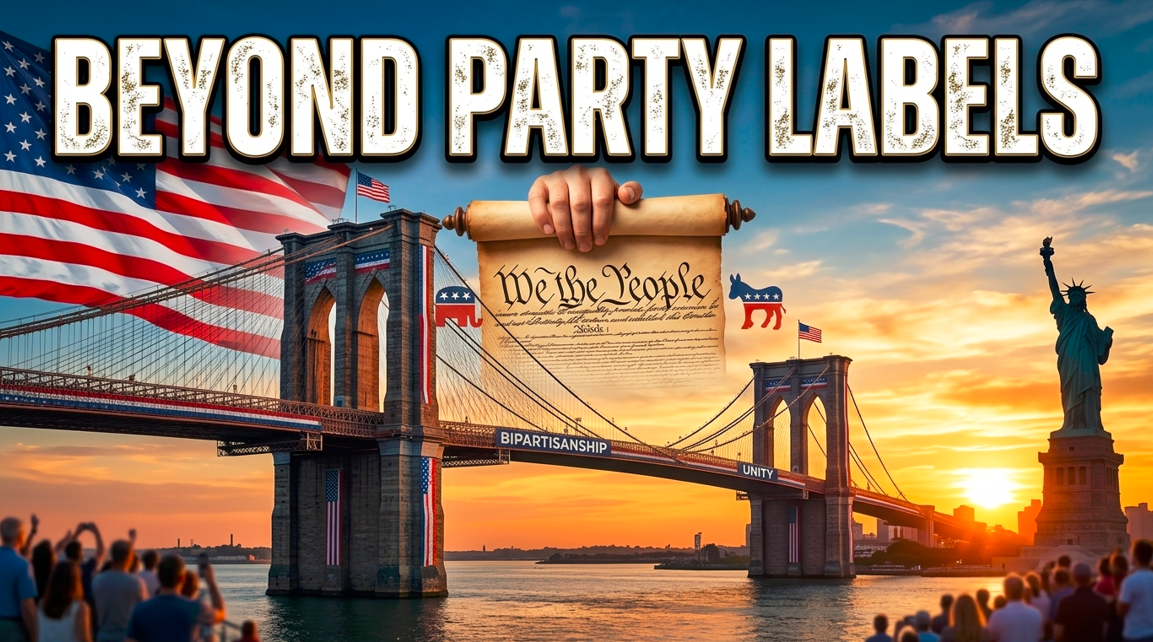
Beyond Party Labels: Progressive Influence and the Democratic Party
American democracy has always been shaped by the tension between enduring constitutional principles and changing political movements. Understanding the present therefore requires both historical context and careful attention to how particular factions, organizations, and public figures influence a party’s priorities without necessarily representing the party as a whole. That distinction guides the discussion that follows, beginning with democracy’s recurring vulnerability to corruption and demagoguery.
Since its emergence in ancient Greece, democracy has followed a tumultuous and evolving path. It has been criticized for its vulnerability to corruption and demagoguery, yet celebrated for its capacity to self-correct. American democracy reflects this pattern: the nation has endured civil war, Reconstruction, and recurring political crises while adapting its institutions to new challenges. The present era belongs within that continuing history.
The Founders anticipated that a young republic would face recurring crises, factional conflict, and abuses of power. They therefore created constitutional mechanisms intended to protect the nation’s core principles, although those safeguards have often required public vigilance and political sacrifice to remain effective. The present moment should be evaluated within that historical pattern: American institutions are stronger than they were at the nation’s founding, but demagoguery and corruption can still weaken democratic norms when citizens and leaders fail to resist them.
The responsibility for preserving democratic institutions ultimately rests with the American people. As earlier generations confronted civil conflict, institutional failure, and political corruption, the present generation must evaluate current movements by their conduct, their policies, and their respect for constitutional norms. Renewal begins with a clear distinction between legitimate disagreement and behavior that undermines democratic government.
This essay examines how ideological change within the progressive wing has affected the Democratic Party’s priorities, rhetoric, and public image. It distinguishes the party’s official positions from the views of particular factions, organizations, and elected officials, and evaluates those developments against the broader demands of democratic governance.
Influence should be measured by evidence—not inferred from labels.
The Ku Klux Klan was not officially established as a branch of the Democratic Party, but its origins and early activities were deeply intertwined with Southern Democrats during the Reconstruction era. The Klan emerged in 1865–66 in Pulaski, Tennessee, initially as a social club for Confederate veterans such as Frank McCord, Richard Reed, and John Lester. Nathan Bedford Forrest, a former Confederate general and prominent Democrat, became its first Grand Wizard. The organization quickly evolved into a violent paramilitary group targeting newly emancipated Black Americans and white Republicans who supported Reconstruction policies. Historians widely agree that, in practice, the Klan operated as an armed force advancing the interests of the white Southern Democratic Party, opposing Republican-led reforms. Forrest’s participation in the 1868 Democratic National Convention further illustrates the overlap. While there is no evidence that the Democratic Party formally “founded” the Klan as an official military wing, the political and personal connections between the Klan and Southern Democrats were extensive and consequential.
The political coalitions associated with the two major parties have changed substantially since Reconstruction. After the civil rights era, many white Southern voters shifted toward the Republican Party, while both parties adopted new platforms and constituencies. For that reason, the Democratic Party of the 1860s and 1870s cannot be treated as equivalent to the modern party. Any critique of today’s Democrats should instead identify the specific factions, organizations, elected officials, funding relationships, rhetoric, or policy priorities at issue. This distinction is especially important because moderate Democrats, including Senator John Fetterman, have publicly challenged positions associated with the party’s progressive wing.
Democratic Socialism and DSA Radicalization: The Democratic Socialists of America (DSA) is a separate organization from the Democratic Party, but it frequently fields candidates in Democratic primaries and has succeeded in electing officials such as Alexandria Ocasio-Cortez and New York State Assembly member Zohran Mamdani. The DSA’s platform has shifted further left in recent years, embracing explicit anti-capitalist rhetoric, elements of central economic planning, and, in some caucuses, open identification with Marxist-Leninist or communist ideologies. Investigative reporting and internal DSA accounts have documented the rise of hardline factions within the organization, opposition to capitalism as a system, and positions that question the legitimacy of Israel’s existence or right to self-defense. Publications such as The Atlantic have described the DSA’s evolution from social-democratic reformism toward more rigid and illiberal stances, which in turn influence the broader Democratic Party through primary challenges and policy debates.
Strategic Alliances Between Progressive and Islamist-Linked Groups: Segments of the far left have cooperated with certain Islamist-linked groups around opposition to Israel, aspects of Western foreign policy, and perceived imperialism. These relationships may appear in campus organizations, political funding, joint protests, and shared advocacy language, but their form and significance vary by organization and event. Any assessment should identify the participants, the documented activity, and the policy objective involved rather than treating distinct groups as a single ideological bloc. Not all progressives participate in these alliances, and some actively oppose them.
During the 2020 protests and riots—which resulted in more than $1 billion in insured damages—some Democratic officials and media outlets emphasized underlying causes and police reform or described the events as “mostly peaceful,” while critics argued that this framing minimized incidents of arson, looting, and attacks on law enforcement or federal property. Vice President Kamala Harris stated that the protests “are not going to stop… and they should not.” At a 2020 Senate hearing addressing Antifa-linked violence in Portland, Democratic senators largely focused on federal law-enforcement actions rather than directly condemning Antifa. Other Democrats, including Nancy Pelosi, condemned violence. The episode therefore illustrates a dispute over emphasis and consistency rather than a uniform Democratic response.
Controversies Surrounding Extreme Anti-Zionism and Antisemitism in the Progressive Wing
Prominent progressive lawmakers, including Ilhan Omar, Rashida Tlaib, Jamaal Bowman, and Cori Bush, have faced criticism that some of their rhetoric and actions move beyond opposition to Israeli policy and invoke antisemitic tropes or reject Israel’s legitimacy. The controversies include statements interpreted as dual-loyalty accusations, defenses or contextualizations of the slogan “from the river to the sea,” and comparisons of Israeli actions to apartheid or genocide. Some of these lawmakers have also associated with or defended campus protest encampments where incidents of harassment and intimidation of Jewish students were reported. Because the meaning and significance of these statements and associations remain contested, each claim should be evaluated according to its wording, context, documented consequences, and the response of the individual involved.
While Ilhan Omar has faced censure in limited forms, she has retained her caucus standing; Rashida Tlaib, however, was formally censured by the House for her rhetoric. Lawsuits and campus investigations have substantiated claims of harassment linked to these controversies. Despite this, Democratic leadership has often characterized such incidents as isolated or as matters of free speech, rather than addressing them as symptoms of a broader ideological problem within the party. This approach stands in contrast to the party’s more rapid and decisive responses to other forms of bias. The Democratic Socialists of America (DSA) and affiliated organizations have further amplified related rhetoric, contributing to the perception of a growing divide over Israel and antisemitism within progressive circles.
Debates Over Gender Ideology and Youth Medical Transition
Progressive Democrats and allied institutions have increasingly treated issues such as rapid-onset gender dysphoria, the use of puberty blockers, cross-sex hormones, and gender-affirming surgeries for minors, as well as the participation of transgender women in female sports and spaces, as settled matters of civil rights. This stance persists even as the Cass Review in the UK and several European countries have moved to restrict youth medical transitions, citing insufficient evidence and potential long-term risks. Research indicates that most cases of childhood gender dysphoria resolve without medical intervention, yet progressive policy often supports school-facilitated social transitions without parental notification and opposes any restrictions, framing them as discriminatory “bans.”
Critics argue that this approach prioritizes ideological commitments over biological realities and the long-term well-being of children, while supporters maintain that opposition to these policies constitutes bigotry and a denial of transgender rights. The debate has become a flashpoint in education, healthcare, and sports policy, with progressive advocacy often at odds with emerging international caution and parental rights concerns.
Institutionalization of Identity-Based and Critical Theories
Under progressive influence, frameworks derived from critical race theory, diversity-equity-inclusion (DEI) mandates, and systemic oppression narratives have become deeply embedded in educational institutions, corporations, and government agencies. These approaches can foster racial essentialism, suppress dissenting viewpoints, and sometimes result in lowered academic or professional standards. While not extremist in the sense of advocating violence, these frameworks represent a significant departure from the classical liberal ideals of color-blindness and individual rights that have historically defined mainstream Democratic values.
The institutionalization of these critical frameworks has sparked backlash from moderates and traditional liberals, who argue that such policies undermine meritocracy and social cohesion. Nonetheless, these approaches remain influential in shaping curricula, hiring practices, and organizational culture across many blue cities and academic environments.
Internal Party Dynamics and Broader Context
These progressive trends operate alongside substantial countervailing forces within the Democratic Party. Some progressive incumbents have lost primaries or faced strong challengers, moderate Democrats have rejected controversial rhetoric and policies, and voter concerns about crime, education, and Israel have constrained the progressive wing’s influence. Similar ideological pressures also exist on the right, including white nationalist and conspiracy-driven movements. The relevant question, therefore, is not whether either party contains a fringe, but how much influence that fringe exercises over candidates, institutions, policy, and public rhetoric.
A fringe matters not because it exists, but because of the influence it gains.
The evidence discussed in this essay should be assessed through public statements, legislative votes, campaign-finance records, organizational platforms, official guidance, incident reports, and reporting from multiple perspectives. Taken together, these sources may reveal influence within particular primaries, districts, institutions, or advocacy networks, but they do not by themselves establish that every position examined here represents the Democratic Party as a whole. The argument is strongest when it identifies who acted, what occurred, how representative the conduct was, and what consequences followed.
The following case studies concern particular candidates, organizations, institutions, and advocacy networks rather than the Democratic Party as a whole. They illustrate how contested progressive ideas appear in campaigns, educational guidance, political funding, public advocacy, and institutional policy. Each example should therefore be assessed according to the strength of the documented relationship, the representativeness of the conduct, and the extent of any demonstrated influence on party policy or public rhetoric.
Zohran Mamdani, a Democratic Socialist, was elected Mayor of New York City in 2025. Mamdani has a longstanding history of activism related to the Israeli Palestinian conflict, including co-founding a Students for Justice in Palestine chapter and participating in numerous anti-Israel campaigns. He has appeared alongside, or expressed praise for, controversial figures such as Imam Siraj Wahhaj—who was investigated for alleged connections to the 1993 World Trade Center bombing plot—and has accepted support from organizations and media channels linked to the Council on American-Islamic Relations (CAIR), according to various reports. Mamdani has also declined to explicitly condemn slogans like “globalize the intifada,” which critics argue signals tacit support for radical positions. Opponents describe his alliances as emblematic of a “Red-Green alliance,” referring to cooperation between far-left progressives and Islamist networks. Supporters, however, dismiss these criticisms as Islamophobic, emphasizing that Mamdani has never advocated for the imposition of Sharia law or any form of religious governance. In the 2025 general election, Mamdani secured victory with approximately 50.8% of the vote, defeating independent candidate Andrew Cuomo and Republican Curtis Sliwa.
Abdul El-Sayed, a Democratic candidate for the U.S. Senate from Michigan, has also faced scrutiny over alleged connections to Islamist networks. Media reports have highlighted social media posts by family members referencing a relative’s past involvement with the Muslim Brotherhood, as well as familial ties to the Islamic Society of North America (ISNA) and El-Sayed’s own acknowledgment of intellectual inspiration from Tariq Ramadan, the grandson of Muslim Brotherhood founder Hassan al-Banna. El-Sayed has consistently denied any personal or familial ties to the Muslim Brotherhood, and factcheckers have found no direct evidence of his support for the organization, though some associations have been documented in conservative and investigative outlets.
The Muslim Brotherhood, founded in Egypt in 1928, is an Islamist movement advocating for political systems based on Islamic governance. While several countries—including Egypt, Saudi Arabia, and the UAE—have designated the Brotherhood or its branches as terrorist or extremist organizations, the United States has not applied such a designation to the group as a whole, though it has labeled Hamas (a Palestinian offshoot) as a terrorist organization. CAIR and other groups have faced scrutiny as unindicted co-conspirators or linked entities in the Holy Land Foundation terror-financing case.
A small number of Democrats, including Senator John Fetterman and several House members, have supported legislation to designate the Muslim Brotherhood as a foreign terrorist organization. Mainstream Democratic leadership does not endorse the Brotherhood, but some progressive Democrats and candidates have collaborated with or accepted support from individuals and organizations within the broader Islamist ecosystem. Historical examples include Democratic fundraisers or meetings involving CAIR representatives, as well as associations by figures such as Keith Ellison and Rashida Tlaib with certain networks. Analysts like Asra Nomani have documented a pattern of cooperation between progressive and Islamist groups, particularly around shared opposition to Israel and aspects of U.S. foreign policy.
Fairfax County Public Schools’ “25th Anniversary and Commemoration of 9/11” guidance document has sparked controversy over its approach to teaching the September 11 attacks. The guidance emphasizes sensitivity and inclusivity, advising educators to explain the event’s complexity, prioritize student wellness, provide accurate and inclusive representation, and emphasize humanity, hope, and unity. It also cautions against creating emotionally stressful environments, making assumptions based on students’ identities, ignoring bias or racism, associating the attacks with Islam or Muslims generally, or centering instruction exclusively on the extremists and their actions. Critics argue that the document devotes disproportionate attention to protecting Muslim and Middle Eastern students from stigma while giving less attention to the attacks, military families, and first responders. The guidance identifies Al-Qaeda as the perpetrator and states that its ideology should not be attributed to Islam or Muslims generally. Critics, including a retired Navy vice admiral who was at the Pentagon during the attacks and America First Legal, contend that this framing understates the perpetrators’ stated Islamist motivations; the school district maintains that the guidance protects students from stigma while meeting Virginia’s instructional standards.
This reflects a broader trend observed in certain progressive educational and institutional environments, where discussions about 9/11 are often framed primarily around the need to prevent “Islamophobia.” In these settings, there is a tendency to emphasize the importance of avoiding prejudice against Muslims, sometimes at the expense of directly addressing the explicit religious and ideological motivations cited by the perpetrators of the attacks. This approach can result in a narrative that downplays or omits uncomfortable details about the attackers’ stated beliefs, focusing instead on the potential for backlash against Muslim communities.
Taken together, these case studies show how contested progressive ideas can move among campaigns, educational guidance, advocacy networks, and institutional policy. Their significance depends on the evidence connecting particular actors and settings to broader party priorities; none, standing alone, establishes an official Democratic Party position or a view shared by all Democratic voters and elected officials.
These positions are not official Democratic Party platforms, and many elected Democrats—particularly moderates and centrists—reject their most extreme forms. The progressive wing has nevertheless influenced primary elections, urban politics, cultural institutions, and public perceptions of the party. Because comparable ideological pressures also exist on the right, the analysis here remains limited to the Democratic and progressive examples discussed above and evaluates them according to their documented reach rather than treating them as representative of the party as a whole.
Claims about a political figure’s support, associations, or ideological influence are most credible when grounded in documented public statements, campaign-finance records, legislative actions, organizational affiliations, and reporting from multiple perspectives. The analysis should distinguish direct evidence of coordination from endorsement, shared platforms, attendance at the same event, family relationships, or approval expressed by third parties.
Association is not coordination, and approval is not control.
Both major American political parties have changed substantially over time, reshaping their governing priorities and electoral coalitions. Within that broader change, the Democratic Party’s progressive wing has advanced priorities that can conflict with the obligation to serve a diverse national electorate. Globalization, instant communication, expanded travel, and sustained immigration have also transformed economies, trade relationships, political identities, and the settings in which ideological coalitions form. Assessing progressive influence therefore requires careful distinctions among institutional change, factional advocacy, official party policy, and partisan responsibility.
The pursuit of a better life and the flight from oppressive regimes have continually shaped the United States, producing both intended benefits and unforeseen consequences. After more than 250 years, American democracy faces the continuing challenge of sustaining public engagement while adapting to demographic, technological, economic, and cultural change. Both major parties must reconcile their governing traditions with a diverse electorate and address persistent political, religious, and cultural divisions without deepening animosity or weakening democratic institutions.
Democratic renewal depends on scrutiny without distortion and reform without exclusion.
The Democratic Party’s future direction will depend on whether it can incorporate new constituencies and ideas without weakening the principles that sustain a pluralistic democracy. Political openness can broaden participation, but it can also deepen conflict when leaders ignore persistent cultural, religious, and ideological divisions. The challenge is not simply to embrace or reject change, but to determine—through documented conduct, representative evidence, and identifiable consequences—which changes strengthen democratic institutions, social trust, equal citizenship, and national cohesion.
Media reports describing approval of particular Democratic candidates or positions by controversial organizations, ideological activists, or foreign actors should be evaluated under the same standard as every other association discussed in this essay. Approval alone does not establish control, coordination, shared objectives, or responsibility for another party’s views. Its significance depends on documented relationships, the responses of the candidates involved, and identifiable policy consequences. Applying that standard consistently is essential to distinguishing legitimate scrutiny from guilt by association.
References
- Encyclopaedia Britannica. “Ku Klux Klan: Definition, Leaders, and History.”
- Encyclopaedia Britannica. “Nathan Bedford Forrest: Biography and Facts.”
- Democratic Socialists of America. “About Us.”
- Democratic Socialists of America. “DSA Program—Workers Deserve More!”
- K. Department of Health and Social Care. “Proposed Changes to the Availability of Puberty Blockers.”
- gov. “H. Res. 845—Censuring Representative Rashida Tlaib.”
- Insurance Information Institute. “Facts and Statistics: Civil Disorders.”
- Fairfax County Public Schools. “Remembering September 11, 2001.”
- S. House of Representatives. “Muslim Brotherhood Terrorist Designation Act of 2025.”
- City of New York. “Official Site of NYC Mayor Zohran Mamdani.”