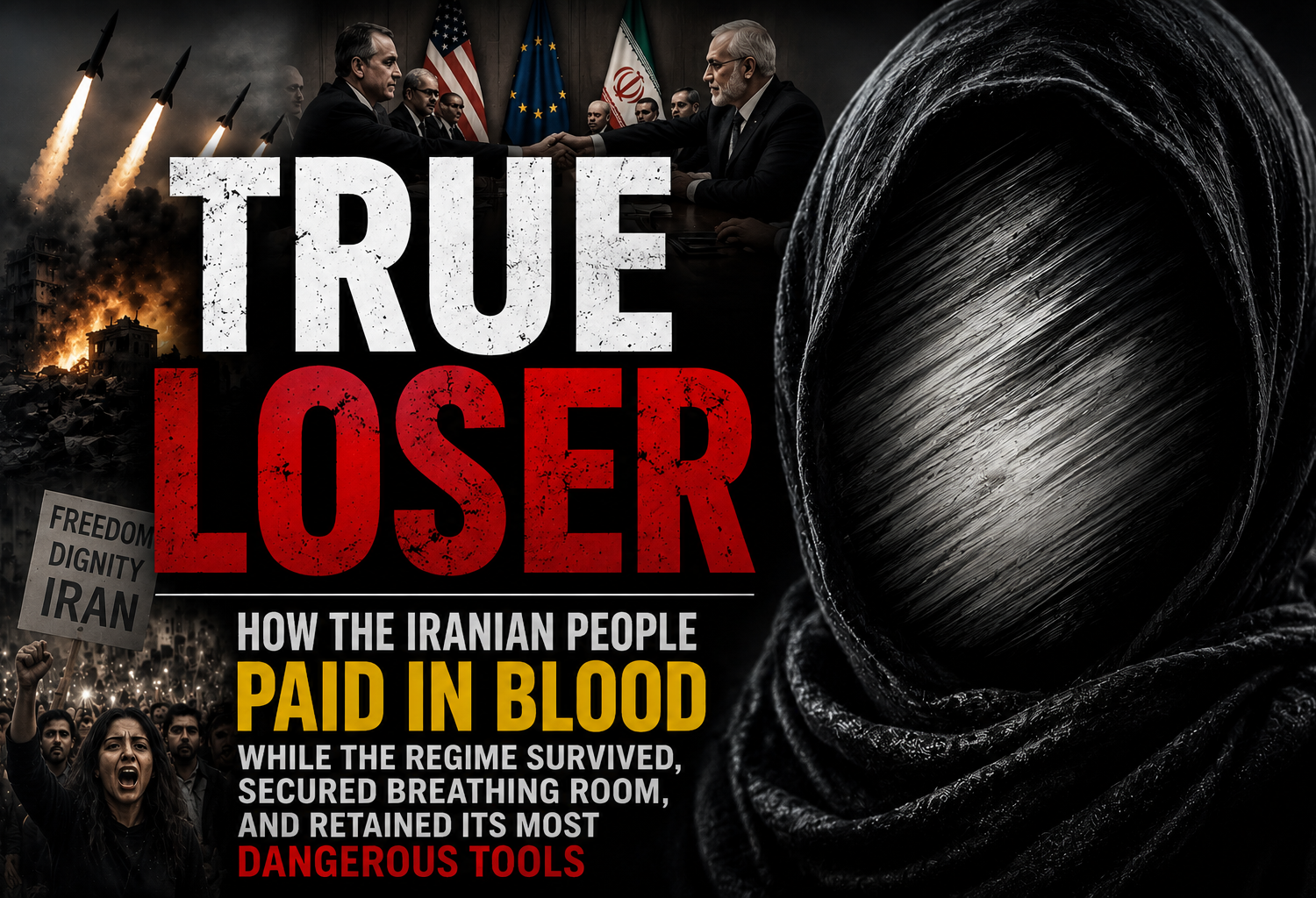
The True Loser: How the Iranian People Paid in Blood While the Regime Survived, Secured Breathing Room, and Retained Its Most Dangerous Tools
In the past 72 hours, three developments have crystallized a dramatic shift in the US approach to the Islamic Republic of Iran. Pakistan’s Prime Minister Shehbaz Sharif confirmed that Iran’s ballistic missile program was never part of the US-Iran Memorandum of Understanding. The US Senate joined the House in passing a War Powers Resolution directing President Trump to end hostilities with Iran absent explicit congressional authorization. A Reuters/Ipsos poll found that only one in four Americans believes the costs of the recent conflict were worth it.
These events mark a sharp departure from earlier momentum toward sustained pressure. They raise urgent questions: Was this political inertia or war fatigue? Did Europe’s caution play a role? Did Washington underestimate Iran’s asymmetric capabilities—cheap drones and mass-produced ballistic missiles wielded by the IRGC and its proxies? Or was something deeper at work? Most painfully, they force a reckoning with a harder truth: while the regime has gained diplomatic space and preserved its core tools of repression and regional destabilization, it is the Iranian people who have emerged as the true losers.
The Pivot in Washington: Costs, Bipartisanship, and Ideological Currents
Public opinion turned as the human, financial, and strategic costs became visible. Energy disruptions from the Strait of Hormuz, equipment losses, casualties, and the absence of a clear, decisive victory eroded support. The Reuters/Ipsos finding that only 24% of Americans view the conflict as worth the price reflects this broad fatigue, not a sudden affinity for the regime.
Congressional action was bipartisan. The House passed its measure 215-208 with four Republicans joining Democrats; the Senate followed 50-48 with four Republicans (including Rand Paul, Susan Collins, Lisa Murkowski, and Bill Cassidy) crossing lines. One Democrat broke with his party in opposition. Democrats largely framed the votes as reclaiming constitutional authority and ending a costly engagement whose objectives had blurred. Progressive and far-left voices within the Democratic coalition were more uniformly critical from the outset, often emphasizing anti-interventionism, skepticism toward Israeli operations, or concerns about escalation—positions that sometimes overlapped with certain right-leaning critiques but arose from different ideological foundations.
This created space for narratives that questioned the war’s premise while giving less weight to the regime’s domestic record. The decisive driver, however, remained tangible costs and institutional pushback rather than ideological capture alone. Europe’s reluctance to align fully with maximum pressure further complicated harder-line positions. The result is a framework that prioritizes de-escalation and future talks while deferring the missile program and much of the nuclear file.
Iran’s Asymmetric Strategy and the Limits of Expensive Defense
The regime’s approach has relied on quantity, low cost, and proxies. Drones priced at $30,000–$40,000 and simpler ballistic missiles—often described internally with dark humor as “water heater” shells—have been produced at scale, reportedly with Chinese and Russian support. These have been employed by the IRGC, Hezbollah, and the Houthis, imposing real damage and forcing adversaries to expend far more expensive interceptors (THAAD, advanced Patriots, and sophisticated systems costing millions per engagement).
This is a classic asymmetric contest: cheap, attritable systems versus high-end, high-precision defenses. Interception rates have often been high, but each success consumes resources and strains logistics. The regime’s calculation appears to be one of endurance—absorb losses while raising the cumulative price for its opponents. Historical parallels in Yemen and elsewhere show that such strategies can succeed in imposing costs and buying time, even when they do not achieve outright battlefield dominance.
Nuance matters. Not every Iranian system is primitive; some have improved guidance, and saturation attacks can still challenge even advanced defenses. “Water heater” rhetoric understates the real violence inflicted. At the same time, cheap mass production does not guarantee victory. Sustainable advantage ultimately depends on production capacity, alliances, political will, and the development of cheaper counters (directed energy, attritable interceptors, and intelligence-driven strikes on production nodes). The math favors the side that can absorb costs longer or change the exchange ratio.
The Uprisings, the Massacres, and the Absence of Organized Leadership
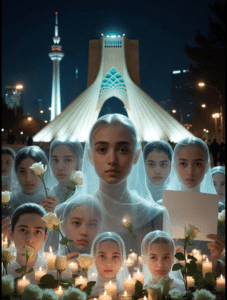
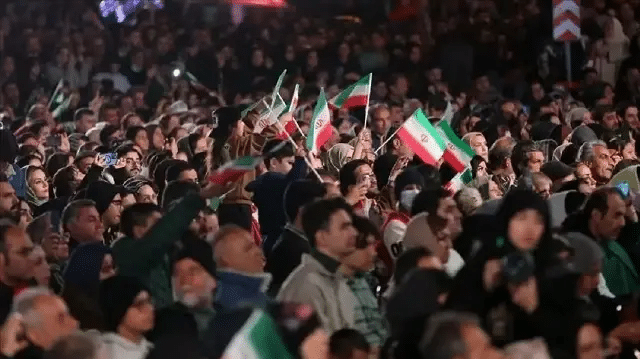
The December 2025–January 2026 nationwide protests represented the most serious internal challenge to the Islamic Republic in decades. Triggered by economic collapse, hyperinflation, and a collapsing rial, demonstrations spread across more than 400 cities and towns. Crowds openly chanted for Reza Pahlavi and an end to the regime, revealing profound popular rejection of the theocratic system.
The response was systematic and brutal. During the internet blackout of January 8–9, 2026, security forces—including IRGC, Basij, and reportedly foreign militias—unleashed live fire, machine guns, and snipers. Hospitals were overwhelmed. Estimates of the death toll vary because of the blackout and regime opacity:
- Official Iranian figures claim around 3,117 total deaths.
- Verified documentation from human rights networks places confirmed protester deaths in the 6,000–7,000+ range, with tens of thousands injured or arrested.
- Higher estimates drawn from leaked documents, medical sources, and opposition reporting range from 12,000 to over 36,500 killed in the peak period alone, with broader uprising-related deaths potentially reaching or exceeding the 42,000–45,000 figure cited by some accounts.
This was not spontaneous excess but organized repression by a regime with long experience in crowd control and infiltration. Protesters demonstrated extraordinary courage, yet they operated without centralized internal leadership, secure communications, or coordinated command structures. The regime excelled at divide-and-rule and rapid, overwhelming force. Diaspora voices and figures such as Reza Pahlavi offered moral clarity and strategic vision from outside but translating that into on-the-ground organization under blackout conditions proved nearly impossible.
The result was one of the largest massacres in the regime’s history. The Iranian people paid with their lives, their futures, and their hope for immediate change. The regime, bloodied but intact, has now gained diplomatic breathing room.
Iranians Are the True Losers
While the regime has survived and retained its missile arsenal, proxy networks, and capacity for future nuclear latency, the Iranian people have lost the most. They rose in December 2025 and January 2026 demanding dignity and freedom. They were met with massacre on a staggering scale. They continue to live under economic siege, political repression, and the memory of loved ones slaughtered for daring to dream of something better.
A regime that stood on the verge of collapse—facing simultaneous internal revolt and external pressure—has instead secured a framework that defers accountability for its atrocities and preserves its most dangerous instruments. The true loser is not the side that absorbed missile intercepts or faced higher defense costs. It is the nation whose children were gunned down in the streets, whose hospitals overflowed with the dead, and whose future remains mortgaged to a system that has repeatedly chosen survival through terror over reform.
The “What If” Reckoning
These outcomes invite painful counterfactual reflection.
What if President Trump had spoken with unambiguous clarity—“we are armed and ready”—or if the initial Israeli operations (the Twelve-Day War phase targeting nuclear infrastructure) had been completed decisively with clearer, sustained US backing? A more resolute posture during the window when uprisings were active and the regime’s command structure was strained might have accelerated internal disintegration or forced far weaker terms. It could have complicated Russian and Chinese resupply and encouraged more defections. Yet the risks were substantial: wider war, direct entanglement by Moscow or Beijing, higher immediate civilian casualties, and the danger of a chaotic vacuum without prepared successors.
What if the current MoU, with European support, evolves into another JCPOA-style agreement? This concern is well-founded. The original deal provided sanctions relief and economic oxygen without constraining missiles, proxies, or domestic repression. A similar outcome here—sanctions easing in exchange for temporary nuclear steps while the missile program and IRGC networks remain largely untouched—would likely stabilize the regime short-term. Russia and China have clear strategic interests in a weak, ideologically anti-Western Iran: a sanctions-evasion partner, an oil supplier, a regional distraction, and a living demonstration that authoritarian systems can outlast pressure. The Iranian nation would continue to suffer under siege, denied the democratic future its people have repeatedly risked everything to claim.
The regime was genuinely vulnerable after the uprisings and military setbacks. The combination of popular rejection, economic decay, and external strain created a real opening. Diplomacy that provides legitimacy and resources without requiring accountability for massacres or dismantling tools of repression risks closing that window. Long-term regime vulnerabilities—succession uncertainty, alienated youth, and the indelible memory of the massacres—persist, but short-term survival buys time to regroup.
Implications and the Path Ahead
The lesson is stark. Asymmetric tools and proxy endurance can buy a regime time. War fatigue and domestic political dynamics can constrain external pressure. But when these factors combine to rescue a regime that has just committed mass atrocities, the people caught between the regime’s guns and international inconsistency pay the highest price.
A durable policy must do more than manage threats through temporary frameworks. It must combine sustained, targeted pressure on the regime’s finances, missile infrastructure, and proxy networks with meaningful support for Iranian civil society, rigorous documentation of atrocities for future accountability, and unambiguous recognition of the Iranian people’s right to determine their own future. Deals that treat the regime as a permanent interlocutor while deferring its most dangerous capabilities risk repeating cycles of temporary relief for Tehran and prolonged suffering for Iranians.
The memory of those who poured into the streets in December 2025 and January 2026—chanting for freedom and paying with their lives—demands nothing less. They were not the losers in spirit. They showed what Iran could become. The tragedy is that the system that slaughtered them has been given another chance to endure.