America’s Trojan Horse, Volume II: New Perspectives Introduction — Why a Second Volume Ali R. Rahimi
When I wrote the first volume of America’s Trojan Horse, I was told, in effect, to lower my voice. The subject was too sensitive, the hour too delicate, the words too likely to offend. I declined then, and I decline now. But a writer who refuses to lower his voice owes his readers something in exchange: he must raise his standard. He must be more exact, more documented, and — this is the harder discipline — more fair. This second volume is my attempt to pay that debt. It is naked and unapologetic about doctrine, as the first was. It is also, deliberately, conciliatory toward people, because the argument was never against people. It was against a political program that hides inside a faith and inside the vocabulary of tolerance, and against the refusal of free societies to look at either one directly.
Much has happened since the first volume. America has now elected its first Muslim senator. I did not vote for him, and in these pages I explain exactly why — not because of his faith, which is his own, nor because of his wife’s dress, from which I convict no one, but because a republic should know the doctrines in play before it celebrates the symbols. The digital battlefield I described has grown teeth: Russia, China and the Islamic Republic of Iran now work the same American divisions with the same tools, and the alliance between political Islam and the radical left — the horse I warned was already inside the gates — no longer troubles to hide its carpentry. Meanwhile the old questions have not aged at all. In March 1786, John Adams and Thomas Jefferson asked the ambassador of Tripoli why his state made war on a nation that had done it no injury, and he told them, in writing that survives: because his Prophet’s laws commanded it. The founding generation heard the answer, took it seriously, and responded with neither hatred nor naïveté — they built a republic that protects the Muslim’s worship and refuses every man’s theocracy. We have forgotten both halves of that settlement. This book is an effort to remember them.
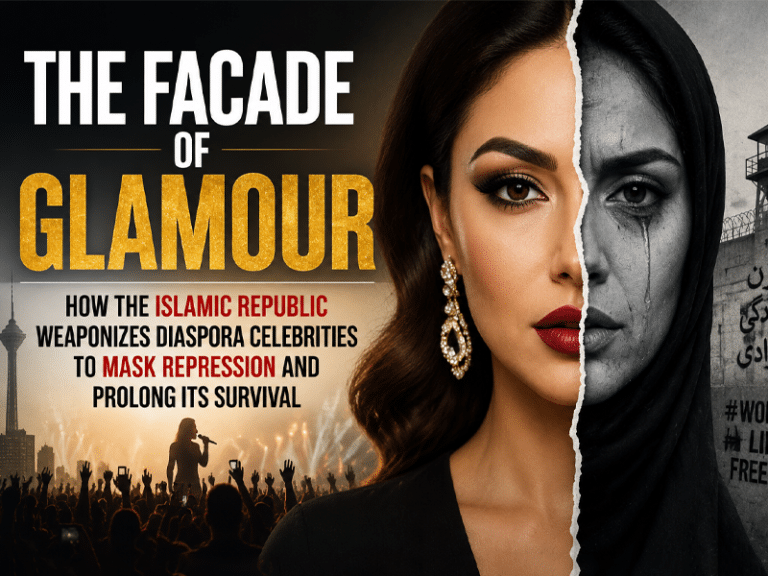
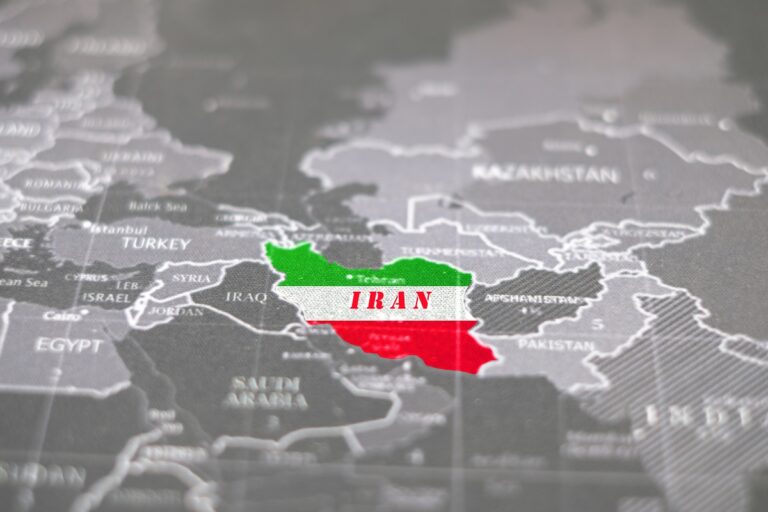
Let me state the thesis in one paragraph, so no reader can say I hid it. Certain doctrines, carried into politics, are incompatible with a self-correcting democracy: a revelation that declares itself final; a judgment — Ma’ad — that fixes the end of history and the price of every deed; a standing order, Amr bil Ma’ruf and Nahi an al-Munkar, to enjoin right and forbid wrong, which travels in the tradition from the heart, to the tongue, to the hand; and tactical permissions, taqiyya and khud’a, born in war and persecution, available to movements that believe a sacred end sanctifies a hidden means. I do not claim that every Muslim lives by this program politically; plainly, most do not, and the Muslim neighbor who prays and works and raises his family is not my subject and never was. My subject is the program itself, the regimes that run it — Tehran above all — and the Western habits of mind that refuse to read it: the infomercial that presents a political doctrine as a private spirituality, the confusion of diplomas with enlightenment, and the renaming of every hard question as hatred.
The first volume exposed. This volume proposes. Its final part lays out a new approach for maintaining and enhancing American democracy: awareness taught honestly, because knowledge is not hatred; one constitutional question put to every candidate of every faith — when office and doctrine conflict, which governs; law enforced at the line of conduct, never belief, so that no street, school, wife or daughter is governed by imported norms; a floor under women’s rights that no custom may lower; transparency for foreign money in our religious and political life; protection for the dissidents, reformers and apostates whose safety is the true measure of our freedom; an integration compact of equal rights and equal duties; and, abroad, peace with the world’s nearly two billion Muslims joined to open support for their reformers and steady confrontation of the theocracy that oppresses them first of all. None of this requires America to become less free. All of it requires America to become less ignorant.
I am a physician. I was trained to look at what is in front of me and call it by its name, because a diagnosis softened for politeness can kill the patient. I am also an Iranian by birth and an American by choice, and I have watched one country I love be taken by men who claimed to speak for God, while the other country I love assures itself that such things cannot travel. They travel. Ideas cross oceans in suitcases and in servers, and they arrive, as the horse arrived at Troy, gift-wrapped. But I did not write this book in despair, and I ask you not to read it in fear. Democracy, unlike dogma, has no finality: it can examine itself, correct itself, and renew itself in every generation. That is its weakness in the short run and its glory in the long one.
So: naked, because the facts will be stated as they are. Unapologetic, because no citizen owes an apology for defending the Constitution. Informative, because every claim here can be checked against sources I name. And conciliatory, because the goal is not a war of neighbors but a republic of citizens — Muslim, Christian, Jew, believer and unbeliever alike — equal under one law that no revelation outranks. If that is a horse at the gate, it is the only kind America should ever admit: the kind that arrives in daylight, with its contents declared.