October Surprise
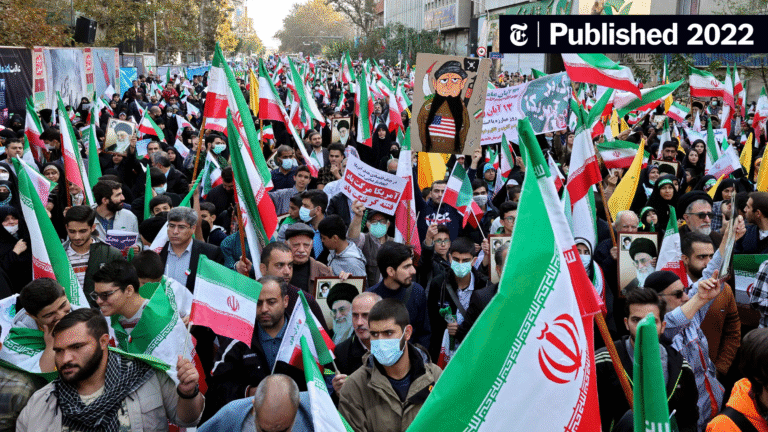
For half a century, the IRGC and the Islamic Republic of Iran have loudly proclaimed “Death to America.” Recently, Akhond Hossein Taeb—long notorious for his role in suppressing dissent—was appointed commander of the Basij, the regime’s paramilitary force infamous for killing Iranians and violently crushing protests. In a televised statement, Taeb declared that America would be destroyed by 2025, echoing the regime’s enduring anti-American rhetoric.
Since 2015, the Iranian government has skillfully employed delay tactics in negotiations with the Obama and Biden administrations and later used similar strategies to keep President Trump and his inexperienced representatives, such as Jared Kushner and Steve Witkoff , off balance. From the Iranian perspective, these delays serve a clear purpose: to prolong negotiations until the U.S. midterm elections, hoping for Republican losses and a Democratic-controlled Congress that could paralyze Trump’s agenda. Ultimately, Tehran aims for a return to a Democratic administration, expecting a revival of the more conciliatory policies seen under President Obama.
On or around August 10–11, 2026, Hossein Taeb was appointed head of the Basij Resistance Force by the new Supreme Leader, Mojtaba Khamenei, as part of a sweeping reshuffle to fill vacancies left by U.S.-Israeli strikes earlier in the year. Taeb, a cleric and veteran IRGC intelligence official, is infamous for his role in the brutal crackdown on the 2009 Green Movement protests, where the Basij were responsible for beatings, killings, detentions, and torture. He later led the IRGC Intelligence Organization until about 2022 and has been sanctioned by the United States for his involvement in repression.
Analysts see Taeb’s return to the Basij—now tasked with expanding a “popular intelligence network,” neighborhood surveillance, and deploying new technologies—as a move to tighten internal control amid wartime economic hardship, succession uncertainty, and the persistent risk of renewed protests. The Basij remains the regime’s primary domestic enforcer: a vast volunteer force under IRGC command, used for morality policing, pro-regime mobilization, intelligence gathering, and violent suppression of dissent. Its record includes lethal force, targeted eye injuries, arbitrary arrests, and close coordination with other security agencies during crackdowns in 2009, 2019–2020, the 2022 Mahsa Amini/Women-Life-Freedom protests, and subsequent unrest.
Taeb has a long history of ideological statements predicting the decline or collapse of the United States. In late 2022, he cited U.S. national security documents and claimed that 2025 would be a decisive year for America’s global standing, linking this to the regime’s “Death to America” worldview and the supposed acceleration of Western decline in the region. This narrative is consistent with the IRGC’s longstanding belief that American power is waning and that the Islamic Republic is actively hastening its downfall.
Iran’s pattern of artful delay—seen under Obama (during JCPOA negotiations and implementation), under Biden, and now under Trump’s second term—is well documented. Tehran has repeatedly used negotiations to ease international pressure, advance its nuclear and missile programs, secure sanctions relief, and wait out unfavorable U.S. administrations, while hardliners maintain veto power over any deal. In the current post-war context—following the major U.S.-Israeli campaign that began in late February 2026, the deaths of senior commanders and Ali Khamenei, a ceasefire/MOU process, and stalled talks—Iranian negotiators have issued conflicting statements, responded slowly through intermediaries, and insisted on sequencing that prioritizes economic relief before nuclear concessions. U.S. officials and outside observers have repeatedly noted the deliberate pace and the risk that Tehran is simply running out the clock.
From the hardline Iranian perspective, the logic is straightforward: maintain ambiguity and low-level friction through the November 2026 midterms. A Democratic gain in the House or Senate could constrain Trump through investigations, funding battles, or legislative resistance. If a Democrat wins the presidency in 2029, Tehran expects a return to the more accommodating approach of the Obama/Biden years. This is not mere speculation—it is a recurring feature of the Iranian regime’s reading of American politics and polarization, and it continues to shape their strategy today.
The stress of the Mid-Term elections and the potential for an October surprise are generating significant anxiety at home, while simultaneously offering the Islamic regime in Iran some hope that a more polarized and distracted American political landscape could work to their advantage. It appears increasingly likely that the Islamic Republic and the IRGC are actively seeking to engineer their own version of the infamous “October surprise,” drawing inspiration from historic last-ditch offensives designed to disrupt and influence U.S. elections.
Some American analysts are already sounding the alarm. On August 11, 2026, Victor Davis Hanson described the possibility of a late-October Iranian kinetic action—ranging from missile salvos and disruptions in the Strait of Hormuz to strikes on Gulf targets, Israel, or U.S. assets—as a “last gasp, sort of like the German Battle of the Bulge, the Ardennes Offensive, where they marshaled all of their final resources and tried to stage a dramatic counteroffensive to remind the Allies they still could lose this war and they should negotiate.” Other voices, including former Secretary of State Mike Pompeo and analysts from the Middle East Forum, have warned that Iran is positioning itself to exploit or manufacture disruption precisely timed to the U.S. midterms, believing that a politically weakened Trump or a Democratic-controlled chamber would enhance Tehran’s leverage.
There are clear structural similarities to the Battle of the Bulge and the 1918 German Spring Offensives:
- A strategically pressured or attrited side (Iran, after significant military and leadership losses in 2026) committing its remaining high-value assets to a high-risk, high-visibility effort.
- The objective is less about territorial or military conquest and more about achieving political and psychological effects—forcing the stronger opponent into a more favorable negotiating posture or triggering internal political crisis.
- Reliance on surprise, careful timing against the opponent’s political calendar, and the hope that temporary disruption (such as energy price spikes, regional instability, or American domestic fatigue) will create strategic breathing room.
- The inherent risk that such an effort could exhaust the last usable reserves and accelerate collapse if the opponent absorbs the blow and responds decisively.
However, there are also important differences. Iran wields asymmetric tools—proxies, residual missile and drone inventories, leverage over the Strait of Hormuz, and cyber and influence operations—that Germany in 1944 did not possess. The “battlefield” now extends directly into the American information space and electoral calendar. Domestically, the Iranian regime faces the dual challenge of managing a population that has repeatedly risen in protest and maintaining control over a security apparatus now being reinforced by figures like Hossein Taeb. A failed or costly “October surprise” could further erode the regime’s internal legitimacy or provoke intensified U.S. and Israeli retaliation.
Last-Ditch or High-Risk Offensives That Gained Ground but Ultimately Collapsed
German Spring Offensives of 1918 (Kaiserschlacht / Operation Michael and Follow-ons)
This remains the strongest historical parallel. Between March and July 1918, Germany launched a series of massive attacks on the Western Front after redeploying divisions from the East following Russia’s exit from the war. Employing new infiltration (“stormtrooper”) tactics, short but intense bombardments, and surprise, German forces achieved deep penetrations—advancing up to 40 miles in some sectors, creating large salients, and nearly breaking the Allied line near Amiens. The objective was a decisive victory before American forces could arrive in strength, ideally forcing a negotiated peace.
Despite impressive tactical gains, the offensives soon lost momentum due to exhausted elite troops, overstretched logistics, inability to exploit breakthroughs with mobile reserves, the lengthening of the German front, and the resilience and reinforcement of Allied forces. Germany suffered approximately 800,000–1 million casualties—losses that could not be replaced. The failure permanently shifted the initiative to the Allies, who soon launched the Hundred Days Offensive that ended the war. Historians frequently note the similarities: a last major gamble by a Germany under strategic pressure, temporary map gains that proved hollow, and the self-inflicted exhaustion of remaining striking power.
Battle of Kursk / Operation Citadel (July 1943)
Germany’s final large-scale strategic offensive on the Eastern Front aimed to eliminate the Kursk salient with a double envelopment using concentrated panzer forces. The operation featured a massive buildup, elite units, and new equipment (including Tigers and Panthers). However, the Soviets anticipated the attack, prepared deep defensive belts, and absorbed the German assault. German advances created only limited penetrations and failed to achieve a breakthrough. After suffering heavy losses in armor and infantry, the Germans were forced onto the defensive as the Soviets seized the initiative with powerful counteroffensives. Like the Battle of the Bulge, Kursk was high stakes attempt to regain the strategic initiative that instead depleted irreplaceable reserves and marked a permanent shift in momentum.
Japanese U-Go Offensive (Imphal–Kohima, March–July 1944)
Japan’s last major offensive in the Burma–India theater sought to disrupt Allied supply lines (including the Ledo Road and air supply over the Hump), capture Imphal and Kohima, and potentially open a path toward India. Japanese forces achieved initial surprise and advances through difficult jungle and mountainous terrain, surrounding British and Indian positions. However, logistics collapsed during the monsoon season—troops starved, disease spread, and ammunition ran short. The offensive ended in catastrophic Japanese defeat with enormous, irreplaceable losses. Parallels include ambitious aims beyond sustainable logistics, challenging terrain, and the exhaustion of the attacker’s remaining offensive capability.
Tet Offensive (January–February 1968)
North Vietnamese and Viet Cong forces launched coordinated surprise attacks across South Vietnam, temporarily seizing parts of cities (including the U.S. Embassy compound in Saigon and the citadel at Huế). The military goal was to spark a general uprising and collapse South Vietnamese and U.S. control. Tactically and operationally, the offensive failed: attackers suffered devastating losses, urban gains were reversed, and no uprising occurred. Strategically and politically, however, it had major impact by undermining U.S. public support and claims of progress. The Tet Offensive shares the elements of surprise, widespread shock, temporary territorial gains, and ultimate military failure at high cost—though its political dimension sets it apart from the more operational focus of the Bulge.
Other Comparisons and Modern Parallels
Modern observers have occasionally drawn loose comparisons to Ukraine’s 2024 cross-border operation into Russia’s Kursk region, which featured surprise and temporary gains aimed at diversion and leverage. However, the scale, forces involved, and strategic context differ substantially, and the long-term outcome remained contested at the time of later assessments.
- Operation Mars (Rzhev, 1942): A major Soviet offensive intended to encircle and destroy German forces west of Moscow. Despite initial penetrations, the attack stalled in the face of strong German defenses, logistical difficulties, and high casualties, ultimately failing to achieve its objectives and exhausting Soviet reserves in the sector.
- Operation Market Garden (September 1944): The largest airborne operation of WWII, aiming to seize bridges in the Netherlands and open a rapid route into Germany. Initial gains were impressive, but the offensive ultimately failed due to overextended supply lines, unexpectedly strong German resistance, and the inability to secure the final bridge at Arnhem, resulting in heavy Allied losses.
- Operation Spring Awakening (Hungary, March 1945): Germany’s last major offensive of WWII, launched to secure oil fields and stabilize the Eastern Front. Despite initial advances, the offensive quickly stalled due to overwhelming Soviet strength, poor logistics, and depleted German forces, leading to a rapid Soviet counteroffensive and collapse of German positions.
These examples reinforce the recurring pattern: high-risk offensives launched under strategic duress may achieve dramatic but fleeting gains, only to collapse under the weight of exhausted resources, logistical overreach, and determined opposition—often hastening the attacker’s ultimate defeat.
Successful Analogues: Surprise Breakthroughs That Achieved Decisive Results
German Ardennes Thrust of May 1940 (Fall Gelb / Battle of France)
The most direct geographic and conceptual parallel—and the one that inspired elements of Hitler’s 1944 plan. German panzer groups drove through the supposedly “impassable” Ardennes, achieved operational surprise, crossed the Meuse, and raced to the Channel, splitting Allied armies and forcing the Dunkirk evacuation and French collapse. Success rested on superior relative mobility and concentration, effective air-ground coordination, French command paralysis and doctrine focused on a linear defense farther north, and the fact that Germany still possessed the overall initiative and resources in 1940. In 1944, the same terrain and concept failed because the balance of forces, air power, logistics, and Allied resilience had reversed.
Manstein’s Kharkov Counteroffensive (February–March 1943)
After the Stalingrad disaster, Field Marshal Erich von Manstein conducted a mobile counterstroke against overextended Soviet forces. Using concentrated armor, operational maneuver, and exploitation of Soviet overreach, German forces regained Kharkov and stabilized the southern front. It restored a measure of initiative temporarily and demonstrated successful counteroffensive principles—concentration, surprise, and striking enemy vulnerabilities—under far more favorable relative conditions than the later Bulge. However, the strategic situation remained unfavorable for Germany, and the success was only temporary.
Inchon Landing (September 1950)
General Douglas MacArthur’s amphibious surprise at Inchon reversed the early course of the Korean War. By landing far behind North Korean lines, UN forces cut supply routes, forced a rapid Communist retreat from the Pusan Perimeter, and recaptured Seoul. It succeeded through bold operational surprise against an overextended enemy, though it did not end the war (Chinese intervention followed). The operation demonstrated the power of audacious maneuver and the exploitation of enemy vulnerabilities, even when initial prospects seemed bleak.
Israeli Counteroffensives in the Yom Kippur War (October 1973)
After the initial Egyptian and Syrian surprise successes (crossing the Suez and advancing on the Golan), Israeli forces conducted rapid counterattacks, including the crossing of the Suez Canal that encircled Egyptian forces. Mobility, air power recovery, and exploitation of enemy overextension turned the tide. These operations share the recovery from surprise through decisive counter-maneuver, demonstrating how initiative and rapid adaptation can reverse early setbacks.
Soviet Operation Uranus (November 1942)
The counteroffensive that encircled the German 6th Army at Stalingrad. It featured carefully concealed buildup, simultaneous attacks on weaker Romanian and Italian flanks, and rapid exploitation that created a decisive encirclement. It succeeded because of superior overall numbers, better timing relative to German exhaustion, and effective deception. Operation Uranus stands as a classic example of how surprise, concentration, and attacking enemy weaknesses can achieve strategic results even after a period of adversity.
Additional Example: The Sinai Campaign (1956)
During the Suez Crisis, Israeli forces launched a rapid and unexpected assault across the Sinai Peninsula, outflanking Egyptian positions and seizing key objectives with speed and surprise. The operation demonstrated the effectiveness of concentrated armor, air superiority, and operational surprise, forcing a rapid Egyptian withdrawal and achieving its immediate military objectives before international intervention.
Why Even a Failed Action Can Still Damage the Trump Administration
If the regime is indeed pursuing a dual-track strategy—using diplomatic engagement to buy time while simultaneously preparing for a disruptive kinetic or hybrid event timed to the midterms—it is a high-stakes gamble. Success, from their perspective, would mean Republican setbacks, prolonged U.S. domestic division, and a path back to softer Western pressure.
Crucially, the political effect does not require Iranian success on the battlefield. Even a failed or limited attack—whether a barrage on U.S. bases, shipping in Hormuz or Bab al-Mandab, Israeli targets, or an attempt against a carrier or major surface ship—can generate:
- Visible American costs (casualties, damaged assets, increased defensive expenditures).
- Immediate energy-price spikes and insurance disruptions that affect domestic economic sentiment.
- Media narratives of an unresolved or escalating conflict at the worst possible moment in the electoral calendar.
- Pressure on Republican candidates and on the administration’s claim that the situation is under control.
Even if the Iranian action fails militarily, the mere attempt can still inflict political and psychological costs on the Trump administration. The optics of vulnerability, the perception of crisis management failure, and the economic aftershocks can all erode public confidence and provide ammunition to political opponents. In a polarized environment, the administration may find itself on the defensive, forced to explain both the attack and its response, regardless of the operational outcome.
For the United States, this pattern underscores the need for clear-eyed recognition that Iranian engagement often serves regime survival and time-buying more than genuine strategic compromise. Maintaining military, economic, and diplomatic pressure while preparing for potential late-cycle provocations—and refusing to let the midterm calendar dictate the terms of any final settlement—would be consistent with treating the parallel Seriously.