...

New Dawn


A New Dawn: Peace in the Middle East After Decades of Conflict

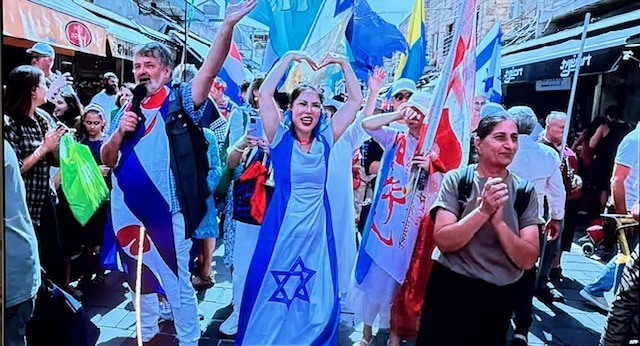
The world celebrates a historic peace agreement that ends the long-standing conflict between Israelis and Palestinians, announced on October 8, 2025. This agreement, which includes the dismantling of Hamas and Hezbollah, marks a significant shift towards peace in a region plagued by over 70 years of turmoil. The peace deal, led by Saudi Arabia and other Arab nations, is a result of persistent efforts and visionary leadership.

The Israeli Palestinian conflict has its roots in the 1948 Arab-Israeli War, which displaced hundreds of thousands and set the stage for subsequent wars and continuous unrest. The region has seen immense suffering, with Gaza often at the center of conflict due to Hamas’s control and Israel’s defensive measures. Hezbollah and Iranian influences have further exacerbated tensions, with their actions reaching across Lebanon and Syria, contributing to widespread devastation and loss of life.

For years, international responses were insufficient, with many peace efforts undermined by ongoing violence and political intransigence. However, the new peace agreement, spearheaded by President Donald Trump, introduces a comprehensive plan to ensure long-term stability. This includes a hostage and prisoner exchange, a structured ceasefire with Israeli withdrawal to fortified lines, the disarmament of Hamas, and the governance of Gaza transitioning to the Palestinian Authority. An international board will oversee the reconstruction of Gaza, promoting education and economic development.

This breakthrough is part of a broader initiative that began with the Abraham Accords and expanded to include key regional players like Saudi Arabia and a post-Assad Syrian government. The agreement not only aims to secure peace but also to foster economic integration and mutual prosperity among Israelis and Palestinians. The end of terror and the promise of a collaborative future offer a new chapter for the Middle East, where children and families can look forward to a life free from the shadow of conflict.

The peace deal is a testament to the power of diplomatic resolve and strategic leadership, highlighting a significant moment in history where peace replaces decades of conflict. As the region rebuilds and reconciles, the world watches with hopeful anticipation for a stable and prosperous Middle East.
Similar Posts

  • Political Islam and the Iranian Theocracy — A Global Challenge

    Introduction Political Islam—the integration of Islamic principles and Sharia law into state governance—has shaped nations and conflicts for centuries. The Islamic Republic of Iran, established in 1979, is one of the most dominant examples of a theocratic regime with deep global ramifications. The Revolutionary Legacy of 1979 Born from anti-monarchy sentiment, the Iranian Revolution aimed…

  • The Danger of Isthmus Rulers in the Middle East

    Understanding “Isthmus Rulers” and Their Authoritarian Tactics As we reflect on Middle Eastern governance, the concept of “Isthmus rulers” offers a key insight. These small, ruthless factions operate like bottlenecks in governance, where a minority maintains control through terror and disenfranchisement. Unlike traditional governments, they rely on mercenaries and mobs rather than a legitimate military…

  • Democracy, Radicalization, and Gang Violence

    Unpacking the Interplay of Socioeconomic and Political Factors The relationship between democracy, religious radicalization, and organized gang violence is influenced by a variety of complex social, economic, and political factors. Here are some key contributors to these issues: High levels of poverty, unemployment, and lack of access to education can create environments where individuals are…

  • What to Know about Globalization

    • Job Displacement: Globalization often results in the relocation of manufacturing and other services to countries where labor is cheaper, leading to job losses in more developed nations. This shift can result in significant economic and social stress for communities as they struggle to adapt to job losses and decreased wages. • Income Inequality: While…

  • Why Islam needs reformations?

    The Islamic code in education, trade, and social relations can present significant challenges for countries seeking to thrive in the modern world. Here’s a breakdown of these factors: 1-Education: Traditional Islamic education systems often prioritize religious studies over secular subjects, which can limit opportunities for individuals to acquire the skills needed for economic and social…

  • Human Rights

    Every day, we encounter the concept of “human rights” in a myriad of forms and contexts. It permeates our daily lives through media, discussions, and policies, becoming an almost ubiquitous term in the contemporary world. Politicians and government entities frequently invoke human rights, often competing to align themselves with these principles to legitimize their actions….

Leave a Reply

Your email address will not be published. Required fields are marked *

Seraphinite AcceleratorOptimized by Seraphinite Accelerator
Turns on site high speed to be attractive for people and search engines.