 Skip to content
 ESSAYS
CIVIL WAR
Is the West ensnared in a cycle of Repetition Compulsion?
Sigmund Freud once described repetition compulsion as an unconscious urge to reenact unresolved conflicts, often to achieve mastery or resolution. Since 1979, the West has embarked on a significant political endeavor by initiating a “foreign human rights policy” without a thorough analysis of the diverse cultural and political structures, literacy rates, social structures, and religious beliefs—or lack thereof—in various regions or countries. Despite global technological advancements, the world today is markedly different yet not necessarily improved or more stable. In fact, the world has experienced increased turmoil, with more killings, wars, and violations of human rights. Many nations, once considered laboratories for human rights, now suffer under increasingly authoritarian and ideological governments that oppress their citizens with iron fists. Even the West, the initiator of these policies, finds itself powerless, entangled in multilateral wars, insurgencies, civil wars, and sectarian killings. Let’s explore this issue more deeply.
Armed Conflict: A broad legal term used in international humanitarian law (IHL), referring to any situation of prolonged armed violence between organized parties, where resort to armed force occurs. It is divided into two main categories: International Armed Conflict (IAC), which involves two or more states, and Non-International Armed Conflict (NIAC), which occurs within a single state between government forces and organized non-state armed groups, or between such groups themselves. The threshold for an armed conflict is met when there is a certain intensity of violence and organization of the parties involved, triggering the application of rules like the Geneva Conventions.
Civil War: Typically, a subset of NIAC, this term describes a high intensity, sustained, and organized violent conflict within a single country between the state (or its armed forces) and one or more organized non-state actors (e.g., rebel groups), or between rival factions vying for control of the government or territory. It often involves large-scale fighting, regular armed forces, and significant societal disruption, but lacks a universally agreed-upon legal definition—it’s more of a political or descriptive term.
Scope and Parties Involved
Armed conflicts can occur on an international scale, involving disputes between different nations, such as the conflict between Russia and Ukraine. Alternatively, they can be non-international, involving factions within a single state. In contrast, civil wars are inherently intra-state conflicts, where internal factions—often divided by political, ideological, or ethnic lines—vie for control over the state, pursue secession, or fight for ideological dominance.
Legal Framework and Intensity Threshold
The International Humanitarian Law (IHL) sets a lower threshold for armed conflicts, requiring only the presence of organized groups engaged in sustained hostilities. Civil wars, however, demand a higher level of intensity. They involve prolonged and organized combat, significant territorial control, and the operation of non-state actors in a manner akin to a government. Typically, a conflict must exceed 1,000 battle-related deaths annually to be classified as a civil war, distinguishing it from lesser insurrections or violent disturbances.
International Involvement
While international armed conflicts (IACs) directly involve foreign nations and are subject to comprehensive IHL regulations, civil wars are primarily internal. However, they may become internationalized through indirect foreign involvement, such as proxy support, which complicates their classification. Despite such involvement, these conflicts are generally categorized as non-international armed conflicts (NIACs) unless they escalate into full-fledged wars between states.
Destructiveness and Societal Impact
Civil wars are particularly devastating, often fragmenting societies, perpetuating severe civilian abuses, and exploiting detailed local knowledge to prolong the conflict. They typically result in disproportionate civilian suffering compared to combatant casualties. On the other hand, interstate conflicts might be shorter due to the use of advanced weaponry but can still cause significant destruction and loss of life.
Similarities
Both types of conflicts involve organized violence by armed groups and are regulated under IHL, which aims to protect non-combatants, though protections vary significantly between NIACs and IACs. These conflicts can escalate rapidly, employ similar military tactics such as guerrilla warfare and strategic bombings, and often result in extensive humanitarian crises, including mass displacement and famine. Despite their distinct legal definitions, the terms “armed conflict” and “civil war” are frequently used interchangeably in media reports, underscoring the importance of precise terminology for legal and humanitarian accountability, such as in the prosecution of war crimes.
International Armed Conflict (IAC): An example of this is the 2022 Russia-Ukraine war, which involves direct military confrontation between two sovereign states.
Non-International Armed Conflict (NIAC): This category includes conflicts like the pre-2021 Taliban insurgency against the Afghan government, characterized by lower intensity fighting that does not escalate to the level of a full civil war.
Civil War: The Syrian Civil War, ongoing since 2011, features the national government in conflict with various insurgent groups. This prolonged conflict has resulted in over 500,000 fatalities and has drawn significant international attention and intervention.
Hybrid/Internationalized Civil War: The Yemeni Civil War, which began in 2014, is a prime example of a civil conflict that has become internationalized. It involves internal factions that are significantly supported by foreign nations such as Saudi Arabia and Iran.
General Definitions
Armed Conflict: This term is used in international humanitarian law (IHL) to describe any extended period of armed violence between organized entities. These entities can be nation-states, as seen in International Armed Conflicts (IACs), or can occur within a state, involving government forces and organized non-state actors, or between non-state groups themselves, known as Non-International Armed Conflicts (NIACs). Such conflicts must reach a certain threshold of intensity and organizational structure, though they do not necessarily result in high casualties. IHL, including provisions like Common Article 3 of the Geneva Conventions, is applicable in these scenarios to govern the behavior of parties involved.
Civil War: A specific type of NIAC, civil war is characterized by intense, prolonged conflict within a single nation. It involves clashes between governmental forces and one or more organized non-state groups, or between such groups themselves, with the goals of seizing power, achieving independence, or instigating substantial political change. Academic circles often apply additional criteria, such as a minimum number of battle-related deaths, to differentiate civil wars from less severe insurgencies.
Key Differences
Armed Conflict: This can be either international, like the conflict between Israel and Lebanon in 2006, or non-international, such as a government battling insurgents. It covers a broad spectrum of violence, from minor skirmishes and insurgencies to full-scale interstate wars.
Civil War: Exclusively non-international, occurring within the confines of a single country. It often leads to significant societal disruption and involves competing claims over governance and territory.
Intensity and Casualty Thresholds:
Armed Conflict: Demands a certain level of intensity, such as sustained fighting that escalates beyond mere riots, and a degree of organization, like a command structure among non-state groups. However, it does not require a specific number of casualties for IHL to apply.
Civil War: Academically, a higher threshold is often required. For example, the Uppsala Conflict Data Program (UCDP) defines a civil war as an internal conflict with at least 1,000 battle-related deaths per year. The Correlates of War (COW) project at the University of Chicago initially set the same threshold but has considered lowering it to 100 deaths to include smaller yet significant conflicts.
Organization and Objectives:
Armed Conflict: Non-state groups involved need only a minimal level of organization, such as identifiable leadership, and their objectives can range from political reform to gaining localized control.
Civil War: Typically features highly organized groups with explicit political or territorial ambitions, such as overthrowing the government, as seen in the Syrian Civil War, or seeking secession, like in South Sudan. These groups often control territory and may operate as quasi-states.
International Involvement:
Armed Conflict: International Armed Conflicts inherently involve multiple states. Non-International Armed Conflicts, including civil wars, may become internationalized through foreign intervention but are still classified as NIACs unless direct state-to-state combat occurs.
Civil War: Often draws foreign involvement, such as proxy support in Yemen’s Civil War, yet the primary conflict remains internal. Even when internationalized, these conflicts are treated as NIACs under IHL.
Societal Impact:
Armed Conflict: The impact varies greatly. Interstate conflicts might cause extensive destruction but less societal fragmentation. NIACs can disrupt communities but may be geographically limited.
Civil War: Typically results in deep societal divisions, widespread displacement, and elevated civilian casualties due to internal strife and extended durations of conflict. Civil wars are more likely to lead to severe atrocities, including ethnic cleansing.
University of Chicago and the Revised 100-Death Threshold in Conflict Studies
The Correlates of War (COW) project, hosted by the University of Chicago, stands as a pivotal academic resource in the realm of conflict studies. Traditionally, this project has characterized civil wars as internal conflicts that meet specific criteria:
- A minimum of 1,000 battle-related deaths annually.
- Active involvement of both the government and organized non-state actors.
- Effective resistance from both parties, avoiding scenarios of one-sided massacres.
Recent scholarly discussions and some updated studies within the project have proposed reducing this threshold to 100 deaths annually. This change aims to encompass smaller-scale conflicts that, despite their lower casualty rates, still exert considerable political or social influence. The rationale behind this adjustment includes:
- Broadening Inclusion: This lower threshold aims to include conflicts that fail to meet the 1,000-death criterion yet still significantly disrupt governance or involve organized violence, such as the initial stages of insurgencies.
- Academic Debate: Some researchers argue that the traditional threshold might overlook critical conflicts, particularly in smaller nations where 100 deaths can have a substantial impact. For instance, conflicts in smaller countries like East Timor might not reach the 1,000-death mark but could still destabilize the state significantly.
- Enhanced Data Sensitivity: By lowering the threshold to 100 deaths, researchers can more effectively study emerging conflicts or those with fluctuating intensities, which can enhance early warning systems for potential escalations.
It’s important to note that this shift towards a 100-death threshold is not universally accepted. Many datasets, including the Uppsala Conflict Data Program (UCDP), still adhere to the 1,000-death benchmark for defining “major armed conflicts” or civil wars, with conflicts resulting in 25–999 deaths categorized as “minor conflicts.” The exploration of a 100-death threshold by COW is more experimental and tends to be applied in specific sub-analyses rather than as a replacement for the established definition.
Examples of Conflicts Under Different Thresholds
- Interstate Armed Conflict: The Russia-Ukraine War (2022–present) is an example of an interstate conflict with thousands of deaths, governed by comprehensive international humanitarian laws, including the Geneva Conventions.
- Non-International Armed Conflict (NIAC), Below Civil War Threshold: The Boko Haram insurgency in Nigeria (2009–present) had early phases with fewer than 1,000 deaths annually, qualifying as a NIAC but not as a civil war under COW’s original standard. A 100-death threshold might reclassify these earlier stages as a civil war.
- Civil War (by 1,000-death threshold): The Syrian Civil War (2011–present) involves the government and various rebel groups, with over 500,000 total deaths, clearly qualifying as a civil war under both COW and UCDP standards.
- Civil War (by 100-death threshold): The Northern Ireland Conflict (The Troubles, 1968–1998) saw total deaths averaging below 1,000 per year but often exceeded 100 annually, potentially qualifying as a civil war under the adjusted COW threshold, though typically classified as a low-intensity NIAC.
Global Trends and Casualty Impact
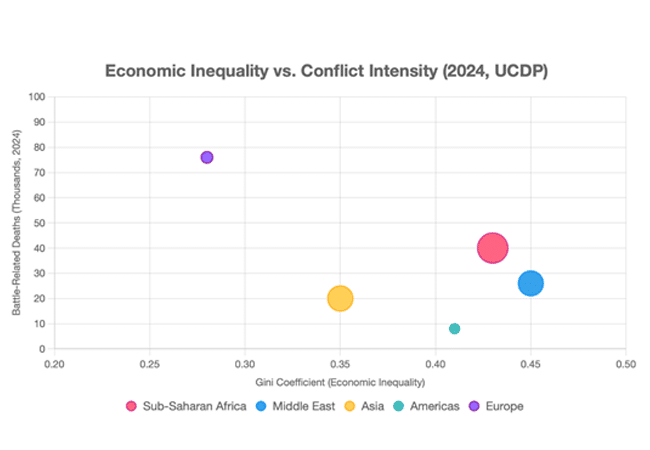
Since World War II, over 90% of armed conflicts have been non-international (NIACs), including civil wars. In 2022, UCDP recorded 55 active armed conflicts, with 8 classified as civil wars (involving 1,000+ deaths). Civil wars are noted for their higher civilian-to-combatant death ratios, as seen in the Rwandan Civil War (1990–1994) and subsequent genocide, which resulted in approximately 800,000 deaths, predominantly civilians. The COW dataset, updated until 2020, lists 296 civil wars since 1816 using the 1,000-death threshold. Lowering this threshold to 100 deaths could significantly increase the number of conflicts recognized, capturing events like the early stages of the 2011 Yemeni uprising.
Comprehensive Overview of the Uppsala Conflict Data Program (UCDP)
The Uppsala Conflict Data Program (UCDP), hosted by the Department of Peace and Conflict Research at Uppsala University in Sweden, stands as a premier global repository for data on organized violence and armed conflicts. Established nearly half a century ago, UCDP is recognized as the oldest continuous data collection initiative focusing on civil wars and associated forms of violence. The program’s extensive data collection, coding, and dissemination efforts are pivotal resources for researchers, policymakers, journalists, and international organizations such as the United Nations and the World Bank. UCDP’s rigorous methodologies and comprehensive datasets are widely regarded as the gold standard for conflict research, significantly influencing global reports on human security, development, and emerging trends.
Historical Development of UCDP
Initiated in the 1970s, UCDP began by documenting ongoing violent conflicts, with a primary focus initially on armed conflicts starting from 1989. In collaboration with the Peace Research Institute Oslo (PRIO), the program expanded its historical coverage to include conflicts dating back to 1946, resulting in the creation of the UCDP/PRIO Armed Conflict Dataset. Founded by Professor Peter Wallensteen, who led the program until 2015, UCDP has broadened its scope to encompass non-state conflicts and one-sided violence. Currently under the leadership of Associate Professor Magnus Öberg, the program employs a dedicated team of 10–15 researchers and assistants. UCDP not only publishes annual updates in the Journal of Peace Research but also provides monthly preliminary data releases for Africa and global candidate datasets. The program maintains key partnerships with PRIO, the Violence Early-Warning System (ViEWS), Varieties of Democracy (V-Dem), and the Global Registry of Violent Deaths (GReVD).
UCDP’s Definitions of Conflict and Types of Violence
UCDP defines organized violence as the deployment of armed force by an organized entity against another organized group or
civilians, which results in at least one direct fatality at a specific location and time. The program categorizes violence into three primary types:
- State-Based Armed Conflict: Involves combat between two organized entities, at least one of which is a state government, over a contested issue related to governance or territory. An active conflict is marked by at least 25 battle-related deaths per year, with conflicts resulting in over 1,000 deaths classified as “wars.”
- Non-State Conflict: Entails violence between organized non-state groups, such as rebel factions, gangs, or cartels, with at least 25 battle-related deaths annually.
- One-Sided Violence: Consists of deliberate attacks by an organized group (state or non-state) against unarmed civilians, resulting in at least 25 deaths per year.
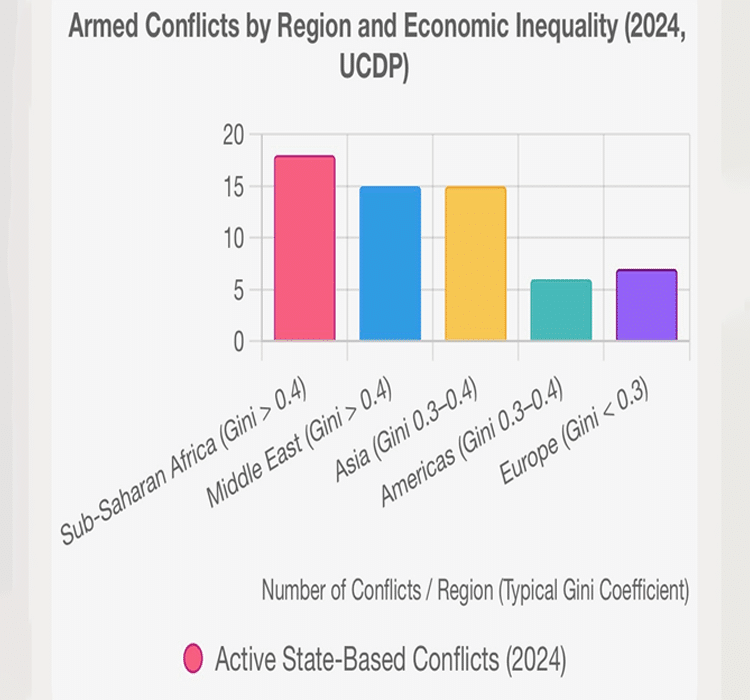
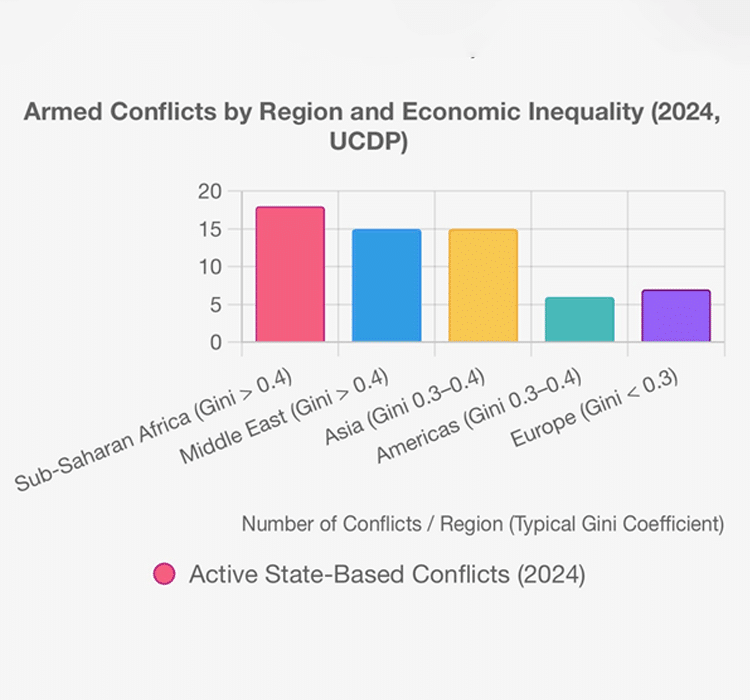
Data sources for UCDP include news reports, academic studies, and firsthand accounts, with a strong emphasis on systematic coding to ensure comparability across different cases, regions, and time periods.
Available Datasets from UCDP
UCDP offers a variety of free datasets, which are updated annually. Notable datasets include:
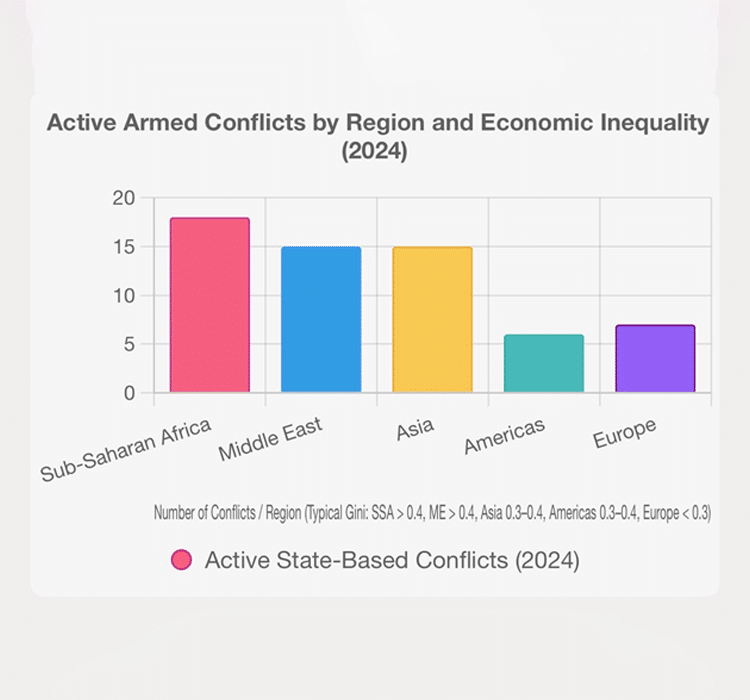
- UCDP/PRIO Armed Conflict Dataset (1946–2024): Provides conflict-year data on state-based armed conflicts, detailing the location, intensity, and involved parties.
- UCDP Georeferenced Event Dataset (GED, 1989–2024): Offers disaggregated event-level data on individual incidents of violence, pinpointed to the village level with specific timestamps.
- UCDP Battle-Related Deaths Dataset (1989–2023): Contains dyad-year data on fatalities in state-based conflicts.
- UCDP Non-State Conflict Dataset (1989–2024): Includes data on conflicts between non-state actors.
- UCDP One-Sided Violence Dataset (1989–2024): Records instances of attacks on civilians.
- UCDP Candidate Events Dataset: Features monthly preliminary releases of global event data, with a one-month lag.
All datasets are accessible for download at https://ucdp.uu.se/downloads/, complete with codebooks and citations for reference.
Latest Statistics and Insights (as of 2025)
The most recent annual update from UCDP, covering organized violence through 2024, reveals significant findings:
- State-Based Conflicts: There were 61 active conflicts in 2024, marking the highest number recorded since 1946. Of these, 11 escalated to war status.
- Total Deaths in Organized Violence: Approximately 160,000 deaths were recorded in 2024, a slight decrease from the previous year but still among the highest figures since 1989.
- Deadliest Conflicts: The conflict in Ukraine resulted in 76,000 deaths; conflicts in the Middle East, including Israel-Gaza and Lebanon, accounted for 26,000 deaths, with 94% being civilians or of unknown status.
- One-Sided Violence: Civilian targeting resulted in 13,900 deaths in 2024, a 31% increase from 2023, with IS (Daesh) being the deadliest perpetrator.
- Non-State Conflicts: There were 75 conflicts in 2023, resulting in 20,900 deaths, indicating a slight decline but still marking the last decade as the deadliest for this category.
UCDP’s ongoing work underscores the escalating nature of global violence, highlighting the urgent need for enhanced civilian protection and the development of effective early warning systems. For further details on specific datasets, visualizations, or conflict information, additional resources are available upon request.
Understanding the Role of Hopelessness and Helplessness in Civil War Dynamics
Hopelessness and helplessness significantly heighten the risk of civil war by fostering deep-seated social, economic, and political grievances. These psychological states not only reflect underlying societal issues but also actively contribute to the escalation of conflicts. This discussion will delve into the mechanisms through which hopelessness and helplessness influence civil war likelihood, supported by data from the Uppsala Conflict Data Program (UCDP) and other academic sources.
How Hopelessness and Helplessness Fuel Conflict
Hopelessness, defined as the belief that positive change is unattainable, and helplessness, the perceived inability to influence outcomes, can severely undermine societal stability. These feelings often stem from structural problems such as poverty, inequality, political exclusion, and state repression, leading to various conflict-enhancing dynamics:
- Grievance Amplification: Perceived injustices like economic deprivation and political marginalization can drive widespread discontent. This discontent can mobilize populations against the state or other groups, thereby increasing the likelihood of organized violence. For instance, the Syrian Civil War saw significant mobilization driven by despair among youth facing high unemployment and political repression, with UCDP data recording over 500,000 deaths since the conflict began in 2011.
- Recruitment to Armed Groups: Rebel groups and militias often exploit feelings of hopelessness to recruit members, particularly among young men. In Nigeria, groups like Boko Haram have recruited heavily among impoverished youth in the north, where the poverty rate reached 70% in 2010, leading to a deadly conflict classified by UCDP as a non-international armed conflict with over 35,000 deaths.
- Erosion of Social Cohesion: When state institutions fail to address community needs, trust erodes, and people may revert to ethnic, religious, or regional affiliations, which can escalate tensions into violence. The Rwandan Civil War and subsequent genocide, which resulted in approximately 800,000 deaths in 1994, were significantly influenced by decades of ethnic marginalization.
- Economic Desperation: Economic challenges, such as high unemployment and food insecurity, are strongly correlated with increased civil war risk. For example, Yemen’s ongoing civil war has been exacerbated by economic collapse and severe hunger, contributing to a death toll that exceeds 150,000 according to UCDP data.
Academic Insights and UCDP Analysis
The UCDP framework helps contextualize how socio-economic and political factors, which often serve as proxies for hopelessness and helplessness, drive conflicts. For instance, UCDP data from 2024 shows that many conflicts involve populations suffering from severe economic hardship and political exclusion. Additionally, quantitative studies using UCDP data have found that low GDP per capita, high inequality, and political repression are significant predictors of civil war risk. The presence of a large youth population combined with high unemployment rates also increases conflict propensity, as demonstrated in regions like Gaza.
Specific Factors Linking Psychological States to Civil War
- Poverty and Inequality: Historical data from the World Bank indicates that the majority of civil wars since 1945 have occurred in countries with low GDP per capita, where widespread poverty fosters feelings of hopelessness that can lead to rebellion or extremism.
- Political Exclusion: Lack of political representation can lead to helplessness, prompting violent resistance. In South Sudan, ethnic exclusion has been a major factor in ongoing civil conflict, with UCDP data recording significant casualties.
- Social Trauma: Prolonged exposure to violence or displacement can create a pervasive sense of hopelessness, contributing to unrest and support for militant groups, as seen in Gaza.
- Trigger Events: Often, hopelessness remains latent until a specific event, such as a repressive act or economic shock, triggers widespread conflict. The Arab Spring is a prime example, where despair turned into uprisings that escalated into civil wars in countries like Libya and Syria.
Counterarguments and Considerations
While hopelessness and helplessness are critical factors, they alone are not sufficient to cause civil war. Effective organization, resources, and leadership are also necessary. Additionally, external factors like foreign intervention or competition for resources can play a decisive role in conflict dynamics. The challenge of quantifying psychological states means that studies often rely on indirect measures such as poverty rates and unemployment, which may not fully capture the depth of despair and disempowerment felt by populations on the brink of conflict.
Exploring the Impact of Economic Inequality on Civil War Risk
Economic inequality, characterized by the uneven distribution of income, wealth, or opportunities, significantly influences the likelihood of civil war. This relationship is particularly pronounced when economic disparities lead to widespread feelings of hopelessness and helplessness among disadvantaged groups. This analysis will delve into the mechanisms through which economic inequality contributes to civil war risk, utilizing academic frameworks such as the Uppsala Conflict Data Program (UCDP) and other scholarly research. Additionally, specific examples and data will be provided to illustrate these points, alongside a discussion on the broader societal impacts of economic inequality to fully contextualize its role in fostering conflict.
Key Mechanisms Linking Economic Inequality to Civil War
Economic inequality can set the stage for civil war through several interconnected mechanisms:
- Grievance and Social Discontent: High levels of inequality, particularly when aligned with ethnic, regional, or class divisions, can generate deep-seated resentment and perceptions of injustice. This sense of deprivation regarding economic opportunities or resources can motivate populations to support or engage in insurgencies against perceived oppressors or the state itself. For example, in South Sudan, disparities between ethnic groups like the Dinka and Nuer, especially in access to oil revenues, have significantly fueled ongoing conflict, with UCDP reporting approximately 400,000 deaths by 2020. A 2016 study utilizing UCDP data highlighted that nations with a Gini coefficient above 0.4 are 30% more likely to experience civil war.
- Hopelessness and Helplessness: Marginalized groups often experience hopelessness (a belief that improvement is unattainable) and helplessness (a perceived inability to change one’s circumstances) due to economic inequality. These feelings can drive individuals, particularly youth, towards radicalization or joining armed groups that promise change. In Nigeria, the stark economic divide between the impoverished north and the wealthier south has contributed to the rise of Boko Haram, with over 35,000 deaths recorded by UCDP since 2009. Studies from the World Bank indicate that countries with youth unemployment rates above 25% are 40% more likely to face internal conflict.
- Resource Competition: Disparities in access to essential resources like land, water, or minerals can heighten tensions and lead to violence, particularly when wealth is monopolized by elites or specific groups. The Darfur Conflict in Sudan, triggered by unequal resource distribution and government favoritism, has resulted in over 300,000 deaths by 2020, according to UCDP estimates.
- Weakened State Legitimacy: Perceptions of economic inequality as a result of corrupt or exclusionary governance can erode trust in state institutions. This erosion can empower rebel groups or spark uprisings, as populations feel the state is failing to meet their needs. The Syrian Civil War, for instance, was precipitated by significant economic disparities and cronyism under the Assad regime, with UCDP documenting over 500,000 deaths by 2024.
- Polarization and Social Fragmentation: Economic inequality often correlates with ethnic, religious, or regional divides, exacerbating social cleavages. This polarization can escalate into civil war when competing groups vie for power or resources. In Yemen, economic disparities between the north and south, coupled with political exclusion, have been central to the ongoing civil conflict, with over 150,000 deaths noted by UCDP by 2023.
Broader Societal Impacts of Economic Inequality
Beyond its direct impact on civil war risk, economic inequality affects societies in numerous detrimental ways. It undermines economic stability and growth, exacerbates health disparities, and limits educational opportunities, contributing to a cycle of poverty and social exclusion. These broader effects not only deepen the direct impacts of inequality on civil war risk but also contribute to a more fragmented and unstable global landscape.
Understanding the multifaceted role of economic inequality in fostering civil conflict is crucial for developing effective strategies to mitigate these risks and promote more equitable and peaceful societies.
Factor | Description | How It Contributes to Civil War | Examples and Data |
Economic Inequality | Unequal distribution of wealth, income, or resources (e.g., Gini coefficient > 0.4). | Fuels grievances, resentment, and competition for resources, motivating rebellion. | Syria (2011–present): Gini ~0.36 pre-war; economic disparities drove protests. UCDP: 500,000+ deaths. |
Hopelessness | Belief that positive change is impossible due to poverty, exclusion, or trauma. | Pushes individuals, especially youth, toward radical groups promising change. | Nigeria (Boko Haram, 2009–present): 70% poverty in north fueled recruitment. UCDP: 35,000+ deaths. |
Helplessness | Feeling powerless to influence outcomes, often due to repression or marginalization. | Erodes trust in institutions, encouraging violent resistance or support for rebels. | South Sudan (2013–present): Ethnic exclusion fostered despair. UCDP: ~400,000 deaths. |
Political Exclusion | Denial of political voice or representation to certain groups (e.g., ethnic, religious). | Sparks demands for autonomy or regime change, escalating into armed conflict. | Yemen (2014–present): Houthi exclusion from power fueled rebellion. UCDP: 150,000+ deaths. |
Ethnic/Religious Divisions | Polarization along ethnic or religious lines, often tied to resource or power disparities. | Deepens social cleavages, leading to group-based mobilization and violence. | Rwanda (1990–1994): Tutsi-Hutu inequality fueled civil war and genocide. UCDP: ~800,000 deaths. |
Weak Governance | Corrupt, ineffective, or authoritarian state institutions unable to address grievances. | Undermines legitimacy, enabling rebel groups to gain support. | Sudan (Darfur, 2003–present): Government favoritism sparked rebellion. UCDP: 300,000+ deaths. |
Resource Scarcity/Competition | Limited access to land, water, or wealth (e.g., oil, minerals) among groups. | Triggers conflicts over control, especially when inequality exacerbates scarcity. | Democratic Republic of Congo (1998–present): Mineral wealth disputes. UCDP: millions displaced. |
Youth Bulge | Large proportion of young population with limited economic opportunities. | Increases pool of potential recruits for armed groups due to frustration. | Gaza (Hamas, 2007–present): 44% aged 0–14, 40% unemployment pre-2023. UCDP: 60,000+ deaths. |
External Intervention | Foreign support for rebels or governments (e.g., arms, funding, proxies). | Escalates conflicts by providing resources and prolonging fighting. | Syria: Russian/Iranian support for Assad vs. Western backing of rebels. UCDP: 30% of 2024 conflicts internationalized. |
Historical Grievances | Past injustices or conflicts that perpetuate mistrust and hostility. | Fuels cycles of revenge and mobilization for violence. | Bosnia (1992–1995): Historical ethnic tensions reignited war. UCDP: ~100,000 deaths. |
Throughout history, civil wars have often stemmed from internal conflicts driven by political and economic inequalities, as well as struggles for freedom. Regardless of their causes or outcomes, civil wars invariably lead to devastation, destruction, and loss of life within the affected nations. The repercussions of such conflicts often extend beyond national borders, causing regional instability, uncontrolled immigration, and the deterioration of infrastructure and moral values among citizens.
The Islamic Revolution of Iran serves as a poignant example of an unexpected and unique outcome of civil strife, comparable in its profound impact only to the atrocities committed under Hitler in Germany. The ideology of political Islam, as it has evolved, stands as one of the most misrepresented political ideologies in recent history. This is particularly stark when contrasted with the ideologies of communism, which, despite its flaws, at least offered the promise of reward through hard work. In contrast, the Islamic doctrine often emphasizes sacrifice, austerity, and martyrdom, with the promise of a luxurious afterlife—a promise supported solely by prophetic words and religious faith, without tangible evidence.
In Iran, this has fostered a civil structure characterized by constant agony and self-inflicted pain, where enjoyment is often forsaken in the pursuit of spiritual closeness to God and the afterlife. This archaic and medieval philosophy starkly contradicts modern understandings of life’s origins and the questioning of the legitimacy of an afterlife and religion itself. As a result of these rigid and likely misguided beliefs, nations like Iran suffer from pervasive despair, hopelessness, and increasing poverty. In contrast, countries that have moderated the rigidity of religious doctrines, like several Arab nations, have experienced greater openness and prosperity. This stark difference highlights the impact of ideological extremity on national well-being and development.
Nations like Iran , suffering under oppressive regimes often experience a profound mental and psychological strain due to low standards of living, a lack of vitality, and escalating poverty. These conditions can push a society to its breaking point, where even a minor incident could ignite a nationwide uprising or civil war. The indecision and repetitive mistakes of Western powers, coupled with their reluctance to intervene decisively, could exacerbate the situation, potentially leading to widespread regional chaos and even the risk of a global conflict like World War III.
This potential for turmoil stems from a failure to confront and dismantle harmful ideologies aggressively. Instead, there is often a reliance on the flawed principles of political correctness and a misinterpreted notion of religious freedom. These ideologies are exploited by extremist groups that aim to establish an international Islamic state under the rule of a mythical Imam. According to their belief, this Imam will return to purge the world, leaving only those who have suffered enough to deserve entry into heaven.
If humanity is to reach its full potential and avoid descending into chaos, it is crucial for global leaders to take decisive action against these destructive forces. This means moving beyond mere rhetoric and taking concrete steps to prevent the spread of extremist ideologies that threaten global peace and stability. The time to act is now, to safeguard future generations from the repercussions of our current inaction and to foster a world where all can thrive without the shadow of tyranny.
Deciphering the Signs and Signals of Military Action: Understanding the Indicators of Conflict
- Regime Atrocities: The Iranian regime’s criminal acts and human rights violations extend beyond its borders, threatening regional and global stability.
- Ideological Extremism: The Ayatollah’s belief in divine authority to eliminate non-believers and establish global Sharia law mirrors extremist doctrines.
- Parallels to Nazi Doctrine: Evidence suggests similarities between the regime’s philosophy and the Nazi “final solution,” particularly regarding threats to Israel and Jews.
- Nuclear Weapons Development: Iran’s pursuit of nuclear weapons poses a direct threat to international security.
- Threats to Israel: The regime’s stated goal of eliminating Israel and Jews is a major concern for the U.S. and its allies.
- Global Expansion: Iran’s efforts to spread its ideology and influence, even as far as Africa, indicate ambitions beyond the Middle East.
- International Consensus: Growing global recognition of the Iranian threat and the need for coordinated action.
- Failure of Appeasement: European appeasement policies have emboldened the regime, necessitating a stronger response.
- Military Preparations: Increased reconnaissance, military formations, and the presence of U.S. Navy carriers (Lincoln and Washington) in the region signal readiness for action.
- Support for Israel: Enhanced Israeli air defense and air power, with U.S. backing, suggest coordinated military planning.
- Wartime Planning: Indications of swift, decisive action with an emphasis on minimizing casualties and collateral damage.
Additional Possible Signs:
- Increased Intelligence Sharing: Closer intelligence cooperation with regional allies, especially Israel and Gulf states.
- Cyber Operations: Escalation of cyberattacks targeting Iranian military and nuclear infrastructure.
- Special Forces Deployment: Reports of U.S. special operations forces in neighboring countries or near Iranian borders.
- Diplomatic Warnings: Heightened diplomatic pressure and public warnings to Iran and its proxies.
- Evacuation of U.S. Personnel: Withdrawal or relocation of U.S. embassy staff and citizens from high-risk areas in the region.
- Sanctions Escalation: Imposition of new, severe economic sanctions targeting key sectors of the Iranian economy.
- Allied Military Exercises: Large-scale joint military exercises with regional partners as a show of force and readiness.
These signs, combined with the points listed, above could indicate preparations for potential military operations. However, actual intentions and timing remain subject to strategic, political, and diplomatic considerations.
Recent reports from credible sources highlight several new indicators fueling discussions about possible U.S. military action in Iran under President Trump as of January 2026. These developments are closely tied to the ongoing nationwide protests in Iran, where a harsh government crackdown has reportedly resulted in thousands of deaths. Trump has repeatedly framed potential U.S. intervention to protect protesters. The following summary focuses on concrete developments rather than speculation. While Trump continues to assert that “all options are on the table,” he recently revealed that he paused immediate military strikes after Iran canceled planned mass executions, describing this as a temporary decision based on his own assessment.
Heightened U.S. Military Posture and Asset Movements
In addition to the deployment of the USS Abraham Lincoln strike group to the Middle East, the U.S. has withdrawn non-essential personnel from bases such as Al-Udeid in Qatar, citing Iranian threats against U.S. facilities. This move is widely interpreted as both a precaution and a signal of readiness for escalation. Reports also note accelerated deployment of aircraft and naval assets in response to Iran-linked crises, including preparations for potential air strikes on nuclear or military targets. Trump has been briefed on strike options against Iran’s nuclear facilities, building on 2025 operations that initially targeted ISIS but have since shifted focus to Iran.
Diplomatic and Economic Pressure
Trump has imposed a 25% tariff on any country conducting business with Iran, aiming to further isolate the regime and force concessions. This “maximum pressure” strategy mirrors his first-term approach and is widely seen as a precursor to military action if diplomatic efforts fail. The administration has also suspended meetings with Iranian officials until the crackdown on protesters ends, while backchannel negotiations have stalled. This creates a “red line” scenario, where unmet demands could prompt U.S. action, echoing Trump’s previous responses in Syria and Venezuela. Coordination with allies is ongoing, with Trump reportedly delaying strikes at Israel’s request for additional preparation, and Russian President Putin offering to mediate, underscoring the high-stakes environment.
Public Statements and Internal Deliberations
Trump has used social media to encourage Iranian protesters, promising support and warning of “grave consequences” if the violence continues. He has publicly confirmed that military options, including air strikes, are under review for a “swift and decisive” response. Situation Room meetings have seen Trump approve attack plans but delay execution to assess whether Iran will halt its nuclear program or end the protest crackdown. Advisors note his preference for actions that avoid prolonged conflict but significantly weaken the regime. At the UN, U.S. officials have reiterated that “all options are on the table,” and have discussed targeted cyber operations to disrupt regime communications during blackouts.
Regional and Intelligence Developments
There is increased U.S. support for potential Israeli strikes on Iran’s missile program, with Trump threatening direct U.S. intervention if Iran rebuilds its nuclear capabilities. Intelligence reports suggest Trump views Iran’s internal unrest as an opportunity for regime change without full-scale occupation. Meanwhile, Iranian threats of preemptive attacks on U.S. bases have prompted heightened intelligence monitoring for signs of imminent action, further justifying the U.S. military’s elevated alert status.
Statement of 14 Self-Designated Religious Reformists in Defense of the Public Protests of the Iranian People and Condemnation of Violence and Foreign Intervention
The fact that every collective protest action ends in bloodshed is a clear and undeniable sign of a structural crisis and a chronic lack of competence in crisis management. Reports have emerged of violent intervention by Israeli agents and groups with a history of crime and terror in the recent protests. However, this in no way diminishes the responsibility of the country’s senior governmental, intelligence, and security officials. The people have the undeniable right to protest, and the rulers are obliged to ensure the security of the nation’s protests. Just as the suppression of protesters is entirely condemned, any foreign intervention in our beloved country, Iran, is also wholly and unconditionally condemned.
Collective Signature
The heartbreaking and bloody violence that has occurred in recent days in our beloved homeland, Iran, pains the heart of every conscious and free human being. Now, regardless of any political inclination, solely in defense of humanity, the preservation of Iranian identity, national-religious values, and the integrity of the homeland, we sincerely and benevolently remind the current rulers of Iran of eight points:
- The blood of every single human being is sacred. Human life is the arena for the realization of God’s will and a sanctuary of divine security. Preserving human life and dignity is a red line, crossing which brings the wrath and punishment of the Almighty. Various reports indicate a high number of martyrs and victims in the recent protests, but even the killing of one person, according to the Holy Book (Ma’ida: 32), is as if all of humanity has been killed. The current rulers of Iran are obliged by reason, law, and religion to manage social crises in a way that avoids bloodshed and harm to people. The fact that every collective protest action ends in bloodshed is a clear and undeniable sign of a structural crisis and a chronic lack of competence in crisis management.
- Reports have emerged of violent intervention by Israeli agents and groups with a history of crime and terror in the recent protests. The notorious record of Israeli terrorism is consistent with such reports, and statements by Netanyahu and some former Israeli and American officials, as well as reports from the Rajavi group’s media, confirm the narrative of violent foreign intervention aimed at undermining security, spreading fear, committing crimes, and inciting unrest. The full extent and scope of these interventions are not yet entirely clear. Nevertheless, this in no way diminishes the responsibility of the country’s senior governmental, intelligence, and security officials; rather, it doubles it. The people have the undeniable right to protest, and the rulers are obliged to ensure the security of the nation’s protests. If they are unable to provide security, they must be held accountable. The constant surprise of the country’s security and intelligence forces—from the twelve-day war to the recent protests—and their inability to establish security shows that, under the pretext of providing security, the nation’s freedom has been taken away, but not only has security not been achieved, the deprivation of people’s freedom has itself become the most significant anti-security factor in the country.
- Engaging in irrelevant and even harmful activities unrelated to the core mission of intelligence and security forces (such as pursuing tolerant critics and interfering in the public and private lifestyles of people), and entrusting affairs to sycophantic supporters while sidelining honest experts in the name of consolidating power, has brought such a grave calamity upon national security and the daily lives of the people. On the other hand, the use of thugs and hooligans to disrupt peaceful protests, incite violence, and pave the way for the suppression of any protest, unfortunately, is also part of the Islamic Republic of Iran’s record. The authorities must immediately, through an impartial fact-finding committee, officially announce the exact number of those killed, the time, place, and manner of the deaths of each martyr and victim of the recent protests. Only in this way can a small part of the survivors’ grief be alleviated and a step taken toward restoring the completely lost public trust.
- It appears that, following the recent protests, widespread arrests have taken place. We warn the judiciary not to, under the influence of political propaganda and to intimidate others, punish any innocent person during these trials.
- Just as the suppression of protesters is entirely condemned, any foreign intervention in our beloved country, Iran, is also wholly and unconditionally condemned. Israel, which is recognized by the global human rights community as a perpetrator of genocide and an apartheid regime, can never be a well-wisher for the Iranian people or any other nation. The domineering and colonialist United States will never pursue the higher interests of the Iranian people but only its own obvious hegemonic ambitions. Iran’s fate will be determined by Iranians alone. If domestic despotism is wholly condemned, so is foreign domination. We warn global powers not to further complicate Iran’s situation with their unwarranted interventions. Those who, in their misguided belief, turn to the vile hands of hegemonic foreign powers to solve Iran’s problems are, if not traitorous collaborators, then naïve and simple-minded.
- Anyone who denies this situation is either in a deep sleep or pretending to be asleep, but sleepwalkers must be warned, as Imam Ali (peace be upon him) said: “He who sleeps is not slept over” (meaning: if you close your eyes, others will not close theirs to you).
Peace be upon you,
Sunday, January 18, 2026 / 28 Dey 1404 (Iranian calendar)
- Masoud Adib
- Abdolali Bazargan
- Reza Haji
- Hamid Dabashi
- Alireza Rajaei
- Abdolkarim Soroush
- Omid Safi
- Hassan Fereshtian
- Hossein Kaji
- Mohsen Kadivar
- Hossein Kamali
- Yaser Mirdamadi
- Dariush Mohammadi-Pour
- Hassan Yousefi Eshkevari
Abdolkarim Soroush and his thirteen apostates were once dedicated members of the Islamic Republic, serving in various capacities such as intelligence, administration, or as part of the repressive IRGC. They were involved in abusive behaviors and, even if not directly, supported the IRGC’s acts of killing and torturing university students. Each, in one way or another, contributed to the core structure that established Islamic or Sharia laws.
Modeling their approach after Chinese cultural and educational laws but adapting them for Sharia, they wrote, theorized, and implemented the Islamic cultural and religious revolution. They shut down universities and rewrote the curriculum based on Islamic mandates.
Like many revolutions, and the Islamic Republic is no exception, “the revolution kills its children.” When these so-called elites lost their usefulness to the regime, they were persecuted, imprisoned, and eventually forced to escape to Europe and America—despite once shouting “death to America, the great Satan.” Now, in the free world, suddenly “their elephant remembered India.”
All fourteen signatories of the January 2026 open letter are Muslims, primarily from Shia backgrounds, and identify themselves as religious intellectuals or reformist thinkers within the broader Islamic tradition. The letter is explicitly presented as a statement from “نواندیش دینی” (self-designated religious new thinkers), although these individuals lack formal international recognition or endorsement. The following is an expanded overview of the signatories, based on publicly available information; it is important to note that most of these characteristics are self-identified and self-designated, with no formal or modern academic education recognized by international organizations such as UNESCO or similar bodies.
Among the signatories, Abdolkarim Soroush stands out for having completed an undergraduate degree in Pharmacy in Iran. He later pursued a master’s degree in analytical chemistry at the University of London, England. Subsequently, he studied the history and philosophy of science at Chelsea College, though he did not obtain a degree in these latter disciplines. Soroush refers to himself as “doctor” based on his pharmacy degree from Iran, awarded in 1969. His total period of study in England lasted five and a half years. All other academic or professional credentials claimed by the signatories are self-reported and have not been independently verified or recognized by internationally accredited institutions.
Many of the 14 signers were imprisoned, accused of “acting against national security,” while a few managed to escape after initial interactions with the Islamic Republic, eventually seeking refuge in Europe, Canada, or the United States. Their statement, while acknowledging reports of Israeli interference in the protests, primarily places blame on the Iranian regime’s mismanagement. However, it is deeply troubling that their language echoes official government propaganda, potentially providing justification for the regime’s violent crackdown on dissent.
It is apparent that these 14 individuals, once seen as reformers, now serve as a propaganda arm for the Velayat-e-Faqih, amplifying the regime’s false narrative to legitimize its brutality. This approach mirrors the tactics used by authoritarian regimes in history, such as Hitler’s propaganda machine in pre-war Europe, which sought to suppress opposition and maintain power through misinformation and fear. The repetition of such narratives not only undermines the legitimacy of genuine protest but also enables further repression and violence against the Iranian people.
- Masoud Adib: A Shia scholar and cleric with formal seminary education in Qom, Adib specializes in Islamic philosophy and theology, contributing to contemporary debates on religious thought.
- Abdolali Bazargan: An influential Muslim intellectual from a distinguished religious-political lineage (son of Mehdi Bazargan, Iran’s first post-revolution prime minister). He is known for his focus on Quranic studies and advocacy for Islamic reform.
- Reza Haji: While public information is limited, Haji is associated with Iranian Muslim reformist circles. There is no evidence suggesting any non-Muslim affiliation.
- Hamid Dabashi: A prominent scholar of Islamic mysticism (Sufism) and modern Islamic thought, Dabashi was raised in a Muslim family and is noted for his work on mystical poetry and contemporary issues.
- Alireza Rajaei: A member of the Nationalist-Religious alliance, a reformist Muslim group in Iran. Rajaei has been imprisoned for his political activism, which is deeply rooted in Islamic principles.
- Abdolkarim Soroush: One of the self designated Islamic scholars and a Rumi expert, Soroush is a leading advocate for reformist interpretations of Islam and has played a significant role in shaping modern Islamic thought.
- Mohsen Kadivar: A Shia mujtahid (senior cleric) and theologian, Kadivar teaches Quranic studies, Sufism, and Islamic ethics, and is known for his progressive views on religious authority and human rights.
- Omid Safi: A professor of Islamic studies with a specialization in Sufism, Safi was raised in a Muslim family that emphasized spirituality and is recognized for his scholarship on Islamic mysticism and ethics.
- Hassan Fereshtian: A jurist and religious scholar, Fereshtian is an advocate for human rights from an Islamic perspective and has publicly criticized the persecution of religious minorities, including Baha’is.
- Hossein Kaji: A philosopher with a focus on ethics, Kaji is associated with Iranian Muslim reformist intellectual circles, though detailed information about his religious background is limited.
- Hossein Kamali: A professor of Islamic studies who holds the Imam Ali Chair in Shia studies, Kamali is recognized for his academic contributions to the understanding of Shia Islam.
- Yaser Mirdamadi: A Shia cleric with seminary training, Mirdamadi conducts research in Islamic philosophy and biomedical ethics, engaging with contemporary ethical issues from an Islamic perspective.
- Dariush Mohammadpour: A scholar specializing in Ismaili (Shia) studies, Mohammadpour focuses on Islamic intellectual history and the study of primary sources within the tradition.
- Hassan Yousefi Eshkevari: A cleric trained in the Qom seminary, Eshkevari is a well-known reformist who has a history of criticizing the Iranian regime from an Islamic standpoint and advocating for religious and political reform.
In summary, while the signatories present themselves as innovative religious thinkers and reformers, their academic and professional backgrounds are largely self-identified, with limited or no formal recognition from established international academic communities.
بیانیۀ۱۴ به ظاهر نواندیش دینی در دفاع از اعتراضهای عمومی مردم ایران و تایید کشتار توسط عوامل خارجی
بیانیۀ۱۴ به ظاهر نواندیش دینی در دفاع از اعتراضهای عمومی مردم ایران و تایید کشتار توسط عوامل خارجی
این واقعیتکه هر اقدام اعتراضیِ دستهجمعی به سرانجامی خونین منجرّ میشود نشانهای است بارز و غیرقابلانکار از بحران ساختاری و فقدان مزمن صلاحیّت در حلّ بحرانها.گزارشهایی مبنی بر مداخلهی خشن عوامل اسرائیل و گروههای دارای سابقهی جنایت و هراسافکنی در تظاهرات اخیر بیرون آمده است. اما این امر به هیچ عنوان مسئولیت مقامهای ارشد حکومتی، اطلاعاتی و امنیتی کشور را کم نمیکند. مردم حق مسلّم اعتراض دارند و حاکمان وظیفه دارند امنیت اعتراض ملّت را فراهم کنند. همانگونه که سرکوبِ معترضان سراسر محکوم است هرگونه مداخلهی خارجی در کشور عزیزمان ایران نیز سراسر و بی اما و اگر محکوم است.
امضای جمعی
خشونتهای دلخراش و خونینی که در روزهای اخیر در میهن عزیزمان ایران اتفاق افتاد دل هر انسان آگاه و آزادهای را به درد میآورد. اکنون فارغ از هرگونه گرایش سیاسی، تنها در مقام دفاع از انسان، پاسداری از هویت ایرانی، ارزشهای ملی-مذهبی و کیان وطن هشت نکته را دلسوزانه و خیرخواهانه خطاب به حاکمان کنونی ایران گوشزد میکنیم:
۱– خون تکتک انسانها محترم است. خون و جان انسانها عرصهگاه تحقق مشیّت خداوندی و حرم امن الهی است. پاسداشت جان و حرمت انسانها خط قرمزی است که عبور از آن عذاب و خشم خداوند قهّار را در پی خواهد داشت. گزارشهای مختلفی از تعداد زیاد شهدا و قربانیان در تظاهرات اخیر میرسد اما حتی کشته شدن یک انسان، به نصّ کتاب الهی (مائده: ۳۲)، در حکم کشتن همهی انسانهاست. حاکمان کنونی ایران به حکم عقل، قانون و شرع موظّف اند در مدیریت بحرانهای اجتماعی چنان عمل کنند که از خونریزی و آسیب به انسانها پرهیز شود. این واقعیتکه هر اقدام اعتراضیِ دستهجمعی به سرانجامی خونین منجرّ میشود نشانهای است بارز و غیرقابلانکار از بحران ساختاری و فقدان مزمن صلاحیّت در حلّ بحرانها.
گزارشهایی مبنی بر مداخلهی خشن عوامل اسرائیل و گروههای دارای سابقهی جنایت و هراسافکنی در تظاهرات اخیر بیرون آمده است. سابقهی ارهابگری اسرائیلِ پرمصونیّت با چنین گزارشهایی همخوانی دارد و اظهارات نتانیاهو و نیز برخی از مقامات سابق اسرائیل و آمریکا و همچنین گزارش رسانهی گروه رجوی تأییدگر روایت مداخلهگرانهی خشن خارجی برای سلب امنیت، هراسافکنی، جنایتگری و شهرآشوبی است. ابعاد و گسترهی این مداخلات البته هنوز کاملا روشن نیست. هر چه که باشد اما این امر به هیچ عنوان مسؤولیت مقامهای ارشد حکومتی، اطلاعاتی و امنیتی کشور را کم نمیکند بلکه دوچندان میکند. مردم حق مسلّم اعتراض دارند و حاکمان وظیفه دارند امنیت اعتراض ملّت را فراهم کنند و اگر ناتوان از تأمین امنیت بودند باید پاسخگو باشند. غافلگیر شدن دائمی نیروهای امنیتی و اطلاعاتی کشور، از جنگ دوازدهروزه گرفته تا اعتراضهای اخیر، و ناتوانی آنها از برقراری امنیّت نشان میدهد که به اسم برقراری امنیتْ آزادی ملّت سلب شده اما نه تنها امنیّت فراهم نشده که سلب آزادی مردم نیز خود مهمترین عامل ضدّ امنیتی کشور از کار در آمده است.
پرداختن به مسائل نامرتبط و بلکه مضرّ به مأموریت ذاتی نیروهای اطلاعاتی و امنیتی (مثل تعقیب منتقدان مداراجو و مداخله در سبک زندگی عمومی و خصوصی مردم) و سپردن کارها به دست حامیان تملّقگو و خانهنشین کردن کارشناسان حقگو، به نیّت یکدستسازی قدرت، اینچنین بلای سهمگینی را بر سر امنیّت ملّی و زندگی روزمرّهی مردم آورده است. از سوی دیگر سابقهی استفاده از اراذل و اوباش برای آشفتهسازی اعتراضات مسالمتآمیز و به خشونت کشاندن صحنه و زمینهسازی برای سرکوب هر گونه اعتراض را هم متأسفانه در کارنامهی جمهوری اسلامی ایران میبینیم. حاکمیت با بهکارگیری کمیتهی حقیقتیاب بیطرف، باید بیدرنگ تعداد دقیق کشتهها، زمان، مکان و چگونگی کشته شدن تکتک شهدا و قربانیان اعتراضهای اخیر را رسماً اعلام کند. تنها به این شیوه شاید بتوان ذرهای از داغ بازماندگان کشتار کاست و قدمی در مسیر ترمیمِ اعتمادِ ــــ بهکلی از دسترفتهیِ ــــ عمومی برداشت.
۲ – از قرار معلوم، در پی اعتراضهای اخیر دستگیریهای گستردهای صورت گرفته است. به دستگاه قضا انذار میدهیم که مبادا در جریان این محاکمات، تحت تأثیر تبلیغات سیاسی و برای زهر چشم گرفتن از دیگران، فرد بیگناهی را به مجازات برسانند.
۳– درست همانگونه که سرکوبِ معترضان سراسر محکوم است هرگونه مداخلهی خارجی در کشور عزیزمان ایران نیز سراسر و بی اما و اگر محکوم است. اسرائیل که از سوی جامعهی حقوق بشریِ جهانى به عنوان نسلکش و رژیم آپارتاید شناخته شده است، هرگز نمیتواند خیرخواه ملت ایران، یا هر ملت دیگری باشد. آمریکای سلطهطلب و استعمارگر هرگز مصالح والای ملت ایران را پی نخواهد گرفت بلکه به دنبال مطامع سلطهجویانهی آشکار خود است. سرنوشت ایران به دست ایرانیان رقم خواهد خورد و بس. اگر استبداد داخلی سراسر محکوم است، سلطهی خارجی نیز سراسر محکوم است. به قدرتهای جهانی هشدار میدهیم با مداخلات نابجای خود اوضاع ایران را پیچیدهتر از این نکنند. کسانی که به گمان باطل خود برای علاج مشکلات ایران دست به دامان پلید قدرتهای سلطهطلب خارجی میشوند اگر وابستگان خودفروخته نباشند همانا سادهدلان خاماندیش اند.
هرکس منکر این وضعیت است، یا به خواب سنگین رفته است یا خود را به خواب زده است، اما خوابگردها را هشدار باید داد که، به تعبیر مولی امیرالمومنین (علیه السلام) «من نام لم یُنَم عنه» (آن که چشم فروبندد بر او چشم فرو برنبندند).
والسلام
یکشنبه ۱۸ ژانویه ۲۰۲۶/ ۲۸ دی ۱۴۰۴ خورشیدی
مسعود ادیب
عبدالعلی بازرگان
رضا حاجی
حمید دباشی
علیرضا رجایی
عبدالکریم سروش
امید صفی
حسن فرشتیان
حسین کاجی
محسن کدیور
حسین کمالی
یاسر میردامادی
داریوش محمدپور
حسن یوسفی اشکوری

