Skip to content
Modern Time Divine Comedy
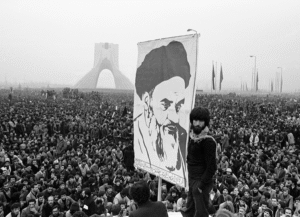
Since the onset of the American and Israeli campaign against the Islamic Republic of Iran, a flood of bizarre, almost Hollywood-style events, analyses, videos, and commentaries have emerged from a wide array of controversial figures. It often seems as though these individuals are scrambling for fleeting moments of fame and glory, oblivious to the potential aftermath and unintended consequences of their romanticized and often shaky assessments. Their portrayals of the Islamic regime in general—and of the Islamic militias, the IRGC, and the so-called “Islamic Third Republic” in particular—frequently lack depth and nuance.
The entire spectacle resembles a modern-day repetition of Dante’s “Divine Comedy,” a frantic race toward notoriety. From media personalities like Bill Maher, Jon Stewart, and Stephen Colbert, to commentators such as Amir Taheri, and policy analysts in publications like Foreign Affairs—including Suzanne Maloney—not to mention various Democrats, leftist groups, regime lobbyists, and agents like NIAC and self-proclaimed philosophers such as Abdul Karim Soroush, the stage is crowded with voices eager to offer their takes.
Yet, if one were to attend a gathering of seasoned Iranian politicians, genuine Muslim scholars, and intellectuals who are deeply engaged in deciphering recent events, the contrast would be striking. The laughter that erupts in such circles underscores just how childish and disconnected from reality many of these Western commentaries appear. There is a profound lack of understanding about Islam, the concept of internationalism, the doctrine of the occultation of the Twelfth Imam, and the true meaning of terms like “infidel.” The superficiality of these external analyses becomes glaringly obvious in the presence of those who possess authentic knowledge and lived experience.
It is not uncommon to encounter commentary praising the so-called resilience of the IRGC, the supposed high quality and cohesiveness of the Iranian regime, or the alleged failures of the United States. These narratives often highlight the regime’s ability to rebound from crises and the “innovative” nature of its military. A frequent example cited is the Iran-Iraq War, where the regime’s survival and ability to avoid outright defeat are portrayed as glorious achievements. However, these accounts conspicuously omit the devastating human cost: over 500,000 Iranians killed and another 500,000 left disabled in a war that was largely unnecessary and instigated by Ayatollah Khomeini’s ambition to export his Islamic revolution.
Moreover, these narratives ignore the regime’s subsequent actions, such as the illegal incursion into Iraq after the war and the creation of the brutal Hashd al-Shaabi proxy militia, which has been responsible for widespread violence and abuse against Iraqi citizens. While regime apologists discuss Iran’s ability to “rebound,” they fail to acknowledge that much of the destruction caused by Saddam Hussein’s bombardments in cities like Kermanshah, Khorramshahr, Abadan, and many other provinces remains unrepaired, with less than half of the damage addressed even decades later. This neglect is a clear sign of the regime’s incompetence and misplaced priorities, as it continues to pursue international agendas—supporting proxies, aiding Russia in Ukraine, fueling the Syrian conflict that has claimed millions of lives, and perpetrating countless other atrocities.
The regime’s record of international assassinations, including operations on American soil, and its systematic violations of human rights both within Iran and in countries like Iraq and Syria, are rarely mentioned by those who praise its “resilience.” Instead, they glorify the IRGC’s ability to maintain order and resist American pressure, while ignoring the regime’s brutal repression of its own people. For example, during recent protests, security forces killed over 42,000 Iranians in just two days and deliberately blinded more than 8,000 individuals by targeting their eyes. The IRGC is lauded for keeping the government afloat, yet the reality is that it has resorted to recruiting children as young as 12 to violently suppress dissent.
Shamefully, these commentators refuse to draw the obvious parallels between the Iranian regime and some of history’s most notorious dictatorships. The IRGC’s methods and ideology are reminiscent of Stalin, Hitler, Pol Pot, and Castro—figures who also clung to power for decades through violence, repression, and the systematic destruction of their own societies. The selective memory and willful blindness of those who praise the Iranian regime serve only to perpetuate its crimes and obscure the suffering of its victims.