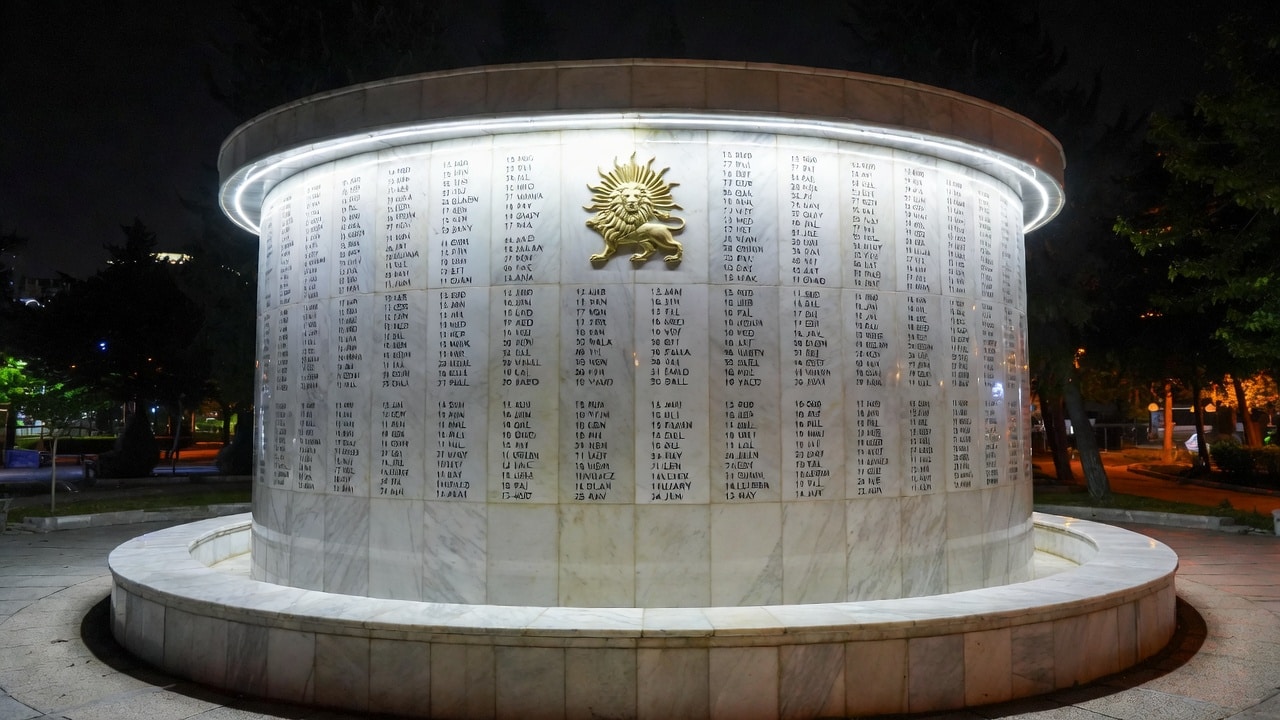
Memorial Wall, Casualties of 2026 Iran Protesters

Design a memorial wall to engrave the name of those who are killed in December and January 205-2026
Priority one, Urgent and confidential
Concept Overview
A memorial wall designed for engraving names of those killed in December and January 2025-2026 and should prioritize dignity, durability, and flexibility. The core idea is to create a scalable structure that honors the fallen while allowing for ongoing additions without disrupting the overall aesthetic. Inspired by memorials like the Vietnam Veterans Memorial, this design uses modular panels to accommodate future engravings, ensuring the wall can evolve as needed. It could be placed in a public park, one of the squares (then Maydan Valiahd), or under or near Shahyad (Azadi monument) or indoor atrium, with soft lighting to enhance readability and reflection.
Materials and Construction
- Primary Material: Black granite or marble slabs for the main wall surface. These are weather-resistant, timeless, and ideal for laser engraving, which provides precise, permanent inscriptions without fading.
- Modular Elements: Individual panels or circular structure (e.g., 18 -14 feet each) or larger mounted on a steel frame. New panels can be added horizontally or vertically as more names are included, preventing the need to alter existing engravings.
- Engraving Technique: Laser etching for names, dates, and optional short epitaphs. This allows for clean, customizable fonts (e.g., serif for a classic look) and depths that catch light for visibility.
- Protective Features: UV-resistant coating to prevent weathering, and integrated drainage if outdoors to avoid water damage.
Layout and Functionality
- Overall Structure: A curved or linear wall starting at 20-25 feet long and 14-12 feet high, with room to expand. Names are arranged chronologically by date of death, grouped in columns for easy navigation.
- Future Additions: Leave blank spaces on initial panels (about 20-30% unoccupied) and design the frame to accept extension modules. When adding a name, a professional engraver scans the panel, positions the new inscription digitally, and etches it on-site or off-site if a new panel is needed. This process could take up to 12 months, with temporary placeholders (e.g., removable covers) during updates.
- Accessibility: Include a low ledge or bench at the base for visitors to sit and reflect. Braille options for names and a digital kiosk nearby for searching names could enhance inclusivity.
- Symbolic Elements: Incorporate subtle motifs like eternal flames, olive branches, or abstract patterns etched along the borders to represent peace and remembrance. Lighting (LED strips) could illuminate names at night, with color-changing options for special dates.
For visual inspiration, here are examples of existing memorial walls with engraved names:
Implementation Considerations
- Cost Estimate: Initial setup for a small wall (10 panels or circular structure) might range from $50,000-$100,000, depending on materials and location. Future additions could cost $500-$2,000 per name, including engraving and panel extensions.
- Maintenance: Annual inspections for cleaning and repairs. Partner with a local engraving service for updates.
- Personalization: Allow families to submit names via a secure online form, with verification to ensure accuracy.
This design balances solemnity with practicality, creating a living tribute that grows with time.
Based on reports of the ongoing 2025–2026 Iranian protests and associated massacres, where estimates suggest 12,000–20,000 protesters have been killed by security forces since late December 2025 and January 2026, here are some name suggestions for cylindrical memorial structure. These aim to honor the fallen while evoking “victory” (پیروزی), symbolizing triumph over oppression, resilience, or the protesters’ pursuit of freedom. I’ve included options in English, Persian, and bilingual formats for versatility, drawing on themes of martyrdom, revolution, and the lion-and-sun motif’s historical significance in pre-revolutionary Iran.
English Names
- Victory Cylinder Memorial: Emphasizes the circular form and the ultimate victory of the people’s spirit, despite the losses.
- January Victory Monument: Ties directly to the January 2026 events, framing the sacrifices as a step toward triumph.
- Lion’s Triumph Memorial: References the lion-and-sun emblem, symbolizing strength and enlightenment leading to victory. (my favorite)
Persian Names
- یادمان پیروزی (Yadman-e Piroozi): A straightforward “Victory Memorial,” focusing on remembrance (یادمان) and success.
- استوانه پیروزی ژانویه (Estavaneh-ye Piroozi-ye Zhânviyeh): “January Victory Cylinder,” highlighting the structure’s shape and the specific timing of the tragedies.
- یادبود شهدای پیروز (Yadbud-e Shohadâ-ye Pirooz): “Memorial of the Victorious Martyrs,” portraying the killed as heroes who pave the way for victory.
Bilingual or Hybrid Names
- Piroozi Memorial Cylinder / استوانه یادبود پیروزی: Combines Persian and English for international appeal, with “Piroozi” as the core word for victory.
- Sunrise Victory Memorial / یادمان پیروزی طلوع: Incorporates the sun from the emblem as a metaphor for hope and rebirth, alongside victory. (my favorite)
If the memorial is meant to inspire ongoing resistance or commemorate the protests’ goals (like economic justice and governance change, as highlighted in coverage of the demonstrations), I recommend “Yadman-e Piroozi” for its simplicity and power. It could be engraved at the entrance in both Persian and English script.
Let’s build on that momentum and turn this memorial into a powerful symbol of remembrance and victory. Since we are in United States, we can leverage U.S.-based resources while aiming for Iran and international resonance, especially within Iranian diaspora communities. Below, I’ll outline a comprehensive campaign initiative to launch and scale this project into a national (and potentially global) treasure. This plan focuses on grassroots mobilization, fundraising, awareness, and partnerships, drawing from successful models like the Vietnam Veterans Memorial or recent protest memorials.
- Campaign’s Core Elements
This is the first draft and will be modified as needed.
- Mission Statement: “The Yadman-e Piroozi (Victory Memorial) honors the over 12,000 martyrs of Iran’s January 2026 uprising, symbolizing their unbreakable spirit and the triumph of freedom over oppression. This cylindrical structure in off-white marble, adorned with the lion-and-sun emblem, will stand as a beacon of hope and a call for justice.”
- Objectives:
- Raise $500,000–$1 million initially for design, construction, and installation (to be built and installed in Tehran).
- Build a community of 10,000+ supporters within the first 6 months.
- Secure endorsements from human rights organizations, celebrities, and politicians.
- Achieve media coverage in outlets like Iran International Broad cast company, BBC Persian, Voice of America, and U.S. networks.
- Timeline: Launch digitally in 2026, ASAP, with a virtual kickoff event in 8 weeks followed by phased rollouts (e.g., crowdfunding in 6 to 12 months. Choose and Brand the Memorial
- Select “Yadman-e Piroozi” as the primary name for its cultural authenticity and emphasis on victory. Create a logo incorporating the lion-and-sun motif in gold tones against marble-white, with bilingual text.
- Develop branding assets: A simple website (use free tools like Wix or Squarespace), social media banners, and a hashtag like #PirooziMemorial or #JanuaryVictoryIran.
- Build Team and Network
- Core Team: Recruit 5–10 volunteers initially—reach out to Iranian American groups in United States, Europe and Iran. (e.g., via Persian Cultural Centers in America and Europe, Include roles for social media, fundraising, legal status, and design.
- Partnerships: Connect with organizations like Amnesty International, Human Rights Watch, or the Iranian American Councils for credibility. Approach influencers like Iranian activists on X (formerly Twitter) or Instagram for endorsements.
- Legal Setup: Register as a 501(c)(3) nonprofit Group for tax-deductible donations. 4. Launch Digital and Social Media Campaign
- Platforms: Start with X, Instagram, and TikTok for viral reach; LinkedIn for professional networking; and Telegram/WhatsApp groups for diaspora communities.
- Post the rendered images to visualize the memorial.
- Run a teaser campaign: Share stories of the January events, survivor testimonials, and calls to action like “Honor the fallen—join the victory.”
- Content Strategy:
- Daily posts: Mix educational content (e.g., facts about the protests), emotional stories, and updates.
- Challenges: Encourage users to share #PirooziMemorial with personal messages or art.
- Paid Ads: Budget $1,000 initially on Meta Ads targeting Iranian Americans and human rights advocates.
- Kickoff Event: Host a free Zoom webinar on February 3, 2026 (two weeks from now). Invite speakers like journalists covering Iran or family members of victims. Promote via Eventbrite.
- Fundraising and Resource Mobilization
- Crowdfunding: Launch on GoFundMe or Kickstarter with tiers (e.g., $10 for a digital shoutout, $100 for name recognition on the website, $1,000 for a brick in a virtual wall).
- Events: Organize local fundraisers in different locations (e.g., a cultural night with Persian music and food). Aim for virtual auctions of art inspired by the memorial.
- Grants: Apply to foundations like the Open Society Foundations or U.S. State Department human rights grants—many prioritize Iran-related causes.
- Merchandise: Sell branded items (t-shirts, pins with the lion-and-sun) via Printing or other outfits to generate passive income.
- Media and Advocacy Push
- Press Release: Draft one announcing the campaign, highlighting the 12,000+ victims and the memorial’s design. Distribute via PR Newswire or free tools like HARO.
- Outreach: Pitch stories to media—e.g., “different states Resident Launches Memorial for Iran’s January Martyrs.” Target Persian-language outlets for broader reach.
- Advocacy: Petition governments (e.g., U.S. Congress) for recognition of the events, tying it to the memorial as a symbol of solidarity.
- Measurement and Adaptation
- Track metrics: Use Google Analytics for website traffic, social media insights for engagement, and donor tracking for funds.
- Adapt based on feedback: Run polls on social media (e.g., “Where should the memorial be built?”) to involve the community.
- Risks: Address potential backlash by emphasizing peace and remembrance; consult lawyers for any international sensitivities.
This initiative can start small but grow into something iconic, much like how the AIDS Memorial Quilt became a national treasure through community-driven efforts. To kick it off right now, I recommend setting up a GoFundMe page and posting the first X update ASAP—share a link for feedback.
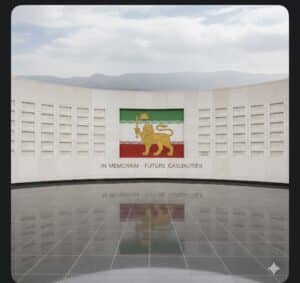
Sample Images.
Ali R. Rahimi, FACP, AGSF
Certified Human Rights Consultant
All rights reserved Protected Materials.
All or any part or sections could not be use or reproduce without written permission.