Skip to content
Is the World Prepared for a Nuclear Ayatollah?
Is the World Prepared for a Nuclear Ayatollah?
In the aftermath of a massive American airstrike targeting Iran’s nuclear facilities at Natanz and the mountain stronghold of Fordow, the global community faces a chilling question: is the world ready for a nuclear-armed theocracy? Despite President Trump’s triumphant declarations that the underground atomic sites—buried 90 to 100 meters deep—were destroyed, the Islamic Republic of Iran neither confirmed nor denied the extent of the damage. Instead, the regime took a defiant stance, barring International Atomic Energy Agency (IAEA) inspectors from accessing the bombed locations.
The IAEA has voiced grave concerns over the disappearance of 465 kilograms of enriched plutonium, raising urgent questions about Iran’s intentions and the possibility of atomic warhead production. The regime’s refusal to cooperate, coupled with its ongoing accumulation of ballistic missiles, signals a bold defiance of international norms and a relentless pursuit of its vision for Islamic global governance.
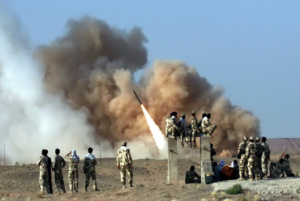
Iran’s nuclear ambitions have once again triggered global alarm, especially considering disturbing new revelations. Recent reports from January 2026, based on classified military records obtained by investigative journalist Catherine Herridge, suggest that Iran’s January 2020 ballistic missile attack on Al Asad Airbase in Iraq may have involved warheads tainted with toxic agents, including radioactive isotopes such as Cesium-137, Actinium-228, and Bismuth-214. Environmental experts who analyzed post-strike data described these isotopes as “anomalous” for conventional munitions, hinting at the deliberate use of radioactive contamination to inflict long-term harm.
Six years after the attack, a troubling pattern of health issues has emerged among US service members who were stationed at the base. Reports include traumatic brain injuries (TBIs), mental health disorders, and a spike in rare cancers—most notably thyroid cancer in young adults. Retired Lieutenant Colonel Alan Johnson, a survivor of the attack, has confirmed that at least six troops have been diagnosed with thyroid cancer, while others are undergoing medical screening. Broader discussions on social media and in investigative reports reference over 45 cases of rare cancers, with allegations of suppressed exposure data and denied disability claims fueling outrage among veterans.
These allegations have reframed the 2020 missile strike as a possible “dirty warhead” incident, designed to inflict prolonged suffering and environmental damage—drawing comparisons to the legacy of Agent Orange. At the time, official accounts focused on the immediate aftermath, reporting over 100 cases of TBI but no fatalities, and made no mention of radioactive contamination. The recent claims, while compelling, remain unverified by independent sources and have not been officially acknowledged by the US Department of Defense. Nevertheless, they are gaining traction in the media and among affected military communities, intensifying calls for transparency and accountability.
As Iran continues to defy international oversight and escalate its nuclear and missile programs, the specter of a nuclear-armed ayatollah looms larger than ever. The world must confront the sobering reality that the next phase of nuclear proliferation may not be driven by secular superpowers, but by ideologically driven regimes willing to use unconventional means to achieve their ambitions. The question remains: is the international community prepared to face this unprecedented threat?
Endnote:
- Cesium-137 (Cs-137) is a radioactive isotope produced by nuclear fission, with a half-life of about 30 years. It emits beta particles and gamma rays, posing health risks through both external and internal exposure.1
- Acute effects of high-level external exposure to Cs-137 include skin burns, acute radiation sickness (ARS), and potentially death at sufficiently large doses. ARS symptoms may include nausea, vomiting, diarrhea, fatigue, and bleeding due to bone marrow and tissue damage.2
- For internal exposure (via ingestion or inhalation), Cs-137 behaves similarly to potassium, distributing uniformly throughout the body, with higher concentrations in soft tissues like muscles. This can cause rapid onset of symptoms such as decreased appetite, nausea, diarrhea, and cardiac arrhythmias, especially if combined with chemical toxicity from stable cesium compounds. The biological half-life in humans is approximately 70 days, with excretion primarily through urine and feces.3
- Chronic and long-term effects of lower-level or prolonged exposure include increased cancer risk due to DNA damage from ionizing radiation, with higher likelihood of leukemia, solid tumors, and other malignancies. Studies of fallout from events like Chernobyl suggest links to thousands of additional cancers, though risks depend on dose, duration, and individual factors.4
- Other long-term effects may include reproductive issues (e.g., reduced fertility), neurological abnormalities (especially from fetal exposure), chromosomal damage, and weakened immune function. While Cs-137 is not specifically targeted to the thyroid like iodine-131, some sources note an elevated risk for thyroid and other endocrine-related cancers in contaminated environments. However, low-dose exposures (e.g., below 0.3 milli-gray ( mGy) have shown no detectable harmful effects on blood components in controlled in vitro studies.5
- Exposure pathways include external exposure (primarily from gamma rays, which penetrate the body, and beta particles, which affect skin and shallow tissues) and internal exposure (high absorption for soluble forms via ingestion, leading to widespread tissue exposure). Contaminated food, water, or air are common sources, especially after nuclear accidents. Risks are higher for children, pregnant individuals, and those with prolonged exposure, as seen in incidents like Chernobyl and Indonesia. Medical uses (e.g., brachytherapy) involve controlled exposures with minimal risks when properly managed.6
- World Health Organization. “Cesium-137.” Fact Sheet, 2022.
- Centers for Disease Control and Prevention. “Radiation Emergency: Cesium-137.” 2021.
- International Atomic Energy Agency. “Cesium-137 in the Environment.” Technical Report, 2019.
- “Sources, Effects and Risks of Ionizing Radiation.” 2020 Report.
- National Research Council. “Health Risks from Exposure to Low Levels of Ionizing Radiation: BEIR VII Phase 2.” 2006.
- Agency for Toxic Substances and Disease Registry. “Toxicological Profile for Cesium.” 2004.