Exploring the Intersection of Politics, Culture, and Environmental Responsibility in America
As the global concern over climate change intensified—a concern that was both necessary and overdue—numerous discussions emerged across various regions including the United States, Europe, and parts of Asia such as China, India, Pakistan, Russia, and Iran. While many countries expressed support for environmental initiatives, some, paradoxically, contributed further to the problem. This introduction sets the stage for a deeper exploration of the social and cultural dimensions of this pressing issue, particularly within the United States.
Last summer, I visited Los Angeles, a city known for its Democratic leanings. My journey included stops at downtown LA, the vibrant LA Alley Mexican Bazaar, various other neighborhoods, and the local beaches. I also traveled along the scenic Highway 5 to San Francisco, where the natural beauty was starkly contrasted by the environmental neglect evident in the harbor and downtown areas. Throughout my travels across the U.S., cities like Boston, New York, and Seattle were memorable not only for their political liberalism but also for their lack of cleanliness, which seemed disconnected from the broader issues of global warming and carbon emissions.
However, my primary concerns lie in the social and political attitudes, behaviors, and moral responsibilities that underpin these environmental issues. In contrast to the liberal cities, many Midwestern communities, which tend to be more conservative, showcased cleaner, tidier environments and a greater sense of civic responsibility. This dichotomy raises questions about the relationship between political ideology and environmental stewardship.
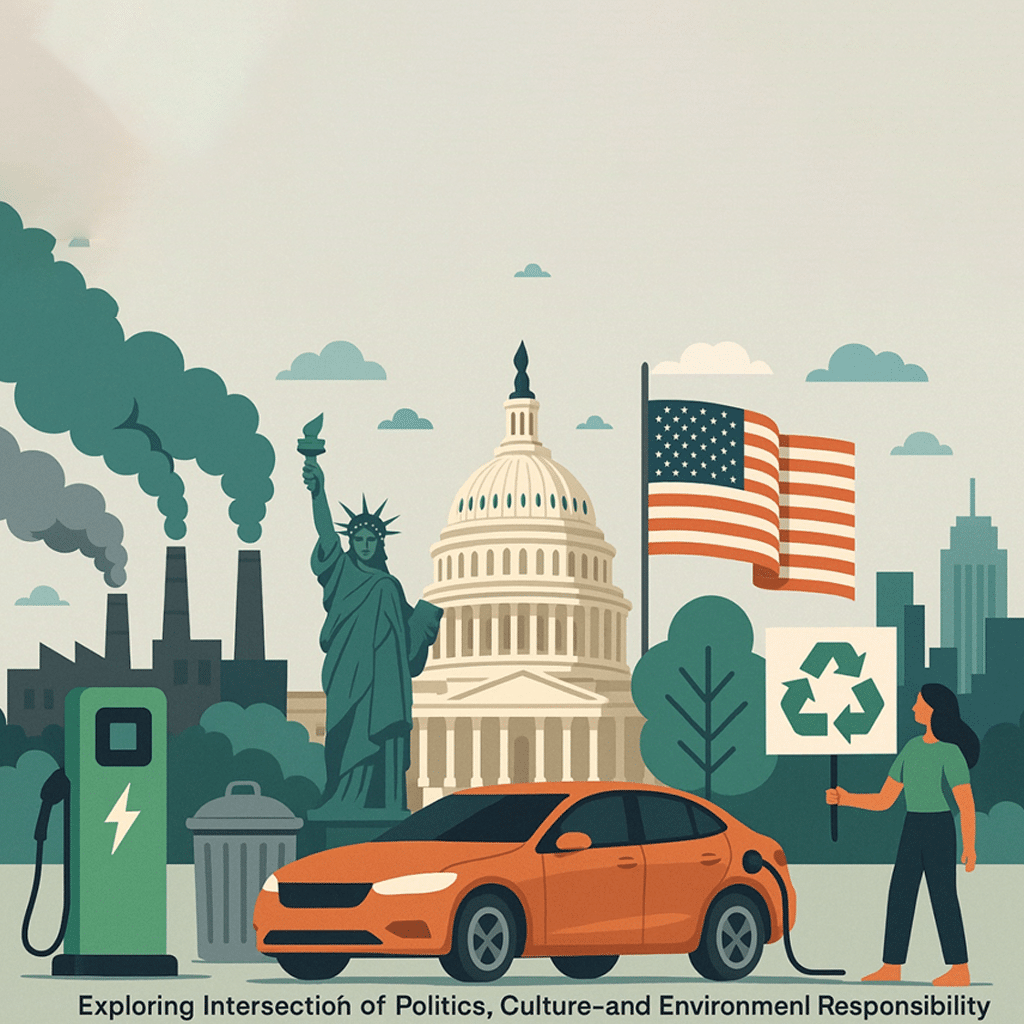
Another significant factor influencing greenhouse gas emissions and global warming is the use of fossil fuels and the adoption of electric vehicles (EVs). The California governor’s commitment to phasing out fossil fuel vehicles by 2035—a pledge supported by several other states and many Democrats—highlights a shift towards more sustainable transportation options. This transition has not only spurred a rush among liberals and progressives to acquire EVs, such as those from Tesla, but has also turned driving an EV into a social statement and a marker of elite status.
At many social gatherings, I observed conversations that shamed those who had not yet switched to electric cars. Californians and Bostonians, in particular, have played a significant role in driving up the demand and prices for EVs, thereby intensifying international competition to develop more advanced electric vehicles. The trend has become so pronounced that it has sparked a backlash, including politically motivated attacks on Elon Musk and acts of vandalism against Tesla dealerships and owners, which some might describe as domestic terrorism.
This situation presents a complex and socially awkward question: how should we address and navigate the intersection of environmental advocacy, social trends, and political activism? This question becomes even more pertinent in the wake of the 2024 election and the controversial involvement of figures like Elon Musk and the emergence of phenomena such as DOGE. The challenge lies in balancing these dynamics to foster a constructive dialogue on sustainable practices and environmental responsibility.