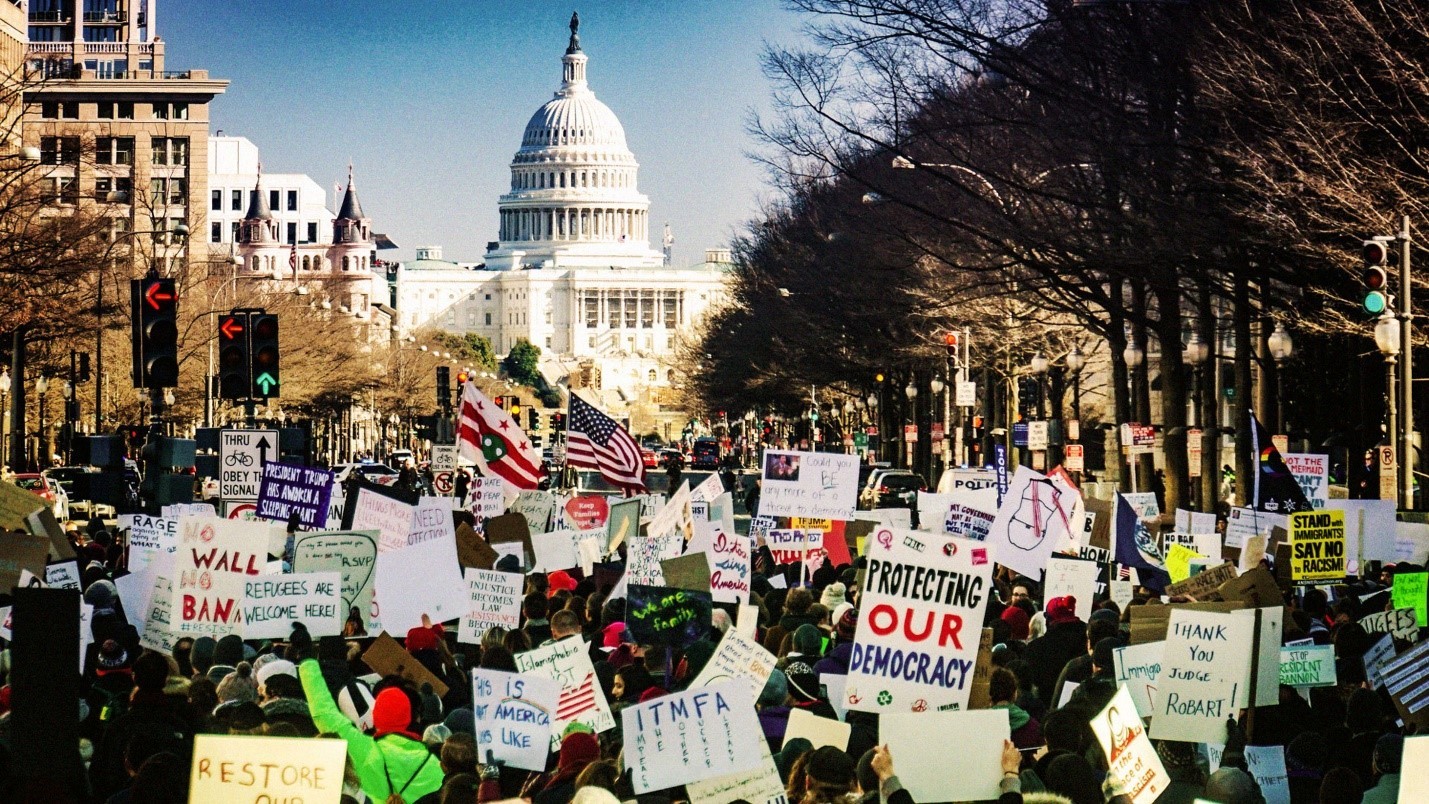
Balancing Majority Rule and Minority Rights: The Evolving Landscape of Modern Liberal Democracy
The concept of democracy, which began to notably evolve from the 18th century, has long stood as a cornerstone of Western governance. Originating to embody the principles of people’s representation, democracy has undergone several transformations, adapting to the needs and challenges of various eras. Now, in its latest iteration, modern democracy often reveals itself as a system predominantly influenced by the “mass majority” or what many refer to as liberal democracy. This shift has brought about significant global changes, particularly in the realm of human rights, under the scrutiny and guidance of international bodies such as the United Nations. Moreover, it has been pivotal in challenging and often dismantling systemic barriers related to race, gender, and sex discrimination, heralding new eras of social justice and equality.
As explored in texts like *Democracy in Iran, Ali Rahimi,2024*, these advancements underline the multifaceted impacts of democracy—not only as a political system but as a catalyst for broader societal progress. However, the transformation of modern democracies, especially in Western territories, suggests an ongoing evolution whose end results remain uncertain. As these democracies continue to adapt and evolve, it is crucial to question whether the dominance of the “mass majority” is invariably productive or if it sometimes veers towards overconfidence and assumes a blanket of absolutism.
Given the complex nature of modern democracies, where diverse populations strive for acknowledgment and representation, the dynamics of the “mass majority” can become double-edged. On one hand, representing the majority can lead to a robust implementation of widely supported policies and reforms. On the other, there’s an inherent risk that this majority could sideline minority voices, leading to a potentially myopic governance that might overlook, or even suppress, the needs of less represented groups.
This potential tilt towards absolutism – where the majority not only leads but dominates – raises concerns about the classic democratic promise: a fair representation for all. It prompts a vital discourse on how democracies can maintain their foundational principles of equity and representation while evolving to meet new challenges. Therefore, the journey of democracy, while marked by notable achievements, must continue to evolve with a cautious introspection about the balance of power and the inclusivity of voices that form the bedrock of any democratic society. The transformation observed in modern democracies invites us to critically assess not just the successes, but also the shortcomings and areas ripe for reform to ensure that democracy remains true to its core promise and responsibility to all constituents.
America
Modern Liberal Democracy
Lessons must be learned